
Desserts
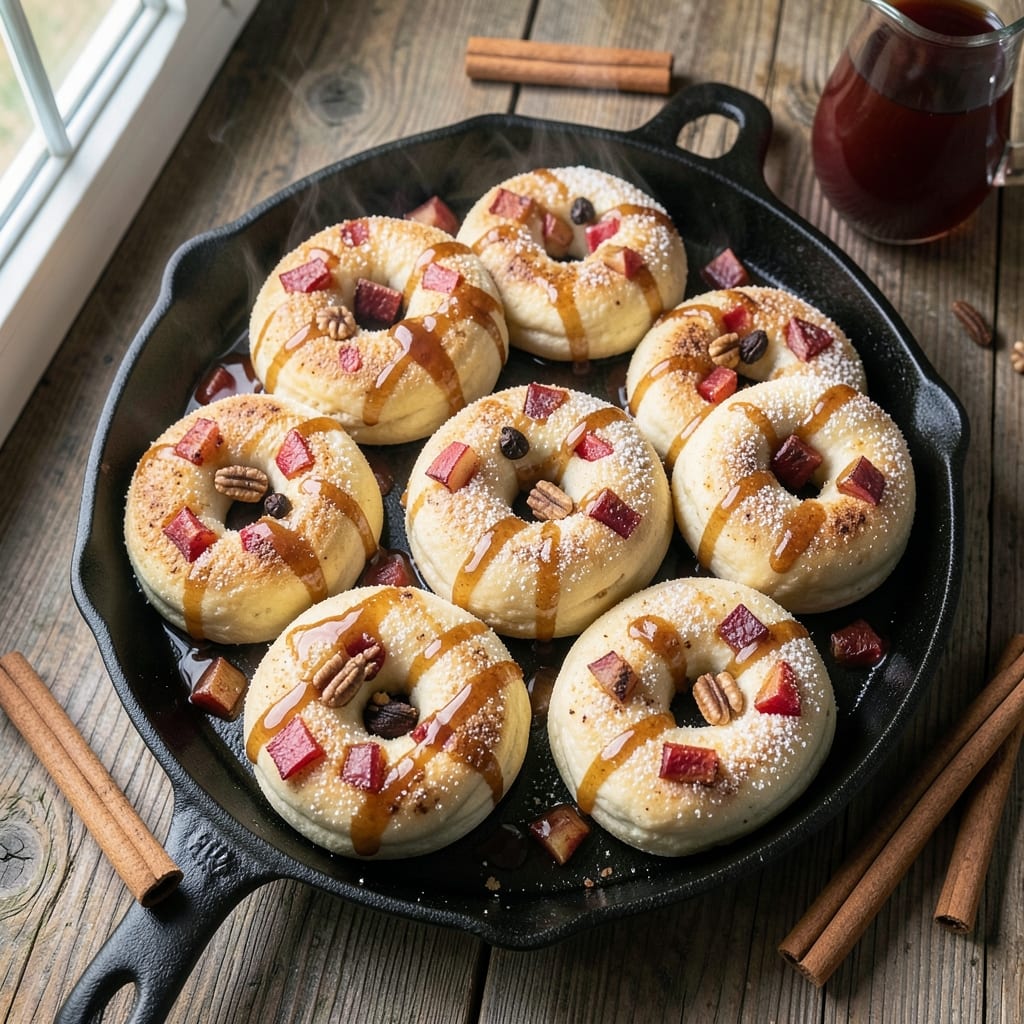
This Amish apple cider donut recipe brings the cozy, spiced aroma of autumn into your kitchen with every bite. The traditional yeast-based dough creates tender, pillowy donuts that soak up the warm flavors of cinnamon and apple cider, while the caramelized glaze adds that signature Amish touch. I've perfected this recipe to deliver the same comforting results you'd find at a Pennsylvania farmhouse—without the deep-frying fuss.
The secret lies in the dough's simplicity and the slow rise, which develops deep, aromatic flavors. You'll start with basic pantry ingredients—flour, sugar, yeast, and of course, apple cider—that come together in a rustic dough. The cinnamon-sugar coating adds texture and warmth, while the glaze ties everything together with a glossy, caramelized finish. It's the kind of recipe that feels like a hug in food form.
What makes these donuts special is their balance of textures—soft, pillowy centers with crisp edges, all wrapped in that sweet-tart apple cider flavor. The glaze isn't just for looks; it adds a subtle caramel depth that makes each bite feel like a little celebration. Whether you're baking for a fall gathering or treating yourself to a cozy weekend breakfast, these donuts deliver restaurant-quality results with minimal effort.
For those avoiding deep frying, I've included an oven-baked method that keeps all the flavor while being just as foolproof. The key is patience—the dough needs time to rise properly, and the baking process requires careful monitoring to achieve that perfect golden-brown finish. Once you try these, you'll understand why they're a staple at Amish gatherings and why they're worth making at home.
Ingredients for amish apple cider donut
Basic pantry staples plus a few cozy fall flavors—these ingredients make rustic donuts feel like a farmhouse hug.
| Ingredient | Amount | Notes |
|---|---|---|
| All-Purpose Flour 🌾 | 4 cups | Sifted for light texture |
| Granulated Sugar 🍚 | ¾ cup | White or light brown |
| Unsalted Butter 🧈 | ½ cup | Cold, cubed for dough |
| Active Dry Yeast 🍞 | 2 ¼ tsp | 1 packet or 7g |
| Apple Cider 🍎 | ½ cup | Unsweetened, room temp |
| Large Eggs 🥚 | 1 whole | Room temperature |
| Vanilla Extract 🌸 | 1 tsp | Pure extract preferred |
| Ground Cinnamon 🌿 | 1 ½ tsp | Freshly ground preferred |
| Salt 🧂 | ½ tsp | Fine sea salt |
| Cinnamon-Sugar Mix 🍬 | ½ cup | For coating (mix 0.25 cup sugar + 1.5 tsp cinnamon) |
| Cream Cheese 🧀 | 4 oz | Softened for glaze |
| Powdered Sugar 🍚 | 1 ½ cups | For glaze |
| Apple Cider Vinegar 🍎 | 1 tbsp | For glaze tang |
The flour is non-negotiable here—King Arthur or Gold Medal work best for that tender crumb. I always grab organic apple cider from Trader Joe's for the best flavor, but any unsweetened kind will do. The butter should be cold when you mix it—take it out of the fridge 10 minutes before so it softens just enough. For the yeast, Bob's Red Mill is my go-to, but any active dry yeast in a sealed container works. Pro tip: if your kitchen runs warm, test the yeast first—dissolve it in the warm apple cider with a pinch of sugar and wait 5 minutes for it to foam before baking.
No vanilla extract? Vanilla sugar at half the amount works in a pinch, though it's not the same. The cinnamon-sugar mix is where the magic happens—use Ceylon cinnamon if you want a milder flavor, but regular works fine too. For the glaze, Philadelphia cream cheese is foolproof, but any soft cream cheese will do. Short on powdered sugar? Blend granulated sugar in a blender for 30 seconds—it's not perfect but gets you out of a jam. And if you're avoiding deep frying, the oven-baked method in the instructions keeps all the flavor without the fuss.
Store the dough in the fridge for up to 24 hours if you're prepping ahead—it actually develops more flavor. The glaze sets quickly, so work fast when applying or it'll dry out. These donuts freeze beautifully—flash freeze on a tray first, then transfer to a bag for up to 3 months. I like to portion them into single servings before freezing so I can grab one straight from the freezer for a quick breakfast. The glaze keeps for 3 days in the fridge, though—make it fresh if you can.
Why You'll Love This Recipe
- No Yeast Nightmare: I’ve made donuts that required proofing patience like a saint—this one? Just mix, let it rise once, and bake. The yeast works with the warm apple cider to create that tender crumb without me staring at a clock like a hawk.
- Cider Kiss Magic: That first sip of apple cider in the dough isn’t just flavor—it’s character. The warmth of the spices (cinnamon, nutmeg) and the slight tang from the cider make these taste like autumn in every bite, but without the fuss of pie crust or filling.
- Breakfast or Snack Star: Honestly, I’ve served these for brunch, after-school snacks, and even as a dessert with coffee—no judgment. The butter-rich dough soaks up syrup or jam like a dream, but they’re just as good plain with a dusting of sugar.
- Budget-Friendly Batch: Five ingredients, one bowl, and leftovers that last. I’ve frozen these for weeks, reheating them straight from the freezer with a quick crisp in the oven. My wallet (and my kids) thank me every time.
Step-by-step instructions for Amish apple cider donuts
Here's how to make these warm, spiced donuts with a caramelized glaze that'll have everyone asking for seconds.
Activate the Yeast and Mix the Dough
In a small bowl, combine the 0.5 cup apple cider, 0.75 cup granulated sugar, and 2.25 teaspoons active dry yeast. Let this sit for 5-10 minutes until it becomes foamy and bubbly—this tells you the yeast is alive and ready to work. If it doesn't bubble, your yeast might be old, and you'll need to start over.
In a large mixing bowl, whisk together the 4 cups all-purpose flour, 1.5 teaspoons ground cinnamon, and 0.5 teaspoon salt. Sift the flour mixture into the bowl to aerate it, which helps create a lighter dough. Make a well in the center and pour in the yeast mixture along with the 1 whole large egg and 1 teaspoon vanilla extract. Use a wooden spoon to mix until a shaggy dough forms.
Incorporate the Butter and Knead
Add the 0.5 cup cold cubed unsalted butter to the dough and use your hands to work it in. The butter should start to melt and coat the dough, but don't worry if it doesn't disappear completely—this is normal. Once the butter is mostly incorporated, turn the dough out onto a lightly floured surface and knead for 8-10 minutes until it's smooth and elastic.
Here's the thing—you want the dough to be soft but not sticky. If it's too sticky, add a little more flour, 1 tablespoon at a time, until it comes together nicely. Once it's ready, shape it into a ball, place it back in the bowl, cover it with a clean kitchen towel, and let it rise in a warm place for 1 hour or until it doubles in size. A good test is to poke the dough with your finger—if it springs back slowly, it's ready.
Shape and Fry the Donuts
Once the dough has risen, punch it down to release the air and divide it into 12 equal pieces. Roll each piece into a ball and then flatten it slightly into a disc about ½-inch thick. Use a donut cutter or a glass to cut out donut shapes, leaving a 1-inch hole in the center. Place the donuts on a floured surface and cover them with a towel to keep them from drying out.
Heat 2-3 inches of oil in a deep fryer or heavy pot to 350°F. You'll know it's ready when a small piece of dough sizzles and floats to the surface. Fry the donuts in batches—don't overcrowd the pot—until they're golden brown on both sides, about 1-2 minutes per side. Drain them on a wire rack or paper towels, and immediately roll each one in the 0.5 cup cinnamon-sugar mix while they're still warm. This ensures the coating sticks and gives them that classic Amish donut crunch.
Make the Cream Cheese Glaze
While the donuts are frying, make the glaze by beating the 4 ounces softened cream cheese until smooth. Gradually add the 1.5 cups powdered sugar and the 1 tablespoon apple cider vinegar, mixing on low speed until fully combined. The glaze should be thick but still pourable—if it's too thick, add a splash of milk or apple cider to loosen it up.
Once the donuts have cooled slightly (but are still warm), dip the top half of each donut into the glaze, letting any excess drip off. Place them on a wire rack to set for 10-15 minutes. The glaze will firm up as it cools, giving you that beautiful caramelized finish. Serve them warm for the best experience—these donuts are even better the next day, but trust me, they won't last that long!
Pro Tips For Making Amish Apple Cider Donut
- Warm the Cider First: Pour your apple cider into a saucepan and heat it just until it’s steaming—about 2-3 minutes. Cold cider shocks the yeast and slows fermentation, so this small step guarantees your dough rises faster and more reliably. (Yes, even if you’re impatient like me.)
- Use a Scale for Butter: Measuring butter by volume leads to dry donuts. Weigh it instead—454g (2 cups) of cold, cubed butter creates the perfect tender crumb. Pack the butter loosely in the measuring cup, then level it off; don’t press it down. Trust me, your donuts will thank you.
- Skip the Overproofing: Let the dough rise until it’s just puffy and springs back slowly when poked—about 1 to 1.5 hours. Overproofing makes the donuts dense and gummy. Cover the bowl loosely with a damp towel, and check it every 30 minutes. No need to wait for a full double.
- Fry in Small Batches: Crowding the fryer lowers the oil temperature and makes soggy donuts. Fry 2-3 at a time in 350°F oil until golden brown—about 2 minutes per side. Keep the oil hot between batches; if it cools, heat it back up before adding more. Patience here means crispy, not greasy.
Make-ahead tips for this amish apple cider donut
Dough Prep Ahead
Make the dough the night before for deeper flavor and easier morning baking. After kneading, shape the dough into a log, wrap it tightly in plastic wrap, and refrigerate for up to 24 hours. The cold slows fermentation, intensifying the apple cider aroma. When ready to bake, let it sit at room temperature for 30 minutes before shaping the donuts—this prevents cracking. 🌱
Fry or Bake?
For deep-frying, preheat oil to 350°F and keep it there using a thermometer—I recommend the Thermoworks Oven Thermometer. Fry in batches of 2-3 donuts to maintain temperature. For oven-baked donuts, brush shaped donuts with melted butter, bake at 375°F for 12-15 minutes until golden, then proceed with cinnamon-sugar coating. The oven method saves oil but requires 5-10 extra minutes per batch.
Glaze Prep
Make the glaze 1 day ahead and store it in an airtight container in the fridge. Stir before using to prevent sugar settling. For a smoother finish, strain the glaze through a fine-mesh sieve. If you're short on time, use store-bought cream cheese glaze (like Betty Crocker)—just add 1 tbsp apple cider vinegar for that tangy kick. The glaze keeps for 3 days, though fresh is always better.
Freezing Donuts
Freeze donuts after frying/baking but before glazing. Arrange them on a baking sheet in a single layer and freeze for 1 hour to prevent sticking. Transfer to a ziplock bag and store for up to 3 months. To serve, thaw at room temperature for 30 minutes, then glaze as directed. The texture stays perfect—just as pillowy as fresh! ❄️
Batch Glazing
Glaze donuts in batches of 4-5 to avoid soggy bottoms. Work quickly but carefully—dip just the top half for an elegant look. For a rustic touch, sprinkle with crushed pecans or cinnamon sticks before the glaze sets. If the glaze thickens while working, thin it with 1 tsp milk or apple cider. These donuts taste even better the next day, so make extras for leftovers!
Equipment Shortcuts
No donut cutter? Use a glass or cookie cutter to shape the donuts. For frying without a deep fryer, use a heavy-bottomed pot (like All-Clad) and keep oil at 350°F with a candy thermometer. No thermometer? Test with a wooden chopstick—if bubbles form around it, the oil is ready. For baking, line your sheet pan with parchment paper to prevent sticking and ensure even browning.
Nutrition facts
Frequently asked questions
Can I make these donuts without deep-frying?
For an oven-baked version, brush shaped donuts with melted butter and bake at 375°F for 12-15 minutes until golden. The texture will be slightly different but still delicious. Just be sure to bake them on a wire rack to prevent sogginess.
What's the best way to store leftover donuts?
Store them in an airtight container at room temperature for 2-3 days, or freeze for up to 3 months. For freezing, place unglazed donuts on a tray first to prevent sticking, then transfer to a bag. Thaw at room temperature before glazing for best results.
Can I substitute apple cider for another liquid?
Yes, but you'll lose that signature flavor. Use milk or buttermilk for a neutral taste, or apple juice for a milder apple flavor. The yeast activation time may vary slightly—check for bubbles after 5 minutes instead of 10.
Why did my dough not rise properly?
This usually happens if the yeast wasn't activated (no bubbles) or the kitchen was too cold. Make sure your yeast is fresh and the liquid is warm (not hot). For better results, place your bowl in a warm oven (70°F) with the light on while rising.
How can I make these donuts healthier?
Try using whole wheat flour (replace 1 cup at a time), reducing sugar by 25%, or using Greek yogurt instead of butter. For baking, use an egg white wash instead of butter. The flavor will be slightly different but still delicious!