
Desserts
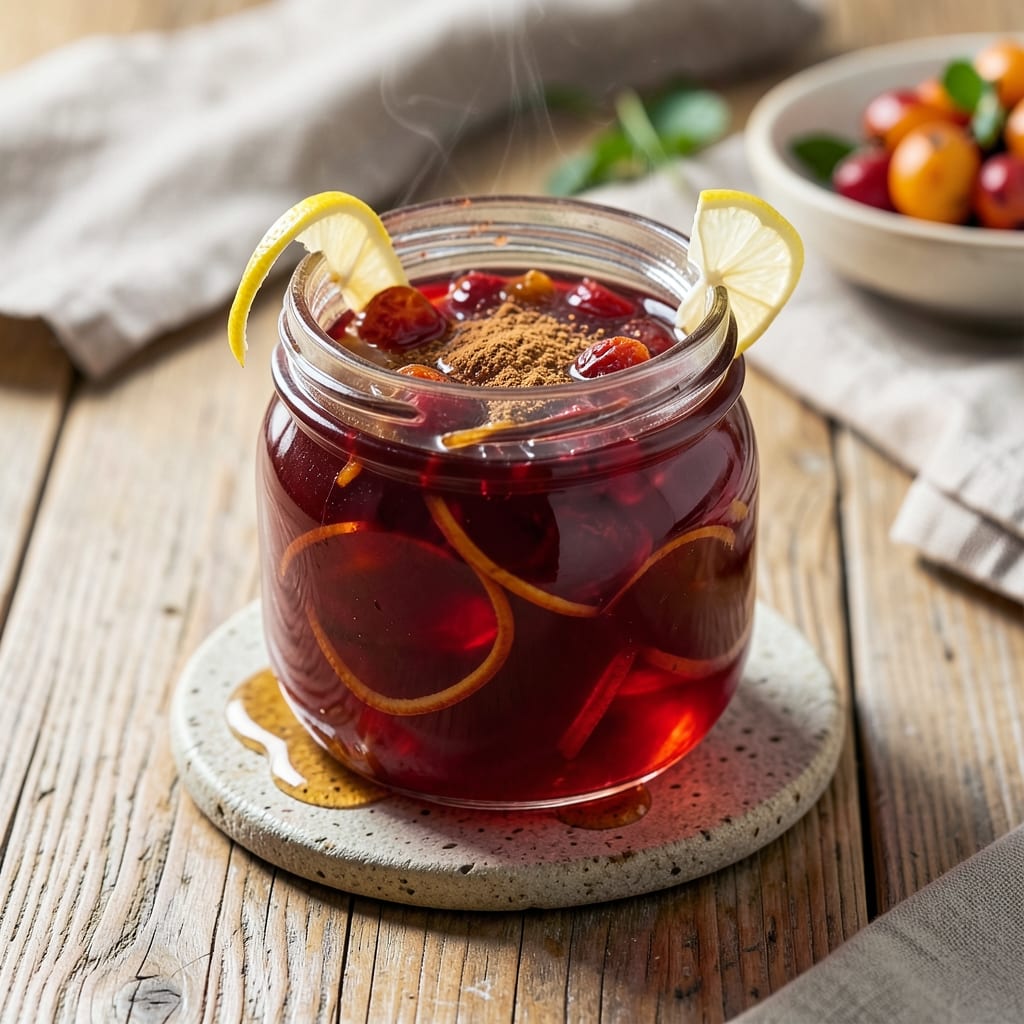
This apple and rosehip jelly recipe transforms tart apples and tart rosehips into a vibrant, balanced spread perfect for elevating pastries and cheese boards. The combination of apple's crisp sweetness and rosehip's bright acidity creates a complex flavor that pairs beautifully with everything from buttery croissants to sharp cheddar. What makes this recipe special is the careful balance of sugar and pectin, ensuring a set that's firm yet spreadable—never cloying or overly thick.
The process begins with sterilizing jars to preserve freshness, then simmering the fruit mixture until the pectin activates and the flavors meld into a harmonious blend. Straining removes seeds and skins, leaving you with a smooth, jewel-toned jelly that's as visually stunning as it is delicious. The optional cinnamon adds warmth without overpowering the natural tartness, making this jelly versatile for both sweet and savory applications.
Once set, this jelly keeps for months in the refrigerator, making it an ideal homemade gift or pantry staple. Its tart-bright profile cuts through rich desserts, while its subtle complexity enhances savory pairings like aged Gouda or smoked salmon. The texture is just right—neither too stiff nor too runny—so it spreads effortlessly without losing its shape.
Perfect for holiday gifting, breakfast tables, or elegant entertaining, this jelly delivers restaurant-quality results with minimal effort. The key lies in precise timing and ingredient ratios, which we'll cover in detail to ensure your batch turns out flawlessly every time.
Ingredients for apple and rosehip jelly
Eight ingredients, jewel-toned results—this tart-bright jelly balances apple's crispness with rosehip's zing.
| Ingredient | Amount | Notes |
|---|---|---|
| Firm Tart Apples 🍎 | 2 lbs | Granny Smith or similar (peeled, cored, sliced) |
| Fresh Rosehips 🌸 | 1 cup | Cleaned, stems removed (or 1 tbsp dried rosehips) |
| Granulated Sugar 🍚 | 3 cups | White or organic cane sugar (no substitutes) |
| Lemon Juice 🍋 | ¼ cup | Freshly squeezed (for acidity balance) |
| Powdered Pectin 🍯 | 2 tbsp | High-methoxyl pectin (like Ball or Sure-Jell) |
| Ground Cinnamon 🌿 | ½ tsp | Optional, for subtle warmth (toasted for depth) |
| Filtered Water 💧 | 1 cup | For thinning consistency (adjust as needed) |
| Mason Jars 🥫 | 4 whole | 8-oz size, sterilized for storage |
The apples and rosehips are your flavor anchors. Granny Smith apples deliver that signature tartness, but Fuji or Braeburn work too if you prefer milder sweetness. Rosehips? Wildcrafted or organic is ideal—they pack more flavor than store-bought, but if you can't find fresh, dried rosehips (like those from Frontier Co-op) work at one-tenth the amount. The sugar isn't just for sweetness; it's what activates the pectin to create that perfect set. Cane sugar has a cleaner finish than beet sugar, but white granulated is fine in a pinch. Sterilize your jars properly—boiling them for 10 minutes in water does the trick—and keep them warm until filling to prevent contamination.
No pectin on hand? Unsweetened applesauce (1/4 cup) can replace 1 tbsp pectin, but texture will be softer. Short on rosehips? Substitute with 1 tbsp cranberry juice or 1 tsp rosehip syrup—just know the flavor won't be identical. The cinnamon is truly optional, but if you add it, toast it first in a dry pan for 30 seconds to deepen the aroma. Lemon juice is non-negotiable for balancing the tartness, though bottled lemon juice works if fresh isn't available. For the water, filtered is best—tap water with high mineral content can interfere with the pectin's ability to set properly. If your jelly ends up too thick, add a splash more water; too thin? Simmer uncovered for another 5 minutes to reduce.
This jelly keeps beautifully—up to 6 months refrigerated in sterilized jars, or 12 months frozen if you prefer longer storage. The color will deepen as it ages, becoming even more vibrant. For gifting, wrap the jars in kraft paper with a ribbon—they make stunning presents. If you find yourself with extra, freeze individual portions in ice cube trays for easy use later. The texture is best when served slightly chilled, so refrigerate for 1-2 hours before spreading. It pairs perfectly with aged Gouda, smoked salmon, or buttery brioche, but don't be afraid to get creative—it's fantastic on grilled cheese or even as a glaze for roasted pork (yes, pork—this jelly is savory-friendly!).
Why You'll Love This Recipe
- No Chopping Nightmare: I’ll admit, peeling rosehips is tedious—but once you’ve got those tart apples diced and the rosehips rinsed, it’s smooth sailing. The pectin does all the hard work while you sip tea and pretend you’re in a cozy British cottage.
- Tart-Sweet Magic: That first spoonful? Chef’s kiss. The rosehips add a bright, almost floral tartness that cuts through the sugar’s richness, while the apples keep it from tasting like candy. Honestly, I’ve never met a jam that balances sweet and sour this well.
- Gift-Worthy in Minutes: Slather it on toast for breakfast, drizzle it over yogurt, or fill a jar for your aunt’s birthday—this jelly is the ultimate lazy-but-luxurious gift. Between us, I’ve used it to impress at dinner parties and as a last-minute hostess present. (It’s my secret weapon.)
- No-Waste Pantry Hero: You’re already using apples—now you’re turning their cores into something golden. Rosehips? Often overlooked, but here they’re the star. And with just sugar, lemon juice, and pectin, it’s one of those recipes where the ingredient list feels shorter than the flavor payoff. Leftovers? Jar them up and forget about them for six months.
Step-by-step instructions for apple and rosehip jelly
Here's how to craft this vibrant spread—where tart apples meet floral rosehips for a perfect balance.
Prepare the Fruit Base
Start by peeling, coring, and slicing the 2 lbs firm tart apples into ¼-inch thick pieces. The thinner the slices, the faster they'll cook down and release their juice. Transfer them to a large, heavy-bottomed pot and toss in the 1 cup fresh rosehips (cleaned and stems removed). Add the 1 cup filtered water and bring everything to a boil over medium-high heat.
Once boiling, reduce heat to medium-low and let it simmer uncovered for 20-25 minutes, stirring occasionally. You're looking for the apples to break down completely and the mixture to reduce by about half. The texture should be smooth with minimal pulp remaining—this ensures a clear, elegant jelly. If you notice any foam forming, skim it off to keep the jelly bright and clean.
Strain and Measure the Juice
Line a fine-mesh strainer with a clean cheesecloth or coffee filter and pour the cooked fruit mixture through it. Let it drain completely, pressing gently on the solids with a wooden spoon to extract every last drop of juice. This step is crucial—any remaining pulp will cloud your jelly and make it grainy.
Measure the strained juice and transfer it to a clean bowl. You should have about 3-4 cups of liquid. If you're short, add a little extra filtered water to compensate. The exact amount isn't critical, but aim for 3 cups total to match the sugar ratio. This juice is the foundation of your jelly, so don't rush the straining—patience here pays off in clarity and texture.
Add Sugar and Pectin
In a separate bowl, whisk together the 3 cups granulated sugar and 2 tbsp powdered pectin until fully dissolved. This prevents clumping and ensures even distribution. Gradually pour the sugar-pectin mixture into the strained apple-rosehip juice while whisking constantly. The sugar will dissolve quickly, but keep stirring until everything is homogeneous.
Add the 0.25 cup lemon juice and 0.5 tsp ground cinnamon (if using) and mix well. The lemon juice balances the sweetness and adds a subtle brightness, while the cinnamon deepens the flavor profile. Taste the mixture—it should be pleasantly tart and sweet, with a hint of floral notes from the rosehips. If you're unsure about the balance, add a pinch more cinnamon or a splash of lemon juice to taste.
Cook to Gel Point
Return the mixture to the pot and bring it to a rolling boil over medium-high heat. Once boiling, set a timer for 1 minute and stir constantly to prevent scorching. This minute is critical—the jelly needs to reach 220°F, the temperature at which pectin activates and the mixture begins to thicken.
After the 1-minute boil, test the jelly by placing a small spoonful on a chilled plate. Let it sit for 2 minutes—if it wrinkles slightly when you push it with your finger, it's ready. If not, return it to the heat and boil for another 30 seconds, then test again. Overcooking will darken the jelly and make it overly thick, so keep a close eye on it. Once it reaches the perfect set, remove it from the heat immediately.
Jar and Process for Storage
Quickly ladle the hot jelly into the 4 sterilized mason jars, filling them to within ¼ inch of the rim. Wipe the rims clean with a damp cloth to ensure a good seal. Place the lids on the jars and screw the bands down until they're fingertip-tight.
Process the jars in a water bath canner for 10 minutes to ensure long-term shelf stability. Start timing as soon as the water reaches a rolling boil. After processing, remove the jars and let them cool on a towel-lined counter for 12-24 hours. This slow cooling helps the jelly set properly and prevents cracking. Once cooled, check the seals—if they're still suctioned, your jelly is ready for storage in a cool, dark place for up to 1 year. If any jars didn't seal, refrigerate and use within 2 weeks.
Pro Tips For Making Apple And Rosehip Jelly
- STRAIN TWICE, POUR ONCE: I learned this the hard way—skimming the rosehip pulp once leaves gritty bits lurking. After straining through a fine sieve, pour the liquid through a clean cheesecloth-lined funnel for that silky texture. Yes, it’s extra work, but your jelly will actually look like it belongs in a fancy jar instead of a science experiment.
- USE COLD ROSEHIPS: Fresh rosehips? Don’t toss them straight into the pot—chill them first. Spread them on a tray and freeze for 30 minutes to soften their tough skins before cooking. This makes them release more flavor and color without turning your jelly into a muddy swamp. (Your future self will notice the difference.)
- WEIGH THE SUGAR: That bag of sugar isn’t as precise as you think. For a set jelly, measure by weight (about 600g per 1kg of fruit) instead of volume—cup measurements vary wildly. Too little sugar = runny mess; too much = a syrup that’ll make your teeth ache. A kitchen scale is your new best friend here.
- BOIL FAST, THEN SLOW: Crank the heat to high and bring the mixture to a rolling boil in 5 minutes—don’t dawdle. Once it hits a full boil, drop to medium-low and simmer for 10 minutes. Rushing the boil skips flavor extraction; simmering too hard turns your jelly into glue. Find that sweet spot, and you’ll get a clear, vibrant set.
Troubleshooting this recipe
Cloudy Jelly Fix
If your jelly turns cloudy after setting, it’s likely due to unstrained pulp or overcooking. To prevent this, strain the fruit mixture through a fine-mesh sieve lined with cheesecloth—press gently but firmly to extract all juice without letting solids slip through. If you’ve already cooked it and notice cloudiness, don’t worry: simply reheat the jelly to a gentle simmer for 5-7 minutes, then strain it again through fresh cheesecloth. This extra step ensures crystal-clear results every time. 💧
Under-Set Jelly
When your jelly doesn’t set properly, it’s usually because the pectin didn’t activate fully. Double-check that you reached a rolling boil for the full 1 minute—pectin needs this high heat to work. If it’s still too runny after testing, return it to the heat and boil for another 30 seconds to 1 minute, then retest. For future batches, ensure your pectin is high-methoxyl (like Ball or Sure-Jell) and that your sugar is fully dissolved before boiling. A splash of extra lemon juice (1 tsp) can also help tighten the set.
Overly Thick Texture
Jelly that’s too thick often happens from overcooking or insufficient liquid. If yours is stubbornly stiff, thin it gently by adding 1-2 tablespoons of hot water per jar, stirring well, and reheating just until it loosens. To prevent this in future batches, aim for 3 cups of strained juice and avoid boiling beyond the 1-minute mark. If you’re using dried rosehips, soak them first in hot water for 10 minutes to soften and reduce their thickening effect.
Foam or Scum Formation
Foam on top of your jelly isn’t just unsightly—it can make the texture grainy. Skim it off as it forms during simmering, and avoid stirring vigorously, which incorporates air. For a foolproof method, add ½ teaspoon of tapioca starch to the fruit mixture when simmering—it helps stabilize the liquid and minimizes foam. If you miss it during cooking, don’t panic: simply spoon off the foam before jarring, and your jelly will still turn out smooth. ✨
Rosehip Bitterness
If your jelly tastes overly bitter, it’s likely from underripe rosehips or overcooking. To balance the flavor, add 1 extra tablespoon of sugar or 1 teaspoon of honey to the strained juice before boiling. For future batches, harvest rosehips when fully ripe (deep red) and avoid using any that are shriveled or discolored. A pinch of ground cinnamon (½ tsp) can also mask bitterness while adding warmth—just toast it first in a dry pan for 30 seconds to deepen its aroma.
Jars Not Sealing
If your jelly jars fail to seal properly, it’s usually due to improper sterilization, headspace issues, or cooling too quickly. Double-check that your jars and lids are sterilized in boiling water for 10 minutes and that the rims are completely clean and free of residue. Fill jars to within ¼ inch of the rim and use finger-tight lids—not too loose, not too tight. Let them cool undisturbed for 12-24 hours on a towel-lined counter. If a jar still doesn’t seal, refrigerate it and use within 2 weeks, or reprocess it with a new lid.
Nutrition facts
Frequently asked questions
Can I substitute dried rosehips for fresh?
Yes! Use 1 tablespoon dried rosehips for every 1 cup fresh. Soak dried rosehips in ½ cup hot water for 10 minutes before adding to the apples to soften them and prevent bitterness. The flavor will be concentrated, so you may want to reduce the sugar slightly (2½ cups instead of 3 cups) to balance the intensity.
Why does my jelly turn out cloudy?
Cloudiness usually means unstrained pulp or overcooking. For crystal-clear jelly, strain through a fine-mesh sieve lined with cheesecloth, pressing firmly to extract all juice. If already cooked, reheat the jelly to gentle simmer for 5-7 minutes, then strain again. Avoid boiling beyond 1 minute—pectin activates at 220°F, and overcooking darkens and thickens the jelly.
How do I know when the jelly is set properly?
Test by spooning a small amount onto a chilled plate. After 2 minutes, push it gently with your finger—if it wrinkles slightly, it’s ready. If it slides or feels runny, return to heat for 30 seconds more and retest. The 1-minute rolling boil is critical for pectin activation, so don’t rush this step!
Can I make this jelly without pectin?
Yes, but the texture will be softer. Replace 1 tbsp pectin with ¼ cup unsweetened applesauce or 1 tbsp chia seeds (soaked in 3 tbsp water). Simmer longer (5-7 minutes after boiling) and test frequently. The jelly will be more spreadable but may not gel as firmly. For best results, use high-methoxyl pectin if possible.
What’s the best way to store homemade jelly?
Store sealed jars in a cool, dark place (like a pantry) for up to 1 year. If unsealed, refrigerate and use within 2 weeks. For longer shelf life, freeze jelly in ice cube trays or small jars—thaw overnight in the fridge. The texture may soften slightly after freezing, but it’s still delicious!