
Desserts
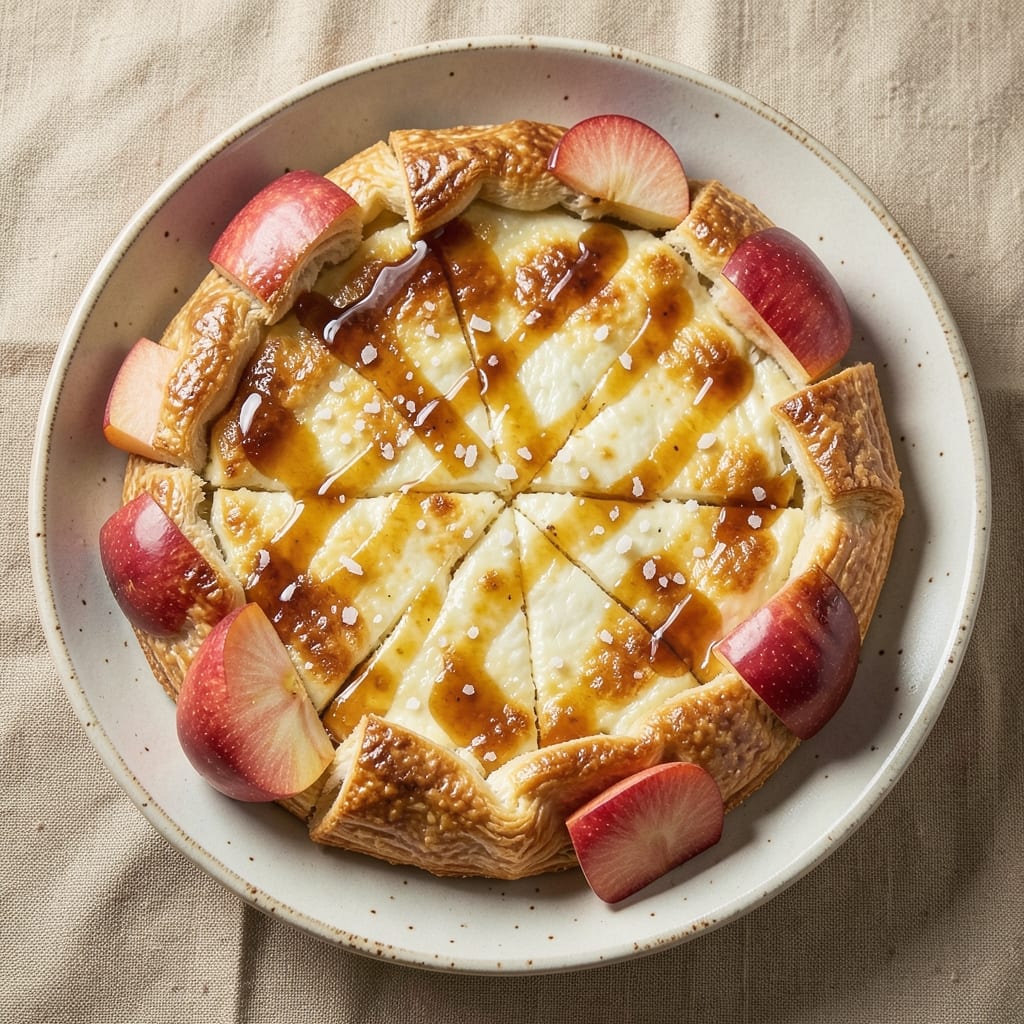
This apple brie galette delivers the perfect balance of flaky pastry, creamy brie, and caramelized apples in every bite. The secret lies in a simple yet effective dough technique that creates layers so delicate they practically melt in your mouth. I've perfected this recipe over countless weekend brunches, where it consistently becomes the star of the table.
The magic happens when you fold the brie and spiced apples into the dough, creating a rustic, free-form galette that bakes into golden perfection. Unlike traditional tarts, this recipe requires no fussy crust assembly—just a few simple folds and a 30-minute bake time. The result is a dessert that looks impressively homemade but comes together with minimal effort.
By the time it emerges from the oven, you'll have a warm, gooey center with crisp edges, where the brie has melted into a luscious blanket and the apples have caramelized into sweet, spiced perfection. The aroma alone will have everyone gathering around your table, anticipation building with every whiff of buttery pastry and warm cheese.
Serve it warm with a drizzle of honey or a sprinkle of flaky sea salt to enhance the flavors even further. This galette is perfect for holiday brunches, dinner parties, or even a cozy weeknight treat that feels special without the fuss. Let's get baking!
Ingredients for apple brie galette
Six simple ingredients transform into a golden, gooey masterpiece—flaky layers hugging sweet apples and creamy brie.
| Ingredient | Amount | Notes |
|---|---|---|
| All-Purpose Flour 🌾 | 2 ½ cups | Sifted for light texture |
| Unsalted Butter 🧈 | 1 cup | Cold, cubed for flakiness |
| Granulated Sugar 🍚 | ½ cup | For dough sweetness |
| Large Egg 🥚 | 1 whole | Room temperature |
| Salt 🧂 | ½ tsp | Fine sea salt preferred |
| Brie Cheese 🧀 | 8 oz | Rind removed, sliced |
| Apples 🍎 | 3 medium | Sweet-tart variety like Honeycrisp |
| Brown Sugar 🍚 | 2 tbsp | Packed for caramelization |
| Cinnamon 🌿 | 1 tsp | Ground, not cassia |
| Lemon Juice 🍋 | 1 tbsp | Freshly squeezed |
| Vanilla Extract 💧 | ½ tsp | Pure alcohol-free if preferred |
| Flaky Sea Salt 🧂 | 1 tbsp | For garnish |
| Honey 🍯 | 2 tbsp | For drizzling |
The butter is non-negotiable here—European-style unsalted gives the best flavor and flakiness. Plugrá or Land O'Lakes work in a pinch, but if you can splurge, President or Bergère make all the difference. Keep those butter cubes cold when cutting into the flour—it's the secret to those delicate layers. The flour should be sifted before mixing to avoid dense dough. I always use King Arthur for its protein balance, but any all-purpose will do. For the brie, local cheesemongers often have better options than grocery store brands—look for a soft, creamy texture with minimal rind.
No brie? Camembert or goat cheese works in a pinch, but the flavor won't be quite the same. Running short on apples? Pears or peaches are perfect substitutes—just reduce the lemon juice to 1 teaspoon. The brown sugar can be swapped for white sugar if needed, but the cinnamon is essential for that classic galette flavor. If you don't have vanilla extract, 1/4 teaspoon vanilla bean paste gives a similar depth. For the apples, Honeycrisp or Fuji are my go-tos—they hold their shape while caramelizing beautifully. Toss them with the spices and lemon juice right before folding into the dough to prevent browning.
The dough can be made a day ahead and kept wrapped in plastic in the fridge—bring it to room temp before rolling. Brie and apples can be prepped up to 2 hours ahead and stored in the fridge. Bake straight from the fridge if you're short on time—the cold dough creates even more steam for flaky layers. Leftovers? 3 days in the fridge, but honestly, this disappears fast. For make-ahead galettes, assemble completely (before baking) and freeze on a tray—bake straight from frozen with an extra 10 minutes. The honey drizzle should be warmed slightly before serving to make it pourable.
Why You'll Love This Recipe
- No-Rolling Needed: I swear by this—no fancy dough tricks. Just toss the flour, butter, and a pinch of salt together until it’s crumbly, then add water. That’s it. No standing at the counter for 10 minutes trying to coax a smooth dough.
- Sweet-Savory Magic: The caramelized apples on top of that creamy, warm brie? It’s like autumn in your mouth. The sugar in the filling turns the apples into little pockets of jammy goodness, while the butter in the crust makes every bite feel like a hug.
- Weeknight or WOW: Honestly, this is my go-to for both lazy Tuesdays and fancy dinner parties. Serve it with a simple salad for a no-fuss meal, or drizzle it with honey and sprinkle nuts for a showstopper. (Yes, even on a Tuesday night.)
- Leftovers? No Problem: Between us, the galette reheats like a dream—just 10 minutes in the oven and it’s just as good as fresh. Plus, you can make the dough ahead and store it in the fridge, so you’re never scrambling when guests pop by.
Step-by-step instructions for apple brie galette
Here's how to create a golden, flaky pastry hugging sweet apples and creamy brie.
Make the Pastry Dough
In a large bowl, whisk together the 2.5 cups all-purpose flour, 0.5 cup granulated sugar, and 0.5 teaspoon salt. Cut in the 1 cup cold cubed unsalted butter using a pastry cutter or your fingers until the mixture resembles coarse crumbs with pea-sized butter pieces. This ensures maximum flakiness in your galette.
Add the 1 whole large egg, 0.5 teaspoon vanilla extract, and 1 tablespoon lemon juice. Mix gently with a fork until the dough just comes together. If it's too dry, add 1 teaspoon cold water at a time. Form the dough into a disc, wrap in plastic, and refrigerate for at least 1 hour (or up to 2 days). The longer it chills, the better the layers will develop.
Prepare the Apple Filling
Peel, core, and slice the 3 medium apples into ¼-inch thick wedges. Toss them with 2 tablespoons brown sugar, 1 teaspoon cinnamon, and a pinch of the 1 tablespoon flaky sea salt. This sweet-spiced mixture will caramelize beautifully while baking, creating that perfect balance of sweet and tart flavors.
Arrange the apple slices in a circular pattern on a parchment-lined baking sheet, slightly overlapping them. This creates the classic galette shape while allowing the apples to caramelize evenly. Place the 8 ounces sliced brie cheese in the center of the apple circle, leaving a small border around the edges.
Assemble the Galette
Roll out the chilled dough on a floured surface to about ⅛-inch thickness. Gently lift the dough and drape it over the apple and brie filling, creating a rustic, uneven shape. Leave the center slightly open—this is what makes galettes look so beautiful and allows the filling to peek through. Trim any excess dough around the edges.
Brush the exposed dough with a little cold water, then sprinkle with additional 1 tablespoon flaky sea salt. Fold the edges toward the center, gently pressing to seal (but don't worry about a perfect seal—rustic is good!). Brush the top with the 2 tablespoons honey for extra shine and sweetness.
Bake to Golden Perfection
Preheat your oven to 375°F. Bake the galette for 35-40 minutes until the pastry is deep golden brown and the filling is bubbling. The edges should be crisp, while the center should still have a slight softness—this indicates the apples have caramelized but aren't mushy.
Let the galette rest for 10 minutes before serving. This resting time allows the juices to redistribute, ensuring each bite is creamy and flavorful. The contrast of the crisp, flaky pastry with the warm, gooey brie and caramelized apples is what makes this dessert truly special.
Pro Tips For Making Apple Brie Galette
- Chill the Dough First: I learned this the hard way—rolling out cold dough makes all the difference. Let the galette dough rest in the fridge for at least 30 minutes before shaping. It’ll be easier to handle and less likely to shrink while baking, so your edges stay crisp and defined.
- Prevent Overfilling the Center: This isn’t the prettiest method, but it works: arrange the apple slices in a loose circle, leaving a 1-inch gap at the center. When you fold the dough over, that empty space lets the filling puff up without spilling over the edges. (Yes, even if you’re impatient like me.)
- Use Cold Butter for Flaky Layers: Cut that unsalted butter into tiny cubes—no bigger than a pea—and freeze them for 10 minutes before mixing into the dough. Cold butter creates those melt-in-your-mouth layers, and skipping this step just gives you a denser crust. Trust the process.
- Brush Edges with Egg Wash: After folding the dough, whisk the egg with a splash of water and brush it only on the outer edges, not the center. This guarantees a golden, shatteringly crisp rim while keeping the top soft enough to hold the brie. (Your future self will thank you.)
Regional styles of this dish
French Rustic Tradition
The galette originated in France as a rustic alternative to fussy tart crusts. In Brittany, apple galettes were a staple during harvest season, using seasonal fruit and simple pastry. The free-form shape comes from traditional baking methods where cooks folded dough over fillings without precise measurements. I love how this recipe keeps that charming imperfection—no one ever complains about a slightly uneven edge when the flavors are this good! 🍏
American Brunch Twist
While French galettes often use just fruit, American versions frequently incorporate brie for extra richness. This combination became popular in the 1990s as brie became more accessible in US grocery stores. The sweet-spiced apple filling balances the creamy cheese perfectly, making it a brunch crowd-pleaser. I first tried this version at a Vermont farm-to-table café where they served it with maple syrup—trust me, it changed how I think about weekend breakfasts. 🥞
Canadian Maple Adaptation
Across the border, Canadian cooks often replace honey with maple syrup in the glaze and add a touch of maple sugar to the filling. The deep caramel notes complement the apples beautifully. I've made this version using 100% pure Canadian maple syrup instead of honey, and it adds a wonderful autumnal flavor. Pair it with a dollop of whipped cream for the ultimate cozy dessert. 🍁
British Cheeseboard Fusion
In the UK, you'll often find galettes made with local cheeses like Stilton or Cheddar instead of brie. The sharper flavors stand up well to the sweet apples. I've experimented with aged cheddar> and 1 tablespoon mustard powder> in the filling for a tangy twist that works surprisingly well. The British also tend to serve galettes with clotted cream rather than honey. 🧀
Southern U.S. Sweet Tea Version
Down South, some bakers add a splash of sweet tea> to the dough for moisture and depth. The Southern heat also makes this a popular dessert for summer gatherings. I've made this version with ¼ cup sweet tea> substituted for some of the water in the dough, and it adds a lovely subtle sweetness. Serve with a glass of iced tea for the ultimate Southern treat. ☀️
Nutrition facts
Frequently asked questions
Can I make this galette ahead of time?
Assemble the galette completely (including the filling) and refrigerate it for up to 24 hours before baking. For make-ahead convenience, you can even freeze the assembled galette on a parchment-lined tray. Bake straight from frozen, adding 5-10 extra minutes to the baking time. The dough stays fresh longer when chilled, and the flavors meld beautifully overnight.
What if my dough cracks or tears when assembling?
Don't stress—rustic imperfections are part of the charm! If the dough tears, simply press the edges together gently or use extra dough to patch it up. For extra strength, brush any cracks with cold water before folding the edges. The key is to keep everything cold—warm dough is more prone to cracking. A little imperfection actually makes the galette look more authentic and homemade!
How do I know when the galette is fully baked?
Your galette is done when the edges are deep golden brown and the center has just a slight softness (not jiggly). The internal temperature should reach 190°F in the filling. If the top browns too quickly, tent it with foil after 20 minutes. The apples should be tender but still hold their shape—overbaking turns them mushy. Let it rest 10 minutes before serving to let the juices set.
Can I substitute other cheeses besides brie?
Yes! For a milder flavor, try Camembert or goat cheese. For something sharper, aged cheddar or Stilton work well (reduce to 6 ounces for balance). Avoid very salty cheeses like feta—they'll overpower the sweet apples. The cheese should melt beautifully and complement, not dominate, the apple filling. Always remove rinds for a cleaner texture.
Why did my galette turn out dense instead of flaky?
Dense galettes usually happen when the butter melts too much during mixing or the dough isn't chilled long enough. Keep your butter cold and cut it into the flour quickly. Chill the dough for at least 1 hour (longer is better). Also, avoid overworking the dough—just mix until it comes together. If using pre-shredded cheese, drain excess moisture first, as it can make the dough soggy.