
Desserts
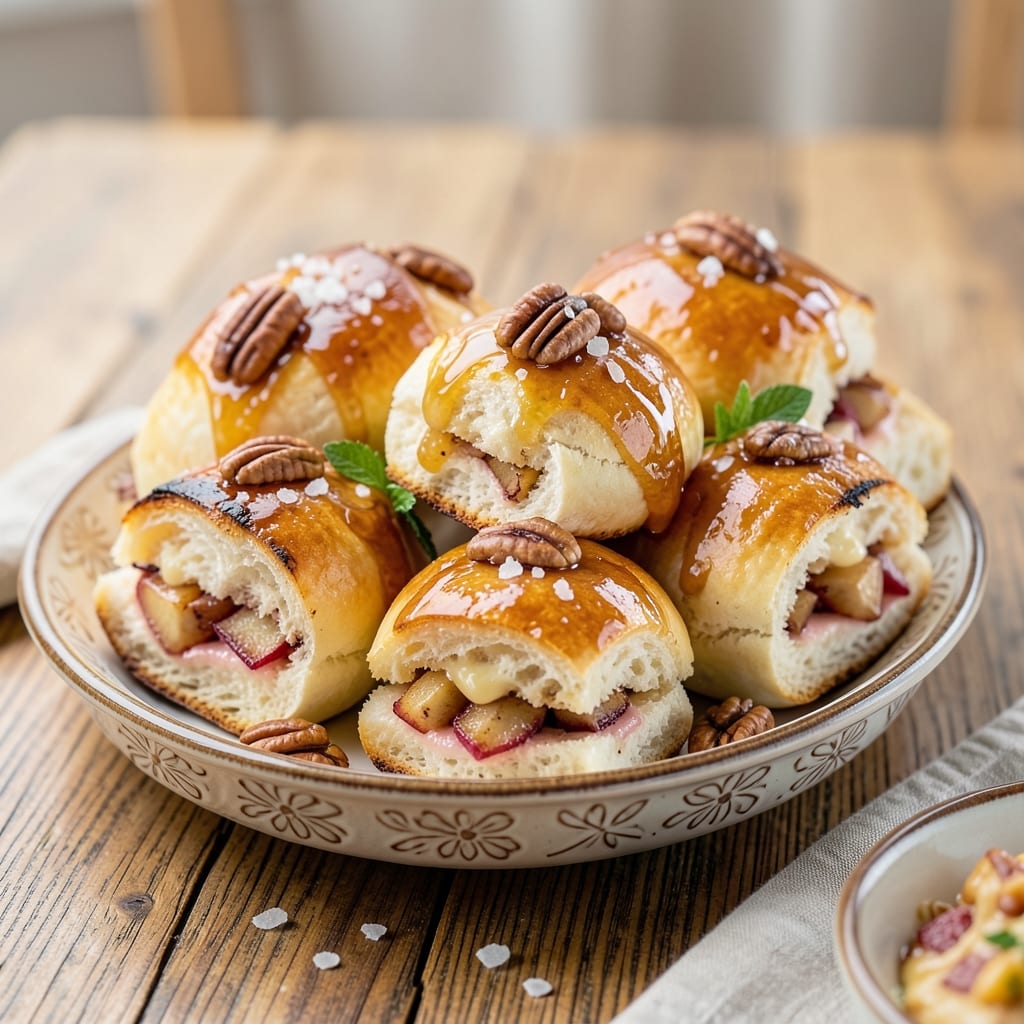
This apple brioche buns recipe delivers flaky layers of buttery dough wrapped around spiced apple filling—perfect for breakfast, brunch, or dessert. 💛 The secret lies in a properly enriched dough that develops tender, airy layers while maintaining structure, paired with a caramelized apple center that balances sweetness with subtle warmth.
The brioche dough requires patience—proofing and resting times are critical for achieving that signature texture—but the results are worth every minute. While traditional brioche relies on extensive kneading, this method simplifies the process without sacrificing flavor or texture. The apple filling transforms ordinary buns into something extraordinary, with cinnamon and nutmeg adding depth that complements the dough's richness.
What you’ll end up with is golden, pillowy buns with crisp edges and a soft, buttery interior, all wrapped around a fragrant apple filling that’s tender yet holds its shape. The contrast between the flaky dough and the spiced apple creates a harmony of textures and flavors that makes these buns irresistible. Whether you serve them warm with butter or glaze them for extra shine, they’re guaranteed to impress.
This recipe scales beautifully—ideal for feeding a crowd or making ahead for special occasions. The dough can be prepared in advance, and the buns freeze well, making them a practical yet luxurious choice for any gathering. Let’s get started on creating these showstopping buns.
Ingredients for apple brioche buns
Twelve ingredients for golden, pillowy buns with flaky layers and spiced apple filling inside.
| Ingredient | Amount | Notes |
|---|---|---|
| All-Purpose Flour 🌾 | 4 cups | Sifted for light texture |
| Unsalted Butter 🧈 | 1 cup | Cold, cubed for dough |
| Granulated Sugar 🍚 | ¼ cup | For enriched brioche |
| Large Eggs 🥚 | 4 whole | Room temperature preferred |
| Whole Milk 🥛 | ¾ cup | Warmed for better mixing |
| Active Dry Yeast 🍞 | 0.03 oz | 1 packet or 2.25 tsp |
| Salt 🧂 | ½ tsp | Fine sea salt preferred |
| Granulated Sugar 🍚 | ½ cup | For apple filling |
| Ground Cinnamon 🌿 | 2 tsp | Freshly ground preferred |
| Ground Nutmeg 🌿 | ½ tsp | Freshly grated preferred |
| Apples 🍎 | 4 medium | Peeled, cored, diced |
| Lemon Juice 🍋 | 1 tbsp | Freshly squeezed |
| Unsalted Butter 🧈 | 2 tbsp | Melted for filling |
| Egg Wash 🥚 | 1 whole | 1 egg beaten with 1 tbsp milk |
| Coarse Sugar 🍚 | ¼ cup | For topping |
The butter and eggs are non-negotiable for that signature brioche texture. European-style butter (like Plugrá) has higher fat content, which gives better layers. If you can't find it, Land O'Lakes or Kerrygold work well too. The apples should be firm and slightly tart—Granny Smith or Honeycrisp are ideal, but Fuji or Gala work in a pinch. Store-bought apples are fine, but if you have time, peel and dice them yourself for better texture. The yeast is the heart of the dough—check the expiration date and make sure it's fresh.
No European butter? Substitute with a mix of butter and shortening—replace half the butter with Crisco for extra flakiness. Out of cinnamon? Cardamom or allspice can add depth, though the flavor will differ. The filling can be prepped ahead and refrigerated for 24 hours—the flavors meld beautifully. For a vegan option, use plant-based butter and flax eggs (1 tbsp ground flaxseed + 3 tbsp water per egg), though the texture will be slightly denser. The dough can be made a day ahead and refrigerated, but let it come to room temperature before shaping.
The dough needs time to rest—at least 2 hours at room temperature or overnight in the fridge. This develops the gluten and flavor. Once shaped, cover the buns with a damp towel and let them proof in a warm place until doubled in size—about 1-1.5 hours. They freeze beautifully after baking: cool completely, wrap in plastic, and store for up to 3 months. To reheat, warm in a 350°F oven for 10 minutes to restore that fresh-baked goodness. The filling can also be made ahead and stored in the fridge for 3 days or frozen for 3 months.
Why You'll Love This Recipe
- No-Knead Magic: Between us, this dough is ridiculously forgiving. Toss the flour, softened butter, and warm milk together—no stand mixer, no fuss—and let the brioche’s natural rise do the heavy lifting. I’ve made these with cold hands and still ended up with golden, pillowy buns.
- Butter-Sugar Bliss: That first bite? The tender crumb from the brioche, the caramelized apples, and the buttery richness—it’s like dessert and breakfast had a baby. Honestly, the sugar in the dough and the apples work together so well, you’ll want to eat them straight out of the pan.
- Weekday Hero: Freeze half the batch before baking, and you’ve got breakfast for lazy mornings or a quick snack for kids’ lunches. I keep a stash in my freezer because reheating them in the oven (5 minutes!) beats cereal any day.
- Budget Breakfast Win: You’re using pantry staples—flour, butter, sugar—and a few eggs, so this won’t break the bank. Plus, the brioche dough stretches far enough to make a dozen buns, meaning fewer trips to the bakery and more money for coffee. (Yes, even on a Tuesday night.)
Step-by-step instructions for apple brioche buns
Here's how to create golden, flaky brioche buns with a perfectly spiced apple filling.
👨🍳 Step 1: Prepare the Brioche Dough
In a stand mixer fitted with the dough hook, combine the 4 cups all-purpose flour, 0.5 tsp salt, and 0.03 oz active dry yeast. Mix on low speed for 30 seconds to distribute evenly. Add the 1 cup cold cubed unsalted butter and mix on low until it begins to incorporate, then increase to medium speed for 3-4 minutes until the dough is smooth and elastic.
In a separate bowl, whisk together the 4 whole large eggs, 0.75 cup warm whole milk, 0.25 cup granulated sugar, and 1 tbsp lemon juice. With the mixer running on low, gradually pour the wet ingredients into the flour mixture. Increase speed to medium and knead for 5-7 minutes until the dough pulls away from the sides of the bowl and forms a smooth, elastic ball.
Transfer the dough to a lightly greased bowl, cover with plastic wrap, and let rise in a warm place for 1-2 hours or until doubled in size. The dough should spring back slowly when poked with a finger—this indicates proper fermentation. Here's the thing—don't rush this step. Proper rising creates those signature flaky layers.
🍳 Step 2: Make the Apple Filling
While the dough rises, prepare the filling by combining the 4 peeled, cored, and diced medium apples, 0.5 cup granulated sugar, 2 tsp ground cinnamon, 0.5 tsp ground nutmeg, and 2 tbsp melted unsalted butter in a saucepan. Cook over medium heat for 8-10 minutes, stirring occasionally, until the apples soften and release their juices.
Remove from heat and let cool completely. The filling should thicken slightly as it cools—this helps prevent the buns from becoming soggy. If the filling is too liquidy, cook it for another 2-3 minutes to reduce. I like to press the apples lightly with a potato masher for a slightly chunky texture that holds its shape in the buns.
🥘 Step 3: Shape and Fill the Buns
Once the dough has risen, punch it down to release air and divide it into 12 equal portions (about 3.5 oz each). Roll each portion into a ball and flatten slightly into a 4-inch round. Using a small bowl or round cutter, press a well into the center of each round, creating a ring shape.
Fill each ring with about 1 tablespoon of the cooled apple filling, pressing down gently to secure. Bring the edges of the dough together to seal the filling completely. This ensures the filling stays contained during baking and creates those beautiful filled buns. Place the filled buns on a parchment-lined baking sheet, cover with plastic wrap, and let rise for 30-45 minutes until puffy.
🔥 Step 4: Bake to Golden Perfection
Preheat your oven to 375°F. Brush the risen buns with the egg wash (1 egg beaten with 1 tbsp milk) and sprinkle generously with the 0.25 cup coarse sugar on top. Bake for 20-25 minutes until the buns are deep golden brown and the internal temperature reaches 190°F.
Here's where it gets critical: watch for the edges to turn golden while the centers remain slightly soft. The buns will continue cooking as they cool. Real talk—if you open the oven door early, the buns will deflate. Let them bake undisturbed until they pass the "golden brown" test. The sugar topping should caramelize beautifully, creating that perfect crunch.
⏰ Step 5: Rest and Serve
Transfer the buns to a wire rack and let cool for 10 minutes before serving. This resting period allows the filling to set slightly and the buns to firm up. The aroma at this point is incredible—warm brioche with spiced apple filling and that caramelized sugar crust.
For the best experience, serve warm with a dusting of powdered sugar or a dollop of whipped cream. If you need to reheat, wrap them in a damp towel and warm in a 350°F oven for 5-7 minutes. The key is to maintain that flaky texture and warm filling—these buns are best enjoyed fresh from the oven.
Pro Tips For Making Apple Brioche Buns
- CHILL THE APPLE FILLING: I learned this the hard way—skip pre-cooking the apple mixture, then stuffing it into warm dough. Instead, toss sliced apples with sugar, lemon juice, and butter, then refrigerate for at least 30 minutes. The cold filling prevents the dough from overproofing while you shape, and the apples release their juices just enough to keep the buns tender, not soggy.
- WEIGH THE BUTTER: Your recipe calls for "softened butter," but I was skeptical until I tried weighing it cold. Cut the butter into small cubes, toss them in flour, and press into the dough—this keeps the brioche from getting greasy or overly rich. (Yes, even if you're impatient like me.) The cubes melt at the right moment, creating those perfect pockets of flakiness.
- DON’T OVERMIX THE DOUGH: I used to punch and fold brioche dough until it looked smooth, but that’s a fast track to tough buns. Mix just until the flour is incorporated, then let the gluten relax during the first rise. The brioche should be sticky but not fight you—think "shaggy dog" texture, not bread dough. Overworking it kills the lightness.
- PROOF IN A COOLER SPOT: Your kitchen’s warm corner is the enemy of even proofing. Place the shaped buns in a draft-free spot where the temperature hovers around 70°F (21°C)—like the top of the fridge or a turned-off oven with the light on. This gives you time to finish shaping without them rising too fast, and the flavor develops more deeply than in a hot kitchen. (Your future self will thank you.)
Regional styles of these flavors
French Classic
In France, brioche buns are often called "brioche aux pommes" and are a staple in bakeries across Normandy and Brittany. The French approach focuses on a richer dough with higher butter content—sometimes up to 1.5 cups—for an ultra-tender crumb. They typically use Calville apples, a local variety with firm texture and mild sweetness, paired with vanilla bean instead of cinnamon for a sophisticated twist. 🌟
For an authentic touch, brush the buns with crème pâtissière (pastry cream) after baking and dust with powdered sugar. The French also love serving them with hot chocolate or caramel sauce for dipping. If you can't find Calville apples, Granny Smith works well when cooked with a splash of apple cider for depth.
Southern U.S. Twist
In the American South, apple brioche buns often get a spicier kick with additions like chopped pecans or bourbon-soaked raisins in the filling. The dough might include a pinch of cardamom alongside cinnamon, reflecting German and Scandinavian influences. I’ve seen Southern versions topped with pecan praline bits for extra crunch and sweetness. 🥜
For a true Southern touch, serve these buns warm with sweet tea or peach cobbler on the side. The high humidity in the South also means the dough benefits from an extra 15 minutes of proofing to prevent cracking. Use Honeycrisp apples for their balance of sweetness and tartness—this variety holds up well during baking.
Scandinavian Cardamom
Nordic countries like Sweden and Denmark often infuse their brioche with cardamom instead of cinnamon, creating a fragrant, slightly floral note. The filling might include dried cranberries or lingonberries for a tart contrast. In Sweden, these buns are called "äpplebullar" and are traditionally served during Midsummer celebrations. 🌸
For a Scandinavian-inspired version, replace the cinnamon with 1.5 tsp ground cardamom and add ½ cup dried cranberries to the filling. The dough benefits from a longer fermentation (up to 3 hours) in a cool environment (around 70°F) to develop deeper flavors. Serve with lingonberry jam or whipped cream for a festive touch.
Japanese Matcha
In Japan, apple brioche buns often incorporate matcha powder into the dough for a subtle earthy sweetness. The filling might include grated daikon radish or shredded persimmon alongside apples for texture. These buns are popular in kaiseki-style desserts and are sometimes dusted with kinako (roasted soybean flour) for a nutty finish. 🍵
To make a Japanese-inspired version, add 1 tsp matcha powder to the dough and mix in ½ cup grated daikon with the apples. The filling should cook for an extra 5 minutes to soften the daikon completely. Serve these buns with green tea or red bean paste for a traditional pairing.
Nutrition facts
Frequently asked questions
Can I make these brioche buns without a stand mixer?
The dough can be mixed by hand, though it will take more effort. In a large bowl, combine the 4 cups flour, 0.5 tsp salt, and 0.03 oz yeast. Cut in the 1 cup cold butter using a pastry cutter or your fingers until it resembles coarse crumbs. Gradually add the wet ingredients and knead vigorously for 8-10 minutes until the dough is smooth and elastic. The key is patience—hand-kneading develops gluten just as effectively as a mixer.
Why did my apple filling turn watery?
Watery filling usually happens when the apples release too much liquid during cooking. To fix this, cook the filling for an extra 2-3 minutes to reduce the juices, or mash the apples slightly with a potato masher before baking to absorb excess moisture. For extra insurance, add 1 tsp cornstarch to the filling while cooking—it thickens beautifully. Always let the filling cool completely before filling the buns to prevent soggy dough.
How can I tell when the brioche dough is fully proofed?
The dough is ready when it's doubled in size and springs back slowly when you gently press it with one finger. If it springs back immediately, it needs more time. A simple test: poke the dough with your finger—if the indentation remains, it's proofed. For best results, proof in a warm place (75-80°F) where the dough can rise properly without drying out. Covering with a damp towel helps maintain moisture.
Can I use frozen apples for the filling?
Yes, but thaw them first and pat them completely dry with paper towels to remove excess moisture. Frozen apples work well, but they may release more liquid than fresh ones. Cook them for 1-2 extra minutes to reduce any excess juice. For best texture, use a mix of fresh and frozen apples—this balances moisture control with flavor. Always peel and core before cooking to ensure even cooking.
What's the best way to store leftover brioche buns?
Store cooled buns in an airtight container at room temperature for up to 2 days, or freeze for up to 3 months. To reheat, wrap in a damp towel and warm in a 350°F oven for 5-7 minutes until heated through. The filling should stay warm and gooey, while the dough regains its flaky texture. For extra freshness, brush with a little milk or cream before reheating to restore moisture.