
Soups & Stews
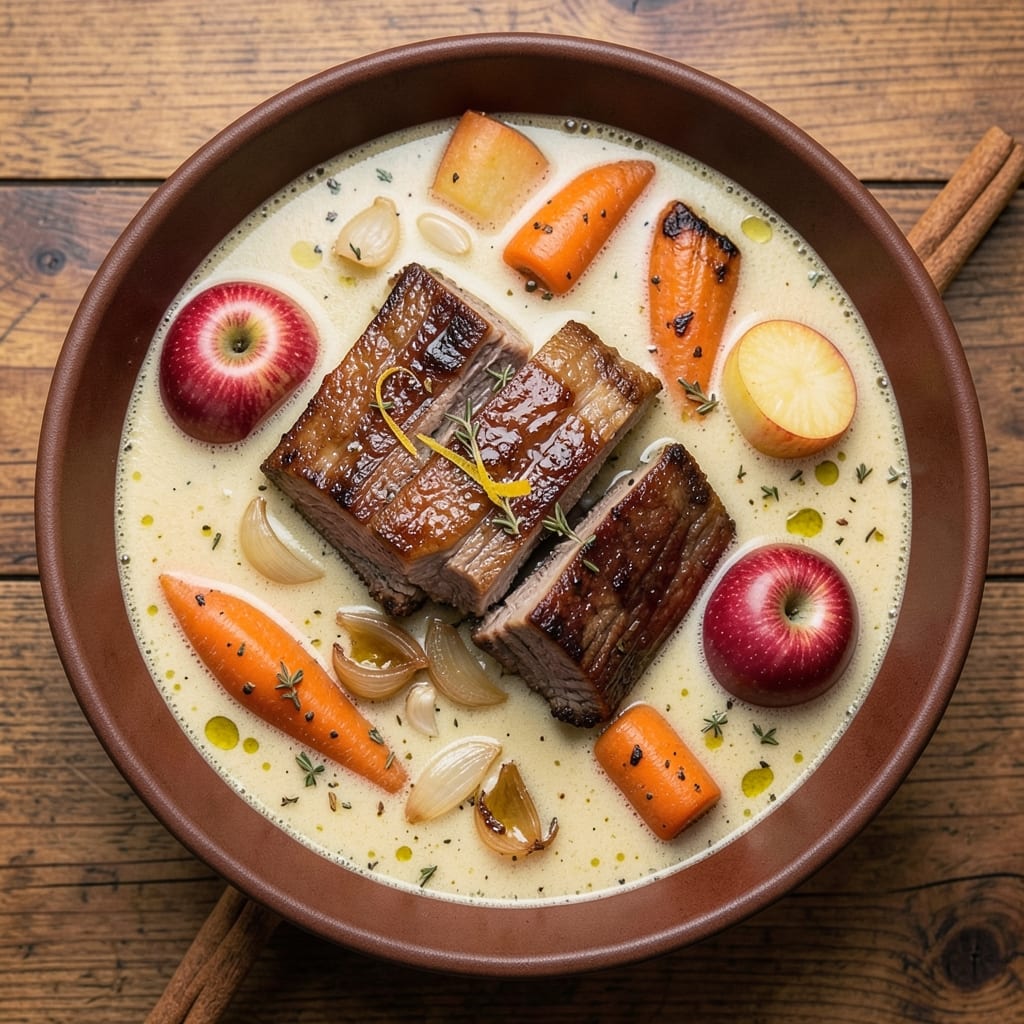
This apple carrot beef rib soup transforms humble ingredients into a deeply comforting bowl of rich, slow-simmered perfection. The secret lies in braising beef ribs until they're fork-tender, then blending them into the broth for unmatched depth—where sweet apples and earthy carrots create a harmonious balance of flavors that lingers long after the last spoonful. What starts as a simple pot of ingredients becomes a restaurant-worthy meal through patience and technique.
The beauty of this recipe is in its layers: caramelized onions form the flavor base, while cinnamon and star anise infuse the broth with subtle warmth. As the soup simmers for hours, the beef ribs dissolve into the liquid, creating a velvety texture that coats every spoonful. The apples add just enough sweetness to complement the savory beef, while the carrots contribute natural sweetness and vibrant color. This isn't just soup—it's a complete meal in one bowl.
By the time you're done, you'll have a pot of soup that smells like home and tastes even better the next day. The broth is rich but not heavy, the vegetables are tender yet still hold their shape, and the beef provides hearty protein that keeps you satisfied. Serve it with crusty bread to soak up every last drop of that flavorful liquid. The result is a soup that's both comforting and impressive, perfect for chilly evenings or when you want to make something special without spending hours in the kitchen.
This recipe scales beautifully for gatherings or leftovers, making it ideal for meal prep. The slow cooking process allows flavors to develop fully, ensuring each bowl tastes as good as the first. Whether you're feeding a family or treating yourself to a cozy dinner, this apple carrot beef rib soup delivers on warmth, flavor, and satisfaction. Let's get started on creating something truly memorable.
Ingredients for apple carrot beef rib soup
Six servings of rich, slow-cooked comfort from these carefully chosen ingredients.
| Ingredient | Amount | Notes |
|---|---|---|
| Beef Ribs 🥩 | 3 lb | Bone-in, cut into 2-inch pieces |
| Yellow Onions 🧅 | 2 whole | Medium, thinly sliced |
| Carrots 🥕 | 1 ½ lb | Medium, peeled and chopped |
| Apples 🍎 | 2 medium | Sweet-tart variety, peeled and chopped |
| Garlic Cloves 🧄 | 6 cloves | Fresh, minced |
| Cinnamon Sticks 🌿 | 2 whole | For infusion |
| Star Anise 🌶️ | 2 whole | For depth of flavor |
| Beef Broth 💧 | 6 cups | Low-sodium preferred |
| Apple Cider Vinegar 🍏 | ½ cup | For brightness |
| Tomato Paste 🍅 | ¼ cup | For richness |
| Olive Oil 🫒 | ½ cup | Extra-virgin for richness |
| Salt 🧂 | 1 ½ tsp | Kosher or sea salt |
| Black Pepper 🌶️ | 1 tsp | Freshly ground preferred |
| Fresh Thyme 🌿 | ¼ cup | Leaves only, chopped |
The beef ribs are the heart of this soup—look for well-marbled cuts at the butcher counter or pre-cut beef ribs from Costco or Trader Joe's. The marrow in the bones adds incredible depth to the broth. Avoid lean cuts as they won't become tender enough. For the apples, Honeycrisp or Fuji work best—they hold their shape while adding sweetness. Carrots should be vibrant orange, not dull or shriveled. Organic carrots from the produce section have better flavor. The star anise and cinnamon sticks can be found in the spice aisle at Whole Foods or Penzeys for the best quality.
No beef broth on hand? Homemade chicken broth with a splash of soy sauce works in a pinch, though the flavor won't be identical. Substitute dried thyme for fresh at one-third the amount if needed. The apple cider vinegar can be swapped for white vinegar or lemon juice, though it'll change the flavor profile slightly. Pre-cut frozen carrots are fine, but fresh will give you better texture. For the tomato paste, Trader Joe's squeeze tubes are perfect—they're convenient and keep well. The onions should be caramelized slowly to build flavor, so don't rush this step.
This soup tastes even better the next day as flavors meld. Store in airtight containers for up to 5 days in the fridge or 3 months in the freezer. The broth freezes beautifully, so you can portion it out for quick meals. Label containers clearly since the color changes as it cooks. For meal prep, make a double batch—the extra portions make great lunches and reheat perfectly. If you have leftovers, consider blending half the batch for a creamy version next time.
Why You'll Love This Recipe
- Fewer Cuts, Same Magic: I swear by this—just rough-chop the onions and carrots, toss in the ribs, and let the slow simmer do the work. No fancy knife skills required, and the apples? They practically melt into sweetness without any effort.
- Sweet-Savory Balance: That first bite where the tender beef meets the caramelized apples and sharp garlic? It’s like a hug for your taste buds. The onions add depth, but the apples keep it bright and unexpected—no heavy, one-note broth here.
- Weeknight to Potluck: Make a big batch on Sunday, and you’ve got lunch for days. Or bring it to a holiday gathering—it’s hearty enough for a crowd but still feels special. My in-laws think I’m a genius because it’s always a hit.
- Budget Meal, Big Payoff: Beef ribs might sound fancy, but they stretch across multiple meals here. The apples and carrots bulk it up without breaking the bank, and the leftovers? Even better tomorrow with a splash of soy sauce or a cracker on top.
Step-by-step instructions for apple carrot beef rib soup
This rich, slow-cooked soup delivers deep beef flavor with sweet-tart apple and carrot notes—every step builds complexity.
Sear the Beef Ribs for Maximum Flavor
Heat the 0.5 cup olive oil in a large Dutch oven over medium-high heat until shimmering. Working in batches, add the 3 lb beef ribs and sear for 3-4 minutes per side until deeply browned. This caramelization forms the flavor foundation for the entire soup.
Don't crowd the pan—this prevents steam from forming, which keeps the ribs from browning properly. Once all ribs are seared, remove them and set aside. The browned bits left in the pot (fond) will dissolve into the broth later, adding incredible depth.
Build the Aromatic Base with Onions and Spices
In the same Dutch oven, add the 2 whole yellow onions and cook for 5-6 minutes until softened and golden. Stir occasionally to prevent burning. Add the 1.5 lb carrots and cook for another 3 minutes, stirring frequently.
Next, add the 2 whole cinnamon sticks, 2 whole star anise, and 6 cloves garlic cloves. Cook for 1 minute until fragrant—this releases their essential oils and infuses the base with warm, aromatic notes. The spices will steep throughout the cooking process, creating layers of flavor.
Develop the Broth with Vinegar and Tomato Paste
Pour in the 0.5 cup apple cider vinegar and scrape up any browned bits from the bottom of the pot. This deglazing step captures all the meaty flavors you worked so hard to create. Stir in the 0.25 cup tomato paste and cook for 1 minute until it darkens slightly and loses its raw taste.
Add the 6 cups beef broth and bring the mixture to a gentle boil. Skim off any foam that rises to the surface—this removes impurities and ensures a clear broth. Return the seared beef ribs to the pot, along with the 2 medium apples and 1.5 tsp salt. The apples will break down during cooking, adding natural sweetness to balance the rich beef flavors.
Simmer Until the Meat is Fork-Tender
Reduce the heat to low and cover the pot. Let the soup simmer gently for 2-2.5 hours until the beef ribs are fork-tender and easily pulled apart. This long cooking time is crucial—it breaks down the connective tissue in the beef, creating a melt-in-your-mouth texture.
Check the liquid level occasionally and add hot water if needed to maintain coverage. The ribs should be falling off the bone, and the broth should have thickened slightly from the natural release of collagen. If the soup reduces too much, you can add a splash of water or broth later to reach your desired consistency.
Finish with Fresh Thyme and Black Pepper
Once the beef is tender, remove the cinnamon sticks and star anise. Stir in the 0.25 cup fresh thyme and 1 tsp black pepper. Taste and adjust the seasoning—you may need to add more salt depending on the saltiness of your broth. The thyme adds a bright, herbal note that complements the sweet apples and rich beef.
For the smoothest texture, use two forks to shred the beef ribs directly in the pot. Discard any large bones or cartilage. The soup should have a velvety consistency with tender beef, soft carrots, and chunks of apple. Serve immediately with crusty bread to soak up every last drop of this deeply flavorful soup.
Pro Tips For Making Apple Carrot Beef Rib Soup
- BROWN THE RIBS FIRST: I learned this the hard way—skipping the sear means flavorless broth. Pat the ribs dry, then hit them with high heat in a Dutch oven for 3-4 minutes per side until deeply browned. That crust? It’s what turns your soup from "meh" to "wow" later.
- PEEL AND GRATE CARROTS: Whole carrots stay stubbornly tough. Instead, peel and grate them—it cuts cooking time in half and gives the soup a silky texture. (Yes, even if you’re impatient like me.) Skip the chopping; the grater does the work faster.
- USE TART APPLES ONLY: Honeycrisp or Fuji? Nope. This soup needs Granny Smiths—their sharp acidity cuts through the richness of the beef. If you’re fresh out, a splash of lemon juice at the end works, but tart apples are non-negotiable for balance.
- SIMMER LOW AND LONG: After adding liquids, resist the urge to boil. A gentle simmer (just bubbles breaking the surface) for 2-3 hours keeps the ribs tender without turning the broth cloudy. I know, I know—it’s tempting to rush, but this is the thing that matters most.
Pro cooking tips for apple carrot beef rib soup
Sear Like a Pro
For maximum flavor, sear your 3 lb beef ribs in batches—never overcrowd the pan. I use a 12-inch cast iron Dutch oven from Lodge because it retains heat beautifully. Work in 2 batches to ensure deep browning on all sides. The key is patience: let each piece develop a rich crust before removing. This caramelized layer is where the magic happens—it dissolves into the broth later, creating depth. 🔥
Spice Infusion Secrets
Whole spices like cinnamon sticks and star anise need time to release their flavors. Add them early and let them simmer for the full 2-2.5 hours—this gentle infusion prevents bitterness. I like to crush the star anise lightly with the side of my knife before adding to intensify the anise notes. Remove them before serving so they don't overpower the dish.
Broth Clarity Tip
Skimming foam during the initial boil removes impurities and prevents cloudiness. Use a fine-mesh ladle or a spoon to gently scoop off the foam that rises to the surface. This step is especially important if you're using store-bought broth, which can sometimes be murky. The result is a beautifully clear broth that lets the vibrant colors of the carrots and apples shine through.
Apple Selection Matters
Sweet-tart apples like Honeycrisp or Fuji hold their shape better than softer varieties. Avoid overly ripe apples—they'll turn mushy during cooking. I like to peel and chop them into ½-inch chunks so they soften but don't disappear completely. The natural sweetness balances the rich beef perfectly, creating that signature apple-carrot harmony.
Low-and-Slow Simmering
Maintain a gentle simmer—not a rolling boil—to prevent the broth from becoming cloudy. I keep the heat at low-medium and check occasionally to ensure bubbles break the surface gently. The slow cook transforms tough beef ribs into tender, shreddable meat. If your ribs aren't tender after 2 hours, add 30 minutes more—they're worth the wait. ✨
Final Texture Trick
For a velvety finish, blend about half the soup after removing the spices. Use an immersion blender right in the pot for convenience. The blended portion adds body while keeping the texture interesting. I like to leave some chunks for contrast—it makes each spoonful more dynamic. Serve with a sprinkle of fresh thyme and a drizzle of Trader Joe's hot honey for that restaurant-quality touch.
Nutrition facts
Frequently asked questions
Can I substitute beef ribs with another cut of beef?
Yes, but choose wisely! For best results, use chuck roast or short ribs—they're more forgiving and develop rich flavor when slow-cooked. Avoid lean cuts like sirloin, as they won't become tender enough. If using chuck roast, cut it into 1.5-inch cubes and increase cooking time to 3 hours for optimal tenderness.
How do I adjust the sweetness if I don't like apples in soup?
Reduce the apples to 1 medium apple or omit them entirely. For sweetness, add ½ cup diced pear (holds shape better) or 1 tablespoon honey during the final 30 minutes of cooking. The carrots already provide natural sweetness, so you won't lose the balanced flavor entirely.
Can I make this soup in a slow cooker? Sear the ribs first in a skillet, then transfer everything to the slow cooker. Cook on low for 7-8 hours or high for 4-5 hours until beef is tender. The slow cooker's gentle heat ensures perfect tenderness without monitoring. Just
Why does my soup taste bitter?
Bitterness usually comes from overcooked spices or reduced broth. Skim foam carefully during boiling to prevent cloudiness, and never let the broth boil vigorously after adding spices. If it's too strong, add 1 cup fresh apple juice or ½ cup heavy cream to balance the flavor. Also, check your star anise—if it tastes bitter, reduce to 1 pod next time.
How can I make this soup vegetarian?
Replace beef with 2 cups dried lentils or 1 lb mushrooms (portobello or shiitake). Use vegetable broth and add 1 tablespoon soy sauce for umami depth. Keep the apples and carrots but reduce cooking time to 45-60 minutes once the vegetables are tender. The texture will be lighter but still hearty.