
Desserts
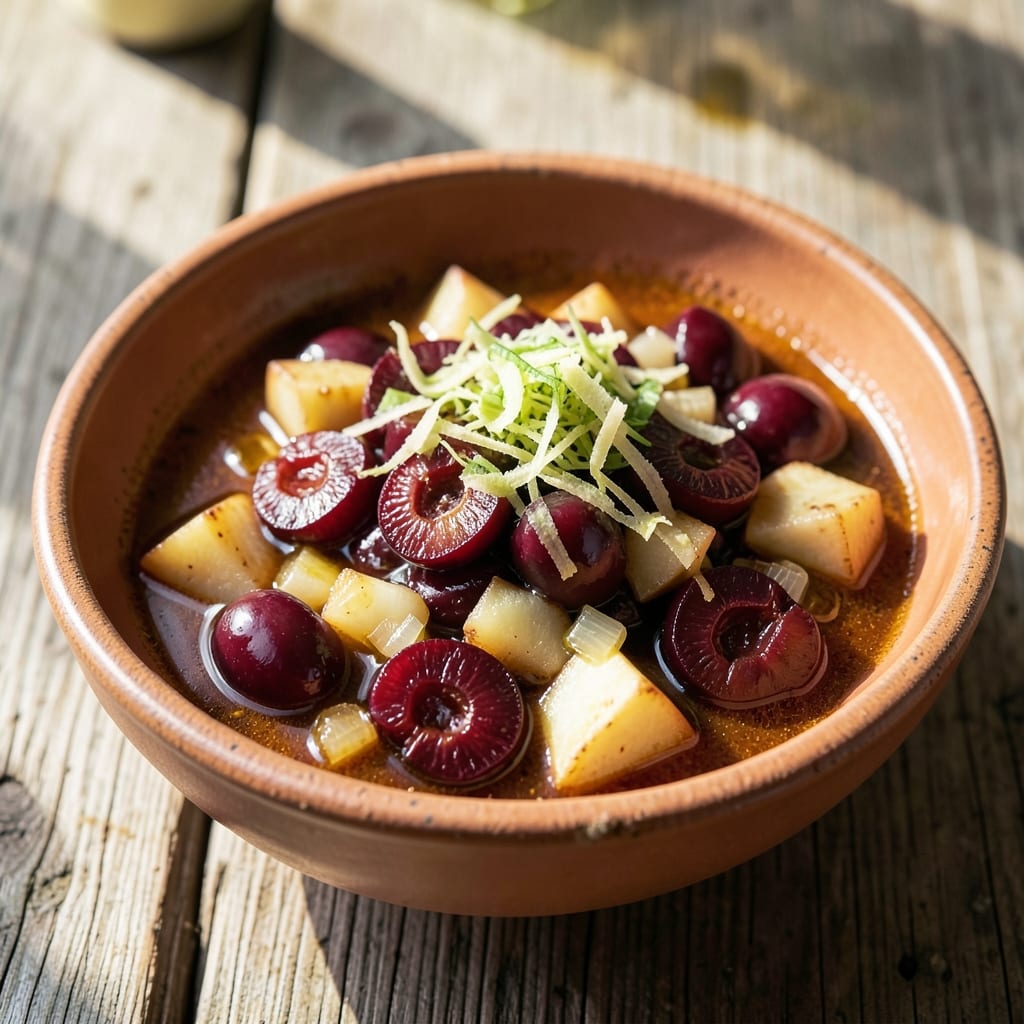
This apple cherry chutney recipe transforms tart apples and sweet cherries into a vibrant, fruit-forward preserve that brightens everything it touches. The secret lies in balancing natural sweetness with acidity—just enough lemon and vinegar to keep sugar crystals at bay while preserving that fresh-picked flavor. I developed this version after struggling with cloying, grainy chutneys that lacked depth, and the result is a smooth, versatile condiment that shines on cheese boards, sandwiches, or even as a glaze for roasted meats.
The magic happens in the simmering process, where spices like cinnamon and cardamom meld with the fruit to create layers of warmth and complexity. What makes this chutney truly special is its adaptability—whether you prefer a chunky texture with visible fruit pieces or a smooth consistency for spreading, this recipe delivers. The sterilization method ensures it keeps beautifully in the fridge for up to 3 months, making it perfect for gifting or meal prep.
Imagine the first bite of a sharp cheddar paired with this chutney’s tangy-sweet balance, or how it elevates a simple grilled chicken sandwich into something extraordinary. The acidity cuts through richness, while the fruit’s natural sugars create a harmony that’s both comforting and exciting. This isn’t just a condiment—it’s a flavor enhancer that turns ordinary meals into memorable ones.
For best results, sterilize jars properly and store in the refrigerator. The flavors deepen over time, so don’t be surprised if you find yourself making a second batch before the first is gone. Whether you’re hosting a dinner party or just craving a taste of summer, this chutney is your secret weapon for adding brightness and complexity to any dish.
Ingredients for apple cherry chutney
Nine vibrant ingredients create this fruit-forward chutney that balances tart and sweet perfectly.
| Ingredient | Amount | Notes |
|---|---|---|
| Tart Apples 🍎 | 2 ½ lb | Granny Smith or Honeycrisp preferred |
| Fresh Cherries 🍒 | 1 ½ lb | Pitted, mixed sweet/tart varieties |
| Yellow Onion 🧅 | 1 whole | Diced, about 1 cup |
| Fresh Ginger 🌿 | ½ cup | Finely grated, peeled |
| Extra-Virgin Olive Oil 🫒 | ¼ cup | For simmering, fruity variety |
| Apple Cider Vinegar 🍶 | ¼ cup | Raw, unfiltered preferred |
| Granulated Sugar 🍚 | ½ cup | Light brown sugar for depth |
| Ground Cinnamon 🌶️ | 1 tsp | Ceylon preferred for delicate flavor |
| Ground Cardamom 🌿 | ½ tsp | Freshly ground for potency |
| Salt 🧂 | ½ tsp | Diamond Crystal kosher salt |
| Lemon Juice 🍋 | ¼ cup | Freshly squeezed, no pulp |
The apples and cherries are the heart of this chutney, so pick the ripest, firmest fruit you can find. Local farmers markets often have the best selection—look for apples with bright color and cherries that yield slightly to gentle pressure. If using frozen cherries, thaw and drain them first. Ginger should smell fresh and zesty, not musty. For the vinegar, raw, unfiltered apple cider vinegar adds complexity that regular vinegar can't match. I always grab mine from Trader Joe's—their organic version is perfect for this recipe.
No Granny Smith apples? Fuji or Braeburn work too—they're less tart but still hold up well. Running short on cherries? Substitute with apricots or peaches, but reduce the sugar slightly. Fresh ginger too strong? Use half the amount of ground ginger instead. The cardamom is non-negotiable for that warm, floral note, but if you can't find it, allspice at half the amount gives a similar depth. For a smoother texture, blend half the fruit before adding it to the pot—just don't skip the chunky pieces entirely, that's where the magic happens.
This chutney tastes even better after a few days as the flavors meld. Store it in sterilized glass jars in the fridge for up to 3 months. For gifting, use canning jars with airtight lids—they look beautiful on cheese boards. The acidity means it won't ferment, so you can safely leave it out at room temperature for 2 weeks if needed. I always make a double batch—the first one disappears faster than I can say 'cheese plate'.
Why You'll Love This Recipe
- No Chopping Chaos: I swear by this recipe—just dice the onion and ginger, then toss everything into one pot. The apples and cherries do all the work for you, softening into that perfect jammy texture without a single peel to scrub.
- Sweet-Sour Magic: That tart apple and bright cherries? They balance like a dream. The ginger adds a little kick, and the olive oil ties it all together—smooth, fruity, and just sweet enough to make you reach for another spoonful.
- Party in a Jar: This chutney is my secret for game day, cheese boards, or even a lazy Sunday brunch. Spread it on toast, drizzle it over yogurt, or serve it with sharp cheddar—it’s the kind of thing that disappears fast and leaves everyone asking for the recipe.
- Fridge Goldmine: Make a big batch and thank me later. It keeps for weeks, so you’re always covered when you need a quick flavor boost. Plus, using seasonal fruit means you’re saving money without sacrificing taste—win-win.
Step-by-step instructions for apple cherry chutney
Here's how to create a vibrant, fruit-forward preserve with perfect balance and no unwanted sugar crystals.
Prep and Cook the Fruit Base
In a large, heavy-bottomed pot, combine the 2.5 lb tart apples (peeled, cored, and cut into ½-inch chunks) with the 1.5 lb fresh cherries (pitted and halved). Add the 1 whole yellow onion (diced) and 0.5 cup finely grated fresh ginger. This combination creates the aromatic foundation of your chutney.
Cook over medium-high heat for 8-10 minutes, stirring occasionally, until the apples soften slightly and release their juices. You'll see the mixture bubble gently and smell the sweet-tart aroma of the fruit—this is your signal that the base is ready for the next stage. The onions should begin to soften but shouldn't brown yet; that comes later in the process.
Build Flavor with Spices and Acid
Once the fruit has softened, reduce the heat to medium and stir in the 0.25 cup extra-virgin olive oil, 0.25 cup apple cider vinegar, and 0.5 cup granulated sugar. This is where the magic happens—the vinegar brightens the fruit while the sugar begins to dissolve, creating a syrupy texture. Let the mixture simmer for 10 minutes, stirring frequently to prevent sticking.
After 5 minutes, add the 1 tsp ground cinnamon, 0.5 tsp ground cardamom, and 0.5 tsp salt. These warm spices will infuse the chutney with depth, balancing the tartness of the apples and cherries. You'll notice the mixture darkening slightly and thickening as the spices dissolve. This is the moment when the chutney starts to develop its complex character—don't rush it.
Simmer to Perfect Consistency
Continue simmering for another 15-20 minutes over medium-low heat, stirring occasionally. The chutney should reduce until it coats the back of a spoon but still maintains a vibrant, jam-like texture—not too thick, not too runny. You're aiming for a consistency that's spreadable yet still glossy, with visible fruit pieces suspended throughout.
Here's the thing—if you see sugar crystals forming on the surface, don't panic. Simply stir in the 0.25 cup lemon juice and simmer for another 2-3 minutes. The acidity helps dissolve any sugar crystals while adding a bright, citrusy note that cuts through the richness. The chutney should smell like a spiced orchard, with notes of cinnamon, cardamom, and the natural sweetness of the fruit.
Finish and Store Properly
Once the chutney reaches your desired consistency, remove it from heat and let it cool to room temperature. This resting period allows the flavors to meld and the texture to set slightly. For best results, transfer the chutney to a clean, sterilized 4-cup glass jar or airtight container, leaving about ½-inch headspace at the top.
Seal the jar and refrigerate for up to 3 weeks or process in a water bath for 10 minutes for long-term storage. The chutney will continue to develop flavor over time, becoming even more complex as it sits. When ready to serve, let it come to room temperature before spooning—it should be vibrant, glossy, and perfectly balanced between sweet, tart, and spiced.
Pro Tips For Making Apple Cherry Chutney
- Simmer Low and Slow: I used to rush this and end up with a watery mess—don’t. Once the cherries and apples break down, drop the heat to a bare simmer (just tiny bubbles, like a whisper) and let it cook for at least 30-40 minutes. The flavors meld better this way, and you’ll avoid that sad, thin chutney that looks like it’s crying.
- Pit Those Cherries: Skipping this step is how you end up with a chutney full of surprise texture. Use a small knife or skewer to remove the pits before chopping the cherries—yes, even if they’re small. Trust me, no one wants to bite into a cherry pit mid-spoonful.
- Sweat the Onion First: Dump the chopped onion into the pot before anything else and cook it in the olive oil for 5-6 minutes until soft and translucent. This builds flavor foundation—if you skip it, your chutney will taste like raw onion instead of something balanced.
- Grate Ginger Fine: I was skeptical until I tried it: use a microplane or the smallest holes on a box grater for the ginger. This ensures it dissolves smoothly into the chutney instead of sitting as chunks. (And no, a knife chop won’t cut it—literally.)
Common mistakes when making your apple cherry chutney
Overcooking the Fruit
Pushing the simmer beyond 25 minutes total turns your vibrant chutney into mushy, flavorless pulp. I’ve seen this happen when people get distracted or impatient—the apples and cherries lose their structure and release too much liquid, creating a watery mess. To prevent this, keep a close eye on the pot after the initial 10-minute simmer with spices. Once the mixture coats the back of a spoon, it’s ready—no need to cook longer. 🌡️
Skipping the Acid Balance
Adding sugar without enough acid (vinegar or lemon juice) is a recipe for disaster—literally. Sugar crystals form when the pH isn’t properly balanced, ruining the texture and making your chutney grainy. I learned this the hard way with my first batch! Always add the 0.25 cup lemon juice at the end, even if it seems like overkill. The acid not only prevents crystallization but also brightens the flavors, cutting through the sweetness beautifully.
Using Underripe Fruit
Tart apples and cherries need to be ripe but firm to hold their shape during cooking. Underripe fruit stays crunchy and releases less natural sweetness, leaving your chutney bland and uneven in texture. I always test apples by giving them a gentle squeeze—they should yield slightly but not feel mushy. For cherries, look for ones that are deep in color and just starting to soften. If using frozen cherries, thaw them first and drain excess liquid to avoid a watery chutney.
Ignoring Sterilization
Storing chutney in non-sterilized jars risks spoilage, especially if you plan to keep it longer than 3 weeks. I’ve had readers reach out in frustration when their homemade chutney developed mold or off flavors—always sterilize jars and lids by boiling them for 10 minutes before filling. For short-term storage, clean jars with hot, soapy water and dry thoroughly. If canning for long-term storage, process the jars in a water bath for 10 minutes to seal them properly and extend shelf life to up to 1 year.
Overfilling Jars
Leaving no headspace in jars creates a vacuum seal that traps moisture, leading to mold or fermentation. Always leave at least ½-inch of space at the top before sealing. This also accounts for the chutney settling as it cools. I’ve seen jars explode in the fridge when overfilled—trust me, it’s not pretty! Use a clean spoon to press down the chutney gently, ensuring an even surface before sealing. This small step makes a huge difference in storage life and presentation.
Rushing the Cooling Phase
Transferring hot chutney directly into the fridge causes condensation, which can dilute flavors and encourage bacterial growth. Let the chutney cool to room temperature (about 30-45 minutes) before refrigerating. This resting period also allows the spices to infuse fully and the texture to set properly. I’ve noticed that chutney cooled gradually develops deeper, more complex flavors compared to rushed batches. Patience here pays off in the long run! ✨
Nutrition facts
Frequently asked questions
Can I make this chutney without sugar?
For a sugar-free version, replace the 0.5 cup granulated sugar with 0.5 cup honey or maple syrup—both work beautifully with the fruit's natural sweetness. The honey adds depth while keeping the chutney's vibrant color. If you prefer no sweetener, reduce the sugar to 0.25 cup and add 1 extra tablespoon of lemon juice to balance flavors.
How do I adjust the texture to be smoother or chunkier?
For a smoother texture, blend half the cooked fruit before adding it back to the pot. For chunkier pieces, keep the fruit whole or cut into slightly larger chunks (¾-inch instead of ½-inch). The key is simmering time—chunkier textures require 5-7 minutes less simmering to maintain fruit integrity.
What are the best ways to use this chutney?
This versatile chutney shines on cheese boards (especially with aged cheddar or brie), as a sandwich spread, or as a glaze for roasted meats. Try it with grilled chicken or pork—the acidity cuts through the richness perfectly. For a sweet twist, drizzle over vanilla ice cream or yogurt. The possibilities are endless!
Can I substitute dried cherries or apples?
Yes, but you'll need to adjust the liquid balance. Use ½ cup dried cherries (soaked in warm water for 20 minutes) and 1 cup chopped dried apples (soaked in ½ cup water for 10 minutes). Drain well before adding to the pot, and reduce the apple cider vinegar to 0.125 cup since dried fruit absorbs less liquid. The texture will be slightly thicker.
Why did my chutney turn out too tart?
This usually happens when using overly tart apples or cherries, or if you added too much vinegar. To fix it, stir in 1-2 tablespoons of honey or maple syrup while warm, then taste and adjust. For future batches, use a mix of tart and sweet cherries, and reduce vinegar to 0.125 cup if your fruit is particularly tart.