
Sauces & Condiments
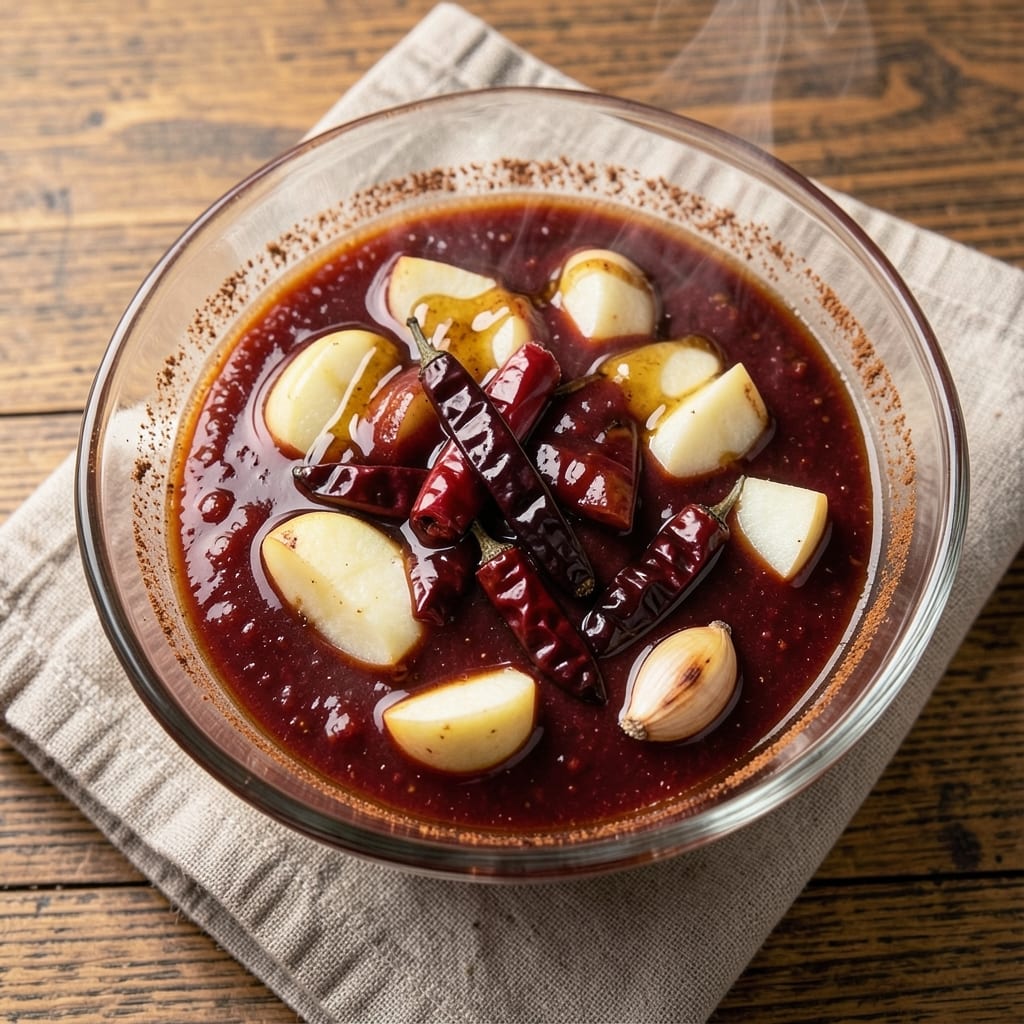
This apple chili sauce transforms simple ingredients into a smoky-sweet condiment that elevates everything from tacos to roasted meats. The balance of tart apples, heat from chili peppers, and a touch of vinegar creates a versatile sauce that works as a dipping sauce, glaze, or marinade. I've perfected this recipe over years of testing—it's the kind of sauce that disappears faster than you can say "second helping."
The magic happens in the slow simmer, where apples caramelize just enough to deepen their natural sweetness while the chili peppers infuse heat without overpowering. A splash of vinegar brightens the flavors, and a pinch of cinnamon adds warmth that rounds out the sauce's complexity. The result is a sauce that's tangy, slightly spicy, and perfectly balanced—never too sweet or too hot.
What makes this sauce truly special is its versatility. Use it as a dipping sauce for fried chicken or spring rolls, brush it on ribs before grilling, or drizzle it over tacos for an instant flavor boost. The texture is thick enough to cling but still smooth enough to spread effortlessly. It keeps well in the fridge for up to two weeks, making it a pantry staple for quick meals.
This recipe is designed to be foolproof—no fancy techniques required, just a few simple steps and a little patience. The ingredients are likely already in your pantry, and the process is straightforward enough for beginners but impressive enough for seasoned cooks. Let’s get started on creating a sauce that will become a regular in your kitchen.
Ingredients for apple chili sauce
Nine simple ingredients create a smoky-sweet sauce perfect for dipping, glazing, or marinating.
| Ingredient | Amount | Notes |
|---|---|---|
| Apples 🍎 | 2 medium | Granny Smith for tartness |
| Dried Chili Peppers 🌶️ | 2 tbsp | Ancho or chipotle for smokiness |
| Apple Cider Vinegar 🍶 | ½ cup | For tangy brightness |
| Granulated Sugar 🍚 | ¼ cup | Balances tartness |
| Ground Cinnamon 🌿 | 1 tsp | For warm depth |
| Garlic Cloves 🧄 | 2 cloves | Minced for aromatic base |
| Extra-Virgin Olive Oil 🫒 | 2 tbsp | For richness |
| Salt 🧂 | 1 tsp | Kosher preferred |
| Black Pepper 🌶️ | ½ tsp | Freshly ground |
| Water 💧 | ½ cup | For simmering |
The apples are the foundation—Granny Smith works best for that perfect tartness, but Fuji or Honeycrisp will do in a pinch. Trader Joe's or Whole Foods always have good quality, but grocery store apples work fine if they're firm and free of bruises. For the chili peppers, Penzeys Spices carries excellent dried ancho and chipotle, but any dried chili will add that essential smokiness. If you can't find ancho, pasilla peppers are a great substitute. The vinegar should be apple cider—Bragg is a reliable brand, but any good-quality cider vinegar will work.
No Granny Smith apples? Substitute with a mix of tart and sweet apples—like half Granny Smith and half Gala—to balance the flavors. Running out of apple cider vinegar? White vinegar or balsamic vinegar both work, though apple cider gives the best flavor. The sugar can be swapped for maple syrup or agave nectar if you prefer a less refined sweetener. For extra depth, add a pinch of ground cloves or allspice, but keep it subtle. If you like your sauce spicier, add an extra tablespoon of chili peppers or a dash of cayenne. The olive oil is non-negotiable—extra-virgin adds a fruity richness that regular olive oil can't match.
This sauce keeps beautifully in the fridge for up to 2 weeks in an airtight container. For longer storage, it freezes well for 6 months—just thaw in the fridge before using. I like to make a double batch because it disappears so fast. Drizzle it over roasted vegetables, use as a dipping sauce for spring rolls, or brush it on ribs before grilling. The texture thickens as it cools, so if it seems too thick after chilling, just stir in a splash of water or vinegar to loosen it up.
Why You'll Love This Recipe
- Here’s what sold me: the way the crisp apple tartness plays off the slow-building chili heat. Honestly, it’s the kind of sauce where the first bite makes you pause—like, wait, that’s actually good—and then you’re hooked. The cinnamon ties it all together without overpowering.
- Five-Ingredient Magic: I swear by this—just apples, chilis, vinegar, sugar, and cinnamon. That’s it. No fancy prep, no last-minute grocery runs. The dried peppers soften right into the sauce while you stir, and the vinegar cuts through the sweetness like a dream.
- Sweet Heat Balance: Here’s what sold me: the way the crisp apple tartness plays off the slow-building chili heat. Honestly, it’s the kind of sauce where the first bite makes you pause—like, wait, that’s actually good—and then you’re hooked. The cinnamon ties it all together without overpowering.
- Dips, Glazes, Everything: Between us, this sauce is my secret weapon for tacos, roasted chicken, or even drizzled over yogurt. I keep a jar in the fridge for when I’m craving something quick—no fancy plating, just pure flavor. (Yes, even on a Tuesday night.)
Step-by-step instructions for apple chili sauce
A perfect balance of smoky heat and sweet-tart apple flavor awaits with this straightforward method.
Prepare the Apples and Aromatics
Peel, core, and finely dice the 2 medium apples into small, even pieces—about ¼-inch cubes. I use a sharp chef's knife for this, cutting lengthwise first to create flat surfaces that won't slide around. The smaller the pieces, the quicker they'll cook and blend into the sauce.
In a small bowl, combine the 2 tablespoons dried chili peppers and 2 cloves minced garlic. This mixture will infuse the sauce with deep, smoky complexity. Set aside—you'll add it later when the apples have softened. The chili peppers should be whole or lightly crushed to prevent bitterness from overcooking.
Simmer the Apple Base
Heat the 2 tablespoons extra-virgin olive oil in a medium saucepan over medium heat. Add the diced apples and cook for 3-4 minutes, stirring occasionally, until they begin to soften slightly. The apples should release some juices, but don't let them brown—this step is just about prepping them for the main simmer.
Pour in the 0.5 cup apple cider vinegar and 0.5 cup water. Stir well to combine, then add the 0.25 cup granulated sugar, 1 teaspoon salt, and 0.5 teaspoon black pepper. Bring the mixture to a gentle boil, then immediately reduce heat to medium-low. Let it simmer uncovered for 10-12 minutes, stirring occasionally, until the apples are completely tender and the liquid has reduced by about half.
Build Flavor and Finish
Once the apples are tender, stir in the reserved chili pepper and garlic mixture. The sauce should darken slightly as the spices bloom and release their flavors. Add the 1 teaspoon ground cinnamon and stir well. Simmer for another 5-7 minutes until the sauce thickens to a glossy, syrupy consistency—it should coat the back of a spoon.
Taste and adjust seasoning if needed. You might want to add a pinch more salt or sugar to balance the tartness and heat. The sauce should be vibrant, with a perfect harmony of sweet, tangy, and smoky notes. Let it cool slightly before serving—this allows the flavors to meld completely.
Blend for Smooth Texture (Optional)
For a completely smooth sauce, transfer the warm mixture to a blender or food processor. Pulse until fully combined, scraping down the sides as needed. If the sauce is too thick, add 1-2 tablespoons of water to reach your desired consistency. For a rustic texture, simply mash the apples lightly with a fork in the pan—this adds beautiful texture and visual appeal.
This sauce is versatile enough to use immediately or store in an airtight container in the refrigerator for up to 2 weeks. It makes an excellent dipping sauce for spring rolls, a glaze for grilled meats, or a topping for yogurt and ice cream. The balance of flavors deepens as it sits, so it only gets better over time.
Pro Tips For Making Apple Chili Sauce
- Simmer Slow and Steady: I learned this the hard way—rushing the simmer turns your sauce into a sad, watery glaze. Keep it at a gentle bubble (not a rolling boil) for at least 20 minutes. That’s when the apples break down just enough to release their natural sweetness without turning to mush.
- Toast Your Chilies First: Dry toasting the chili peppers in a skillet for 30 seconds per side—until they smell smoky—deepens their flavor way more than just tossing them in raw. (Yes, even if you’re impatient like me.) Skip this, and you’ll taste the difference in the aftertaste.
- Peel and Core Apples Evenly: Unevenly chopped apples release liquid at different rates, making your sauce separate. Cut them into ½-inch cubes, peel them, and remove the cores—no seeds. This keeps the texture consistent and the sauce thick.
- Balance Vinegar Gradually: Dumping all the apple cider vinegar at once can make the sauce taste harsh. Add half first, taste, then adjust. You’re aiming for tangy without puckering—like a well-made BBQ sauce, not a science experiment gone wrong.
Common mistakes when making this recipe
Overcooking the Apples
One of the biggest mistakes is letting the apples turn mushy or caramelize too much during simmering. When apples break down completely, they lose their texture and the sauce becomes overly thick and grainy. I’ve learned to keep a close eye on them—once they’re fork-tender but still hold their shape, it’s time to add the chili peppers. Overcooking also intensifies bitterness from the vinegar, so aim for 10-12 minutes of simmering max. 🍎
Skipping the Chili Pepper Bloom
Adding dried chili peppers too early in the cooking process can make them bitter and harsh. The key is to let them bloom in the warm, reduced sauce at the end. I always set aside the chili-pepper mixture until the apples are tender—this ensures a smooth, smoky flavor without any unpleasant astringency. If you’re using chipotle peppers, lightly crush them first to help release their oils. 🌶️
Ignoring the Vinegar’s Role
The apple cider vinegar isn’t just for tang—it’s the secret to balancing sweetness and heat. If you skip it or use too little, the sauce will taste flat. I’ve made this mistake and ended up with a cloyingly sweet glaze. Use the full ½ cup and taste as you go—you can always add a splash more if needed. A quick fix for a bland sauce? Stir in 1 teaspoon extra vinegar and let it sit for 5 minutes to mellow out. 🍶
Not Adjusting Seasoning
Tasting the sauce before serving is non-negotiable. I’ve seen people pour this into dishes only to realize it’s either too sweet or too hot. Always taste as you go—add ½ teaspoon more salt to deepen flavor, or a pinch of sugar to soften the acidity. If it’s too spicy, stir in 1 teaspoon honey or maple syrup to mellow the heat. The goal is harmony, not extremes. ✨
Using the Wrong Apples
Not all apples work equally well. Sweet varieties like Gala or Fuji will make the sauce cloying, while tart apples like Granny Smith are essential for balance. If you’re stuck with sweet apples, add 1 extra tablespoon of vinegar or a pinch of lemon zest to cut through the sweetness. I’ve even used Green Apples from the store in a pinch—they’re tart enough to work. 🍏
Rushing the Simmer
Simmering too quickly on high heat can turn the sauce into a thin, watery glaze. The magic happens at a gentle medium-low simmer, where the flavors meld and the liquid reduces naturally. If your sauce isn’t thickening enough, lower the heat and let it cook longer—patience here makes all the difference. I’ve had to wait 15 minutes extra for stubborn batches, and it’s always worth it. 🔥
Nutrition facts
Frequently asked questions
Can I make this sauce without fresh apples?
Yes! Use ½ cup unsweetened applesauce or ½ cup diced dried apples (rehydrated in warm water for 10 minutes) as a substitute. For dried apples, reduce the water in the recipe by 2 tablespoons since they absorb moisture. The texture will be slightly different but still delicious.
How spicy should the sauce be?
The recipe balances heat with sweetness for a mild-medium kick. For extra spice, add 1 extra tablespoon chili peppers or ½ teaspoon cayenne. For a milder version, reduce to 1 tablespoon chili peppers or remove the seeds from fresh peppers. Always taste as you go!
What are the best ways to use this sauce?
This versatile sauce works as a dipping sauce for spring rolls or fried chicken, a glaze for grilled pork or ribs, or a topping for yogurt, ice cream, or tacos. It also makes an excellent marinade for tofu or chicken—just add 1 tablespoon soy sauce and 1 teaspoon ginger.
Can I make this sauce in a slow cooker?
Combine all ingredients in your slow cooker and cook on LOW for 3-4 hours, stirring occasionally. The slow cooking enhances the flavors even more. If the sauce thickens too much, stir in 1-2 tablespoons water or vinegar before serving.
Why did my sauce turn out too thick?
This usually happens from over-simmering or using too many apples. To fix it, stir in 1-2 tablespoons water or vinegar while warm. For prevention, simmer uncovered and stir frequently. If you prefer a thicker sauce, reduce the water by 1 tablespoon next time.