
Beverages
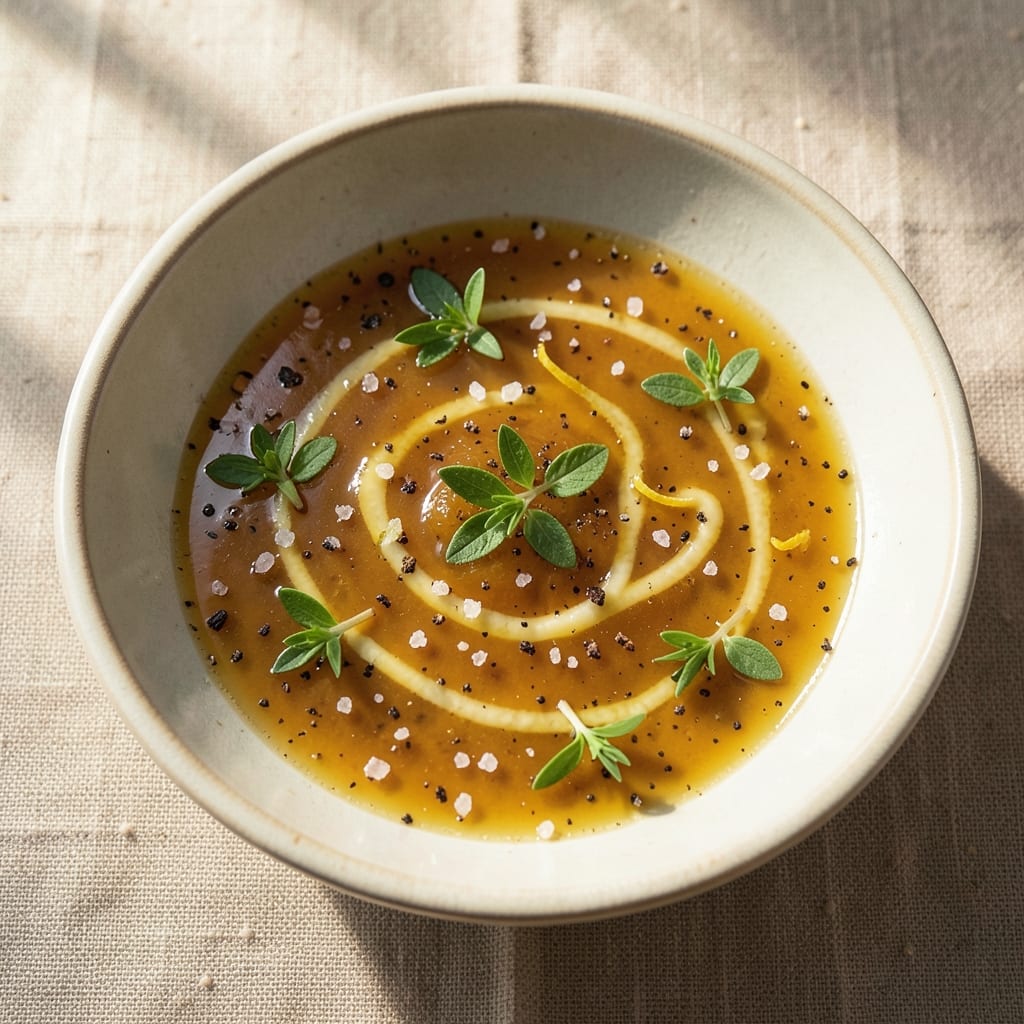
This apple cider honey vinaigrette recipe transforms simple salads into vibrant, tangy-sweet masterpieces with just five ingredients. The balance of sharp apple cider vinegar and rich honey creates a dressing that elevates greens, roasted vegetables, and grilled proteins effortlessly. I developed this recipe after years of testing vinaigrettes—this one consistently delivers that perfect harmony of sweet, tangy, and slightly smoky notes.
The secret to a smooth, emulsified dressing lies in the technique: whisk the vinegar and honey first until fully dissolved, then gradually add the oil while continuously whisking. This ensures the dressing stays silky rather than separating. For extra depth, a pinch of Dijon mustard helps stabilize the emulsion, while fresh thyme or rosemary adds an aromatic touch that pairs beautifully with fall flavors.
What makes this vinaigrette truly versatile is its ability to enhance everything from crisp winter salads to warm roasted Brussels sprouts. The apple cider vinegar’s brightness cuts through rich ingredients, while the honey adds a subtle sweetness that rounds out the flavor profile. It’s a dressing that works equally well as a dip for crusty bread or a finishing drizzle for grilled chicken.
Ready in just 5 minutes, this recipe requires no special equipment—just a bowl, whisk, and a few pantry staples. The measurements are precise but forgiving, allowing you to adjust the sweetness to your taste. Store it in an airtight container in the refrigerator for up to a week, where the flavors will continue to meld and deepen over time.
Ingredients for apple cider honey vinaigrette
Five ingredients balance sharp vinegar and rich honey for a dressing that elevates salads and dips beautifully.
| Ingredient | Amount | Notes |
|---|---|---|
| Apple Cider Vinegar 🍏 | ½ cup | Raw, unfiltered preferred for depth |
| Raw Honey 🍯 | ⅓ cup | Wildflower or clover variety |
| Extra-Virgin Olive Oil 🫒 | ¾ cup | Lightly fruity, not peppery |
| Dijon Mustard 🥬 | 1 tbsp | High-quality, coarse-ground |
| Fresh Thyme Leaves 🌿 | 1 tbsp | Or 1 tsp dried thyme |
| Kosher Salt 🧂 | ¼ tsp | Diamond Crystal preferred |
| Freshly Ground Black Pepper 🌶️ | ⅛ tsp | Freshly cracked for aroma |
| Smoked Paprika 🌶️ | ¼ tsp | For subtle smokiness |
The apple cider vinegar must be raw and unfiltered—brands like Bragg or Texas Pete deliver that complex, slightly smoky depth. For honey, local wildflower varieties add subtle floral notes, while clover honey offers a cleaner sweetness. The olive oil should be lightly fruity, not peppery—California Early Harvest or Colavita work perfectly. Fresh thyme is ideal, but dried works at one-third the amount if you're in a pinch. Smoked paprika adds that signature autumnal touch without overpowering the delicate balance of sweet and tang.
No Dijon mustard? Whole-grain mustard thinned with water serves as a decent substitute, though it lacks the same emulsifying power. Short on thyme? Fresh rosemary at half the amount offers a piney contrast. The honey-to-vinegar ratio can be adjusted—reduce honey by 1 tbsp if you prefer more tang, or add 1 tsp more if you want extra sweetness. For a nutty depth, swap half the olive oil for walnut oil. Always taste before emulsifying; the dressing should be bright, balanced, and slightly smoky—not cloying or overly sharp.
This dressing emulsifies best when whisked immediately before use, but it will hold in an airtight container for up to 7 days in the refrigerator. For longer storage, transfer to a sterilized glass jar and add a thin layer of olive oil on top to preserve freshness. The flavors actually improve over time, deepening as the vinegar and honey meld. For serving, drizzle over warm roasted Brussels sprouts or use as a dip for crusty sourdough. The dressing pairs exceptionally well with grilled chicken, goat cheese, and autumn squash dishes.
Why You'll Love This Recipe
- Five-Ingredient Magic: I swear by this combo—just whisk together apple cider vinegar, honey, olive oil, Dijon, and thyme. No measuring cups, no stress, no second-guessing. The balance of tangy, sweet, and herbal happens every single time.
- Sweet-Tart Balance: That honey cuts through the sharpness of apple cider vinegar like a dream, while the Dijon adds just enough bite. Honestly? It’s the kind of dressing that makes even the simplest salad feel like a restaurant-worthy dish.
- Weeknight Workhorse: I keep a jar of this in my fridge for everything—tossed greens, roasted chicken, or even as a marinade. (Yes, even on a Tuesday night.) The thyme’s bright aroma lingers, so it works for both quick lunches and fancier dinners.
- No-Waste Wonder: This dressing lasts forever—I’ve had it for weeks, and it only gets better as the flavors meld. Plus, the ingredients are cheap staples, so you’re not breaking the bank for something this versatile. Win-win.
Step-by-step instructions for apple cider honey vinaigrette
This bright, balanced dressing delivers perfect harmony between sweet and tangy flavors every time.
Whisk Vinegar and Honey to Create the Base
In a medium bowl, combine the 0.5 cup apple cider vinegar and 0.33 cup raw honey. Use a whisk to blend vigorously for 30 seconds until the honey fully dissolves and the mixture becomes smooth. The honey should incorporate completely without any visible grains, creating a syrupy foundation.
This initial combination is critical—it establishes the sweet-tart balance that defines the vinaigrette. Use a whisk rather than a spoon for better emulsification, which prevents separation later. If you notice any honey crystals after whisking, gently warm the mixture for 10 seconds in the microwave to fully dissolve them before proceeding.
Incorporate Mustard and Aromatics
Add the 1 tablespoon Dijon mustard, 1 tablespoon fresh thyme leaves, 0.25 teaspoon kosher salt, 0.125 teaspoon freshly ground black pepper, and 0.25 teaspoon smoked paprika to the vinegar-honey mixture. Whisk continuously for 1-2 minutes until all ingredients are fully integrated and the thyme leaves are finely dispersed.
The Dijon mustard acts as an emulsifier, helping to bind the oil later, while the thyme and smoked paprika add depth. Taste the mixture at this stage—it should be pleasantly tangy with a subtle sweetness and a hint of earthiness from the thyme. Adjust the salt if needed, but resist adding more honey or vinegar at this point to maintain the precise balance.
Gradually Emulsify the Olive Oil
With the whisk still in the bowl, slowly drizzle in the 0.75 cup extra-virgin olive oil while whisking continuously. Start with a very thin stream and gradually increase the flow as the mixture begins to thicken. Continue whisking for an additional 2-3 minutes until the dressing reaches a smooth, creamy consistency.
The key to a successful vinaigrette lies in this emulsification process. If you add the oil too quickly, the dressing will separate. Work patiently—you'll know it's emulsified properly when it coats the back of a spoon without breaking. For extra insurance, you can pulse the mixture in a blender for 10 seconds if you prefer a completely smooth texture.
Rest and Adjust for Perfect Balance
Cover the bowl with plastic wrap and let the vinaigrette rest at room temperature for 10 minutes. This resting period allows the flavors to meld and any potential separation to resolve. After resting, give it one final whisk to ensure uniformity before tasting.
At this stage, you may need to make minor adjustments. If the dressing tastes too sweet, add 1-2 teaspoons more apple cider vinegar. If it needs more depth, add a pinch of salt or a tiny bit more smoked paprika. The perfect vinaigrette should have a bright acidity balanced by sweetness, with just a whisper of smokiness from the paprika and herbal notes from the thyme.
Pro Tips For Making Apple Cider Honey Vinaigrette
- Whisk in stages: Start by mixing the apple cider vinegar, honey, and Dijon—this is where the real flavor chemistry happens. Only after they’re fully combined should you drizzle in the olive oil; otherwise, you’ll end up with a clumpy, greasy mess that takes forever to emulsify.
- Use room-temperature honey: Cold honey from the fridge is thicker than molasses and won’t blend smoothly. Let it sit out for 10-15 minutes before measuring—this ensures your dressing emulsifies like silk, not glue.
- Skip the thyme stems: Strain out the woody stems before adding thyme leaves, or you’ll get a gritty texture that ruins the smoothness. A fine-mesh sieve takes 10 seconds and makes all the difference.
- Balance the ratios: Too much vinegar makes it sharp; too little honey makes it bland. Start with a 1:1:2 ratio (vinegar : honey : oil) and adjust by the teaspoon—taste as you go, or you’ll end up with a dressing that’s either a mouthful of acid or a dessert.
Troubleshooting this recipe
Separation Solutions
If your vinaigrette separates after making it, don’t panic—this happens to even the best chefs! The most common cause is adding oil too quickly. To fix it, simply whisk vigorously for 2-3 minutes until the dressing re-emulsifies. For stubborn separations, add 1 teaspoon Dijon mustard or 1 tablespoon warm water while whisking. If stored properly in an airtight container, it should hold for 5-7 days in the fridge without separating again. 💡
Honey Crystals
If your honey refuses to dissolve, even after whisking, gently warm the vinegar-honey mixture for 10-15 seconds in the microwave. Stir immediately to prevent overheating, then whisk again until smooth. For future batches, use raw honey (like Manuka or wildflower)—it dissolves more easily than processed honey. If you’re in a rush, a few drops of hot water can also help break up stubborn crystals without altering flavor. 🍯
Too Sweet or Tangy?
Adjusting the balance is easy—just taste before emulsifying! If it’s too sweet, add 1-2 teaspoons apple cider vinegar and whisk. For too tangy, stir in ½ teaspoon more honey or a pinch of salt to round out the flavors. The goal is a bright, balanced dressing where neither sweet nor sour dominates. I always keep a small bowl of the dressing nearby while adjusting—this way, I can taste and tweak without wasting much. ✨
Oil Too Thick?
If your dressing feels too thick after emulsifying, thin it with 1-2 teaspoons warm water or extra-virgin olive oil (if it’s too thin). For a lighter texture, whisk in 1 teaspoon lemon juice—it adds brightness without altering the sweet-tart balance. If the dressing still feels gritty, strain it through a fine-mesh sieve to remove any undissolved honey or thyme stems. 🫒
Flavor Fading Over Time
After 3-4 days in the fridge, the dressing may lose its vibrant taste. Revive it by whisking in ½ teaspoon fresh thyme leaves or a pinch of smoked paprika to reignite the aroma. For extra freshness, add 1 teaspoon apple cider vinegar—it sharpens the tang and balances any dullness. Store it in a dark glass jar to preserve flavor longer, and always shake well before using. 💫
Mustard Substitutes
No Dijon mustard? No problem! Use 1 tablespoon whole-grain mustard (thinned with 1 teaspoon water) or ½ teaspoon dry mustard powder mixed with 1 teaspoon warm water. For a creamy texture, blend 1 tablespoon Greek yogurt into the vinegar-honey base before adding oil. Just note that substitutes may slightly alter the emulsification—whisk extra carefully to prevent separation. 🥬
Nutrition facts
Frequently asked questions
Can I use white vinegar instead of apple cider vinegar?
While you can substitute white vinegar, you'll lose the rich, slightly smoky depth that apple cider vinegar provides. For a similar flavor profile, try balsamic vinegar (reduce to 0.33 cup) or add ½ teaspoon maple syrup to white vinegar to mimic the natural sweetness. The dressing will still work, but the autumnal character will be less pronounced.
How do I make this vinaigrette thicker or thinner?
For a thicker texture, whisk in 1-2 teaspoons Dijon mustard or reduce the olive oil by 1 tablespoon. If it's too thick, thin with 1 teaspoon warm water or add 1 tablespoon more olive oil while whisking. For extra creaminess, blend in 1 teaspoon Greek yogurt—it adds body without altering the flavor balance.
Can I make this dressing ahead of time?
This vinaigrette actually tastes better after 24 hours as the flavors meld. Store it in an airtight container in the fridge for up to 7 days. Before using, whisk vigorously to re-emulsify. For longer storage (up to 3 months), freeze in ice cube trays—thaw overnight in the fridge and whisk to restore consistency.
What are the best foods to pair with this dressing?
This versatile vinaigrette shines on warm roasted Brussels sprouts, crisp winter salads (like kale or arugula), and grilled chicken. It also works as a dip for crusty sourdough or goat cheese crostini. The sweet-tangy balance cuts through rich foods like roasted squash or pan-seared pork chops, making it perfect for fall and winter meals.
Why did my dressing separate?
Separation usually happens when oil is added too quickly or the mixture isn't whisked enough. To fix it, whisk vigorously for 2-3 minutes or add 1 teaspoon Dijon mustard while whisking. For prevention, always drizzle oil slowly while whisking continuously. If stored properly in an airtight container, it should stay emulsified for 5-7 days.