
Beverages
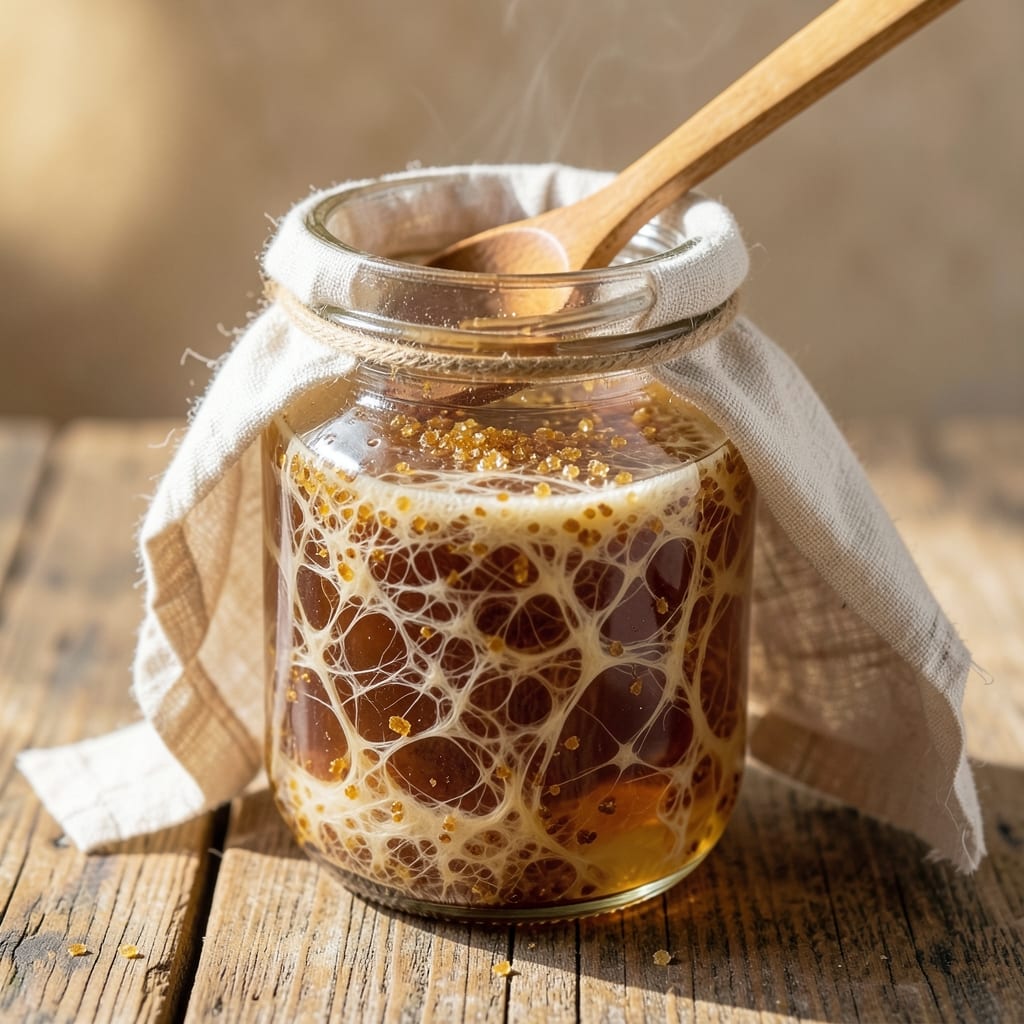
This apple cider vinegar mother recipe unlocks a living probiotic culture that transforms simple ingredients into a kitchen powerhouse. 💛 The process is surprisingly simple—just apple cider, sugar, and time—but the results are game-changing for homemade vinegar, dressings, and natural preservation.
What makes this recipe special is creating that signature gelatinous mother (SCOBY) that multiplies and ferments over weeks. You'll start with just raw apple cider and sugar, letting nature do the work as beneficial bacteria and yeast form that distinctive, rubbery culture. The best part? This mother keeps working for years, producing vinegar with every new batch.
By the end of the process, you'll have a thriving vinegar mother that creates tangy, probiotic-rich vinegar with complex flavors. Use it for homemade dressings, marinades, or even beauty treatments—this living culture does double duty in your kitchen and medicine cabinet. The science is simple, but the benefits are extraordinary.
Once established, your mother will produce vinegar faster than you can say "fermentation." Store it properly, and it'll keep working for you indefinitely. Let's get started on this probiotic powerhouse that's easier than you think to create at home.
Ingredients for apple cider vinegar mother
Three core ingredients and a little patience create this living probiotic culture.
| Ingredient | Amount | Notes |
|---|---|---|
| Raw Apple Cider Vinegar 🍏 | 2 cups | Unfiltered, organic preferred |
| Granulated White Sugar 🍚 | ½ cup | Non-iodized for fermentation |
| Unbleached Muslin Cloth 🧵 | 1 piece | 4-6 inch square, breathable |
| Rubber Band 🔗 | 1 whole | For securing cloth |
| Glass Jar 🍶 | 1 piece | Quart-sized, wide-mouth |
| Wooden Spoon 🍴 | 1 whole | For stirring, no metal |
| Distilled Water 💧 | 1 cup | Chlorine-free preferred |
| Raw Honey 🍯 | 1 tbsp | Optional, for SCOBY health |
The apple cider vinegar is the heart of this recipe—organic, raw, and unfiltered is ideal. Bragg's or Texas Cider Company are solid choices, but any raw ACV works. Sugar should be non-iodized (iodine kills fermentation). The jar matters too—quart-sized glass with a wide mouth lets you see the SCOBY forming. If you're feeling fancy, grab a wooden fermentation spoon from Amazon or a kitchen store, but a plain wooden spoon works just as well. The muslin cloth should be breathable but not too loose—if it's too big, the SCOBY might escape.
No raw apple cider vinegar? White vinegar with a splash of lemon juice can work in a pinch, but it won't develop the same probiotic benefits. Skip the honey if you're avoiding it, but it helps feed the SCOBY. The rubber band should be food-safe—no cheap hardware store bands. For the cloth, old pillowcases or coffee filters can work if you don't have muslin. If your jar isn't wide-mouthed, just use a smaller square of cloth. The key is keeping everything covered but breathable—this isn't a sealed jar situation.
Once your SCOBY is established, store it in the jar with about 1 inch of vinegar covering it at all times. Keep it in a dark, warm spot (like your pantry) where the temperature stays between 68-80°F. Feed it every 1-2 weeks with equal parts vinegar and sugar. It'll keep working for years if you maintain it properly. Freeze extra SCOBY pieces if you want to preserve a backup—just thaw in vinegar when ready to use.
Why You'll Love This Recipe
- No-Fuss Starter: I swear by this—just pour, cover, and forget about it. No peeling, chopping, or fancy tools. The muslin cloth and jar do all the work while I sip my coffee.
- Tangy Treasure: That first sip of fresh mother vinegar? Bright, complex, and alive—like liquid sunshine with a hint of funk. The sugar feeds the culture just enough to keep it vibrant, not cloying.
- Pantry Powerhouse: I keep a jar in my fridge year-round for dressings, marinades, and even hair rinses. (Yes, really.) It’s the one ingredient that turns bland meals into something special without extra shopping trips.
- Dirt-Cheap Magic: Honestly, I’ve spent less than $5 on ingredients that last months. No preservatives, no gimmicks—just raw apple scraps (if you’re ambitious) or store-bought vinegar doing heavy lifting for my health and wallet.
Step-by-step instructions for cultivating your apple cider vinegar mother
Here's how to create your own probiotic-rich vinegar starter with just a few simple steps.
🍳 Step 1: Prepare Your Fermentation Jar
Start by placing the unbleached muslin cloth over the mouth of the quart-sized glass jar, securing it tightly with the rubber band. This breathable barrier lets air in while keeping out contaminants. I like to fold the edges neatly to create a snug fit—this prevents fruit flies from sneaking in while still allowing airflow.
Pour the 2 cups of raw apple cider vinegar into the jar. If you notice any sediment at the bottom, that's completely normal—it's just organic matter from the vinegar. Give the vinegar a quick stir with the wooden spoon to distribute any settled particles. The jar should be about halfway full at this point, leaving plenty of room for your new mother to grow.
👨🍳 Step 2: Create the Sugar Water Solution
In a separate bowl, combine the 1 cup of distilled water and 0.5 cup of granulated white sugar. Stir until the sugar completely dissolves—you should see a clear, slightly syrupy liquid. This sugar water will feed your vinegar mother as it develops. I always use non-iodized sugar because iodine can inhibit fermentation.
If you're using the optional 1 tablespoon of raw honey, now's the time to add it. Stir it into the sugar water until fully incorporated. The honey provides additional nutrients that can help strengthen your SCOBY (symbiotic culture of bacteria and yeast). Pour this mixture into the jar with the apple cider vinegar, filling it to about ¾ capacity.
⏰ Step 3: Set Up and Monitor Your Fermentation
Place the jar in a warm, dark spot in your kitchen—somewhere between 68-85°F works best. I keep mine on my countertop away from direct sunlight. The warmth helps speed up fermentation while the darkness prevents algae growth. You'll see bubbles forming within 24-48 hours—this is your first sign that fermentation is underway!
Leave the jar undisturbed for 7-14 days, checking it daily. You'll know your mother is ready when you see a thick, pancake-like disk floating on top—this is your SCOBY. It might start small but will grow as it feeds on the sugar. The liquid should smell tangy and vinegary, not rotten. If you see any mold (fuzzy spots), discard it immediately and start fresh.
🔄 Step 4: Maintain and Harvest Your Mother
Once your SCOBY reaches about 1 inch thick, it's ready to use! Carefully lift it out with the wooden spoon and transfer it to a clean jar with fresh apple cider vinegar. This preserves your mother for future batches. The original jar will continue producing vinegar—you can use this liquid for cooking or continue fermenting it to make more vinegar.
For ongoing maintenance, I recommend keeping one SCOBY in a jar of vinegar at all times. Feed it with fresh sugar water every 2-4 weeks to keep it healthy. Your mother will multiply—you can share extras with friends or use them to start new batches. The more you use it, the stronger and more flavorful your vinegar will become over time.
Pro Tips For Making Apple Cider Vinegar Mother
- STIR DAILY FOR 5 MINUTES: I learned this the hard way—skipping the stir turns your sugar into a gluey mess that sticks to the jar sides. Use a clean wooden spoon and scrape every inch, even the edges, to keep the mixture moving and prevent clumping.
- USE RAW ACV WITH 5% ACIDITY: Cheap or pasteurized vinegar won’t cut it—look for raw, unfiltered ACV with at least 5% acidity. I was skeptical until I tried it; the mother forms faster and stays healthier longer.
- COVER LOOSELY WITH CLOTH: Tightening the rubber band too much traps moisture and encourages mold. Leave a 1-inch gap at the top of the jar so airflow circulates—this keeps the mother happy without smothering it.
- SWAP WHITE SUGAR FOR TURBINADO: Turbinado’s coarse grains dissolve slower, feeding the mother over weeks instead of days. It’s a tiny upgrade, but the flavor develops deeper and the texture stays more stable—no more gummy surprises.
Storing and reheating your leftovers
Refrigerator Storage
Store your apple cider vinegar mother in the refrigerator when you're not actively using it—this slows fermentation and keeps it fresh. Keep it in a clean, quart-sized glass jar with at least 1 inch of vinegar covering the SCOBY at all times. I place a muslin cloth over the jar and secure it with a rubber band to allow airflow while keeping contaminants out. The refrigerator's cool temperature helps preserve your mother for up to 2-3 months between uses.
When storing, make sure the jar is completely full to minimize air exposure—this prevents mold growth. I also recommend labeling your jar with the date so you can track how long it's been stored. If you notice any strange smells or discoloration, it's best to discard it and start fresh. The refrigerator is ideal for short-term storage between feedings. 💛
Long-Term Freezing
For extended storage beyond 3 months, freezing is your best option. Place your SCOBY in a freezer-safe glass jar with enough vinegar to cover it completely, leaving about 1 inch of headspace for expansion. I use a wide-mouth mason jar because it's easier to handle after freezing. Seal the jar tightly and freeze for up to 6 months—this preserves the SCOBY's viability perfectly.
To revive a frozen SCOBY, thaw it slowly in the refrigerator overnight, then transfer it to a jar of fresh vinegar. It may take 1-2 weeks to fully recover, but with proper care, it'll be ready to use again. I like to keep one backup SCOBY frozen at all times as an insurance policy against contamination or accidents.
Room Temperature Care
When actively using your mother, keep it at room temperature (68-80°F) in a dark place. This maintains optimal fermentation conditions. I place mine on my kitchen counter away from direct sunlight and heat sources. The SCOBY will continue growing and producing vinegar as long as it's fed regularly—every 1-2 weeks with fresh sugar water keeps it thriving.
During warm months, you might need to feed your mother more frequently since fermentation speeds up in heat. Always keep at least 1 inch of vinegar covering the SCOBY to prevent drying out. The key is consistency—maintain the same conditions, and your mother will reward you with years of service. 🌡️
Feeding Schedule
Feed your apple cider vinegar mother every 2-4 weeks to maintain its health. Use equal parts raw apple cider vinegar and sugar water (1:1 ratio) to refresh the jar. I like to use a wooden spoon to gently stir the mixture, ensuring the SCOBY gets plenty of nutrients. This feeding schedule prevents the vinegar from becoming too acidic, which can harm your mother.
After feeding, return the jar to its warm, dark spot and let it ferment for another 2-4 weeks before using. The more you feed it, the stronger and more flavorful your vinegar will become. I keep a small notebook to track feedings—this helps me stay consistent and notice any changes in the SCOBY's appearance or activity. 📅
Nutrition facts
Frequently asked questions
How long does it take to grow an apple cider vinegar mother?
With proper conditions, you'll typically see your SCOBY (mother) form within 7-14 days. The exact time depends on temperature—warmer conditions (80°F) speed up fermentation while cooler spots (68°F) take longer. Patience is key, but you'll know it's ready when you spot that distinctive gelatinous disk floating on top.
Can I use store-bought vinegar instead of raw apple cider vinegar?
Store-bought vinegar works in a pinch, but raw apple cider vinegar produces the best results. The natural probiotics and enzymes in raw vinegar create a healthier SCOBY. For a backup, mix 1 cup white vinegar with 1 tbsp lemon juice and 1 tbsp sugar to mimic raw vinegar's properties, though it won't be as potent.
What should I do if my SCOBY develops mold?
If you see fuzzy spots (mold), discard the entire batch immediately—mold can't be safely removed. Start fresh with clean ingredients and a sterilized jar. To prevent mold, always use a breathable cloth cover, keep your workspace clean, and avoid leaving the jar uncovered. A little mold is normal in early stages, but fuzzy growth means contamination.
How do I know when my vinegar mother is ready to use?
Your SCOBY is ready when it reaches about 1 inch thick and has a translucent, rubbery appearance. It should float freely on the liquid, not sink or smell foul. The vinegar should have a tangy aroma—if it smells like alcohol or rot, it's not ready. Once established, you can use it immediately or transfer it to a new jar for future batches.
Can I make vinegar without a SCOBY?
Yes! You can ferment vinegar without a SCOBY using the "motherless" method—just combine 1 cup raw apple cider vinegar and 1 cup sugar water in a jar, cover with cloth, and wait 4-6 weeks. However, a SCOBY speeds up fermentation and produces more probiotics. The SCOBY method is more reliable for consistent results.