
Beverages
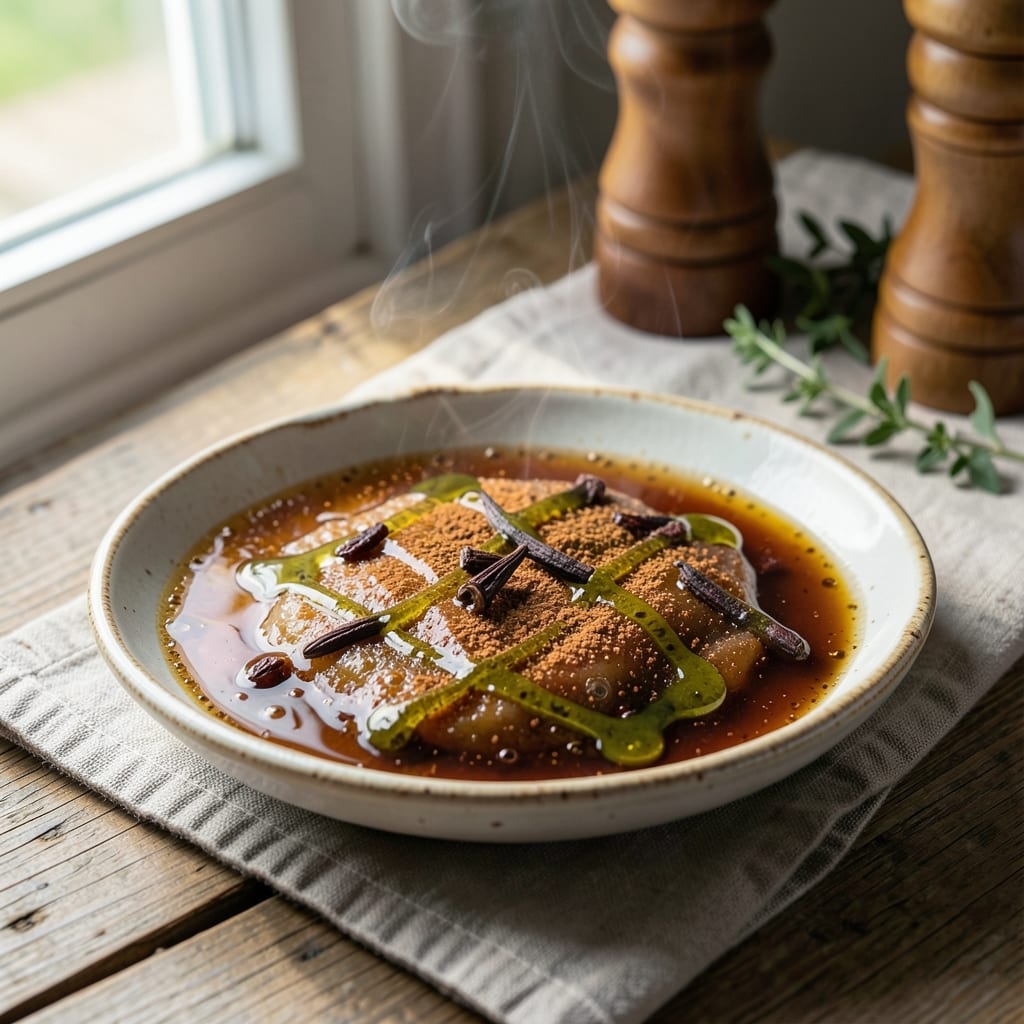
This apple cider vinegar reduction transforms simple ingredients into a bold, umami-rich base that elevates dressings, marinades, and glazes. The process is straightforward—simmering vinegar with sugar and optional spices until thickened—but the results are extraordinary, adding depth to any dish. I developed this recipe after realizing how often I reached for store-bought reductions that lacked complexity, and now I make it regularly for its versatility and rich flavor.
The beauty of this reduction lies in its simplicity: just apple cider vinegar, sugar, and a pinch of spices like cinnamon or cloves to enhance warmth. As it simmers, the liquid reduces dramatically, intensifying the tangy-sweet flavor into a syrupy consistency perfect for drizzling or incorporating into recipes. The reduction’s balance of acidity and sweetness makes it a game-changer for balancing rich dishes or adding a sophisticated touch to salads and meats.
What makes this recipe truly special is its adaptability. Use it as a base for vinaigrettes, a glaze for roasted vegetables, or a marinade for meats—its concentrated flavor cuts through richness while adding complexity. The process takes just 15 minutes of active time, and the finished reduction keeps well in the refrigerator for up to a week, making it a pantry staple for any home cook.
Once you try this reduction, you’ll never go back to bottled versions. The transformation from liquid to thick, flavorful syrup is nothing short of magical, and the possibilities for how to use it are endless. Whether you’re dressing a salad, marinating chicken, or drizzling over roasted carrots, this reduction will take your dishes to the next level.
Ingredients for apple cider vinegar reduction
Just six ingredients transform tart vinegar into a rich, umami-packed sauce base.
| Ingredient | Amount | Notes |
|---|---|---|
| Apple Cider Vinegar 🍏 | 2 cups | Raw, unfiltered preferred for depth |
| Granulated Sugar 🍚 | 1 cup | White or raw cane sugar |
| Ground Cinnamon 🌿 | 1 tsp | Freshly ground for warmth |
| Whole Cloves 🌱 | 4 whole | Lightly crushed for aroma |
| Salt 🧂 | ½ tsp | Diamond Crystal preferred |
| Extra-Virgin Olive Oil 🫒 | 1 tbsp | For finishing drizzle |
| Fresh Ginger 🌿 | ½ tsp | Finely grated, optional |
The apple cider vinegar should be raw and unfiltered—think brands like Bragg or Mott's—because those cloudy bits pack extra flavor. Sugar is the balancing act here: white granulated dissolves cleanly, but raw cane sugar adds subtle molasses notes. For the spices, Penzeys or bulk bins at Whole Foods give the freshest ground cinnamon and whole cloves. If you're feeling adventurous, a small piece of fresh ginger (about half a teaspoon grated) adds a bright, zesty kick that plays beautifully with the reduction's depth. The olive oil isn't just for finishing—it carries the reduction's syrupy richness when drizzled.
No apple cider vinegar? White wine vinegar or rice vinegar work in a pinch, though the flavor profile shifts slightly. Running short on sugar? Honey or maple syrup (equal amounts) swap in smoothly, though they'll darken the reduction. Skip the cloves? A pinch of allspice or a bay leaf adds warmth without overpowering. The salt is non-negotiable—Diamond Crystal dissolves perfectly, but any fine sea salt works. For storage, the reduction thickens further in the fridge, so shake or whisk before using. Freeze in ice cube trays for single-use portions—perfect for marinades or dressings.
This reduction keeps for up to 2 weeks in the fridge, though it tastes best within the first week. The syrup-like consistency makes it ideal for drizzling over roasted vegetables, glazing meats, or whisking into vinaigrettes. For extra richness, store it in a glass jar with a tight seal and layer a thin film of olive oil on top to preserve freshness. Portion into small containers if you're prepping for meal prep—it's the secret weapon in my salad dressings all week.
Why You'll Love This Recipe
- Pantry Magic: I swear by this when I’m staring into an empty fridge at 6:30 PM. Three ingredients—vinegar, sugar, and a dash of cinnamon—simmer down to a glossy, tangy-sweet sauce in 15 minutes. No shopping list, no stress.
- Warm Spice Bomb: That first sip of cloves and cinnamon hitting the back of your throat? It’s like autumn in a spoonful. The vinegar cuts the sugar just enough to keep it bright, not cloying—perfect for drizzling over roasted veggies or even plain yogurt.
- Secret Sauce for Everything: I keep a jar in my fridge for emergencies: glaze for pork chops, tangy dressing for salads, or even a quick marinade. It’s my go-to for when I need flavor but zero effort—just heat, stir, and go.
- Budget Glaze, Big Flavor: A quarter-cup of vinegar and a handful of sugar costs pennies, yet it transforms bland roasted chicken or Brussels sprouts into something restaurant-worthy. No fancy ingredients, just pure, bold taste that won’t break the bank.
Step-by-step instructions for apple cider vinegar reduction
Here's how to craft a rich, aromatic reduction that transforms simple dressings into bold, complex flavors.
Combine Ingredients in a Saucepan
In a medium saucepan, combine the 2 cups apple cider vinegar, 1 cup granulated sugar, 1 teaspoon ground cinnamon, 4 whole cloves, and ½ teaspoon salt. I like to give the mixture a quick stir with a wooden spoon to ensure all the spices are fully incorporated and won't settle at the bottom during cooking.
The sugar will dissolve immediately, but the spices need time to infuse their flavors. This step is where the magic begins—those whole cloves will release their warm, earthy aroma while the cinnamon adds subtle warmth. If using the optional ½ teaspoon fresh ginger, add it now and stir gently to distribute the finely grated pieces evenly throughout the liquid.
Simmer Until Reduced by Half
Place the saucepan over medium-high heat and bring the mixture to a gentle boil. Once boiling, reduce the heat to medium-low and let it simmer uncovered for 20-25 minutes. You're looking for a reduction where the liquid volume decreases by roughly half, leaving you with a thick, syrupy consistency.
This is where patience pays off. Stir occasionally to prevent sticking, but don't obsess—just enough to keep things moving. The reduction should smell intensely sweet and spiced, with the vinegar's tang cutting through the sugar's richness. If you see the mixture darkening too quickly, reduce the heat slightly to maintain a balanced color.
Strain and Finish with Olive Oil
After reducing, remove the saucepan from heat and let it cool for 2-3 minutes. Then, strain the mixture through a fine-mesh sieve into a clean bowl or jar, pressing gently on the solids to extract every last drop of flavor. Discard the cloves and any remaining ginger pieces—they've done their job.
Return the strained reduction to the saucepan and stir in the 1 tablespoon extra-virgin olive oil. This final step adds a silky texture and balances the acidity with rich, fruity notes. The oil should be fully incorporated, creating a glossy finish that's ready to elevate any dish. Let it cool completely before storing or using.
Store and Use for Maximum Flavor
Transfer the finished reduction to an airtight container and store it in the refrigerator for up to 2 weeks. The flavors will continue to meld and deepen over time, making it even more complex with each passing day. When ready to use, give it a good stir—some separation is normal, but a quick shake will restore its silky consistency.
This reduction works beautifully as a base for vinaigrettes, marinades, or even a glaze for roasted vegetables. Its bold umami profile pairs exceptionally well with rich proteins like duck or pork, or adds depth to creamy dressings. A little goes a long way—start with 1 tablespoon and adjust to taste, remembering that it's concentrated and potent.
Pro Tips For Making Apple Cider Vinegar Reduction
- STIR CONSTANTLY AT FIRST: The vinegar’s acidity hits fast—skip stirring the first 30 seconds, and you’ll get a bitter, uneven reduction. Use a wooden spoon to scrape the bottom every 10 seconds until the sugar fully dissolves, or you’ll end up with a clumpy, vinegary sludge that won’t thicken right.
- USE BROWN SUGAR FOR DEPTH: Granulated sugar works, but brown sugar’s molasses adds a caramelized warmth that cuts through the sharpness. Swap 1:1 if you’re lazy, but I’ve tasted the difference—it’s subtle but makes the reduction taste like autumn instead of just sweet vinegar.
- DON’T BOIL DRY: I learned this the hard way—let the mixture simmer until it’s reduced by half, then pull it off heat when it’s still slightly bubbling. If you push it to a syrupy boil, the cloves burn, the cinnamon turns bitter, and you’re left with a dark, acrid mess that’s inedible.
- STRAIN THROUGH CHEESECLOTH: A fine-mesh sieve leaves behind gritty cinnamon and clove dust that ruins the texture. Fold a double layer of cheesecloth into a cone, pour the hot reduction through, and press gently with a spoon—worth the extra 30 seconds for a silky finish. (Yes, even if you’re impatient like me.)
Troubleshooting perfect results
Reduction Too Thin?
If your apple cider vinegar reduction isn't thickening enough, you likely didn't simmer long enough. Increase simmer time by 5-10 minutes—uncovered heat helps evaporate more liquid. For an extra boost, add 1-2 extra tablespoons of sugar and simmer another 5 minutes. Stir occasionally to prevent sugar from burning at the bottom. 🔥
Burnt or Darkened?
Overheating causes darkening or burnt flavors. Keep heat at medium-low and stir every 2-3 minutes to distribute heat evenly. If it darkens too quickly, remove from heat immediately and add 1 tablespoon cold water, then return to low heat to finish reducing. Bragg apple cider vinegar is less likely to burn than cheaper brands.
Grainy Texture?
Gritty texture usually means sugar didn't fully dissolve. Use white granulated sugar (not raw cane) for smoother results. If using raw sugar, stir vigorously while heating to break up any remaining crystals. For a silky finish, strain through a fine-mesh sieve after simmering, pressing gently with a spoon.
Weak Flavor?
Weak flavor often means insufficient simmering or under-spiced ingredients. Simmer uncovered for at least 20 minutes—longer simmering concentrates flavors. Boost depth by adding ½ teaspoon extra cinnamon or 2 extra cloves before simmering. For a tangier reduction, use raw, unfiltered apple cider vinegar like Bragg instead of distilled vinegar.
Separation After Storage?
Natural separation happens as the reduction cools. Whisk or shake vigorously before using—this restores the syrupy consistency. To prevent separation, store in a glass jar (not plastic) and add a thin layer of extra-virgin olive oil on top. For extra stability, refrigerate in smaller portions (like ice cube trays) to minimize air exposure.
Too Sweet or Tart?
Adjust the balance by adding 1 teaspoon at a time of the opposite ingredient. For too sweet, add ½ teaspoon apple cider vinegar and simmer 2 minutes. For too tart, stir in ½ teaspoon honey or maple syrup and taste. If using the reduction in dressings, dilute with olive oil (1:1 ratio) to mellow the flavors naturally. 💫
Nutrition facts
Frequently asked questions
Can I make this reduction without sugar?
You can, but the flavor will be much sharper and less balanced. Sugar helps mellow the vinegar's acidity and creates that syrupy texture. Try using 1/4 cup honey or maple syrup instead for a similar effect—just reduce the simmer time slightly since these sweeteners break down faster.
How do I use this reduction in dressings?
Start with 1 tablespoon reduction per 3 tablespoons olive oil and 1 tablespoon Dijon mustard for a classic vinaigrette. Whisk well and adjust to taste—this reduction adds depth without overpowering. For creamy dressings, reduce the ratio to 1:2 (reduction to oil) and add a splash of buttermilk or yogurt.
Will this reduction work for meat marinades?
Use 1/4 cup reduction per pound of meat with 2 tablespoons olive oil and 1 teaspoon soy sauce for pork or chicken. The spices in the reduction caramelize beautifully during grilling, creating a glossy crust. For tougher cuts like brisket, marinate for 4-6 hours instead of overnight.
Can I make this in a slow cooker?
Yes, but you'll need to adjust the method. Combine all ingredients in your slow cooker and cook on high for 1.5-2 hours instead of simmering. Check frequently—the liquid reduces faster in slow cookers. For best results, transfer to a saucepan to finish reducing on the stovetop for 5-10 minutes to achieve proper consistency.
What's the best way to store leftovers?
Store in a glass jar with a tight seal in the fridge for up to 2 weeks. For longer storage, portion into ice cube trays, freeze, then transfer to a bag. The frozen cubes thaw quickly and work perfectly for dressings. Always stir well before using—some separation is normal.