
Desserts
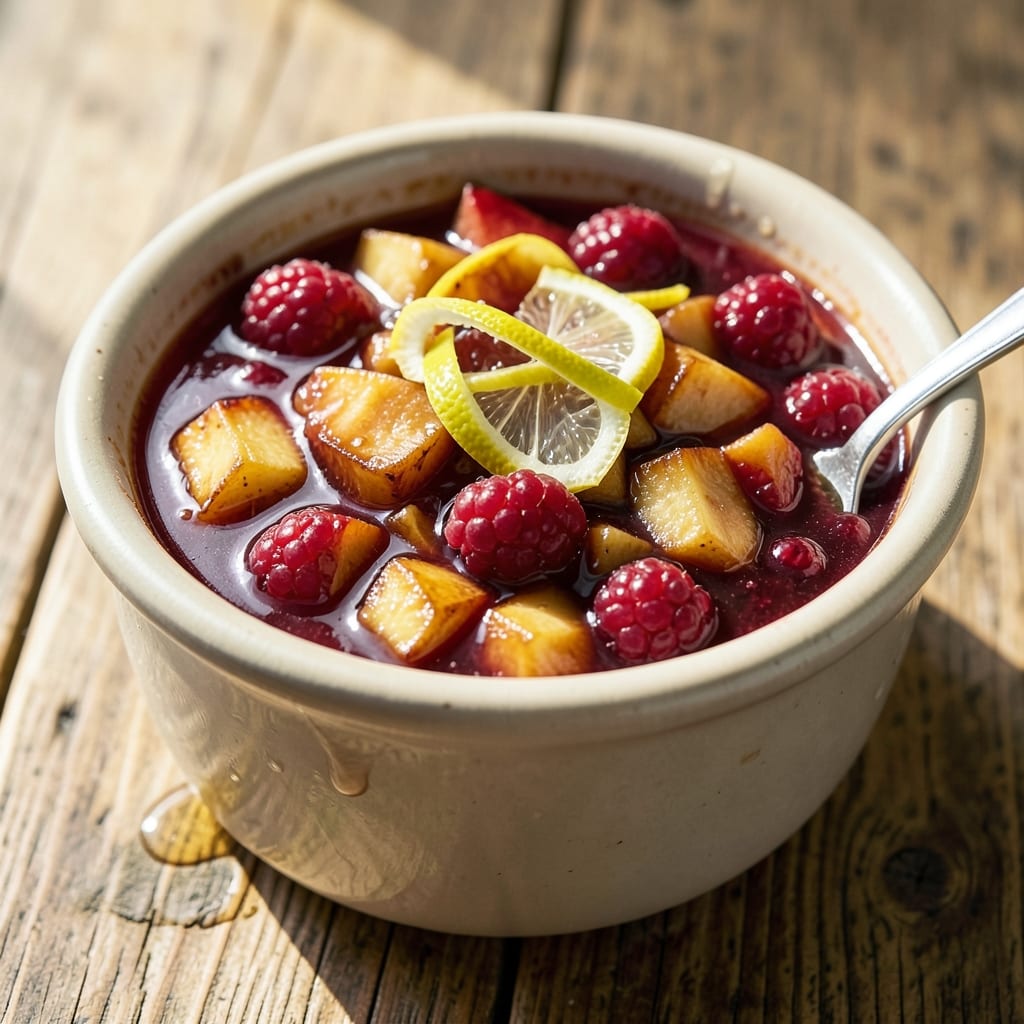
This apple and raspberry jam recipe transforms ordinary fruit into a vibrant, spreadable treasure that brightens toast, desserts, and more. The secret lies in balancing tartness and sweetness while achieving that perfect thick, glossy consistency—no pectin required. I developed this small-batch method after years of testing, ensuring every jar delivers restaurant-quality flavor with minimal effort.
What makes this recipe stand out is the two-fruit combination: tart raspberries add depth while sweet apples create a smooth, velvety texture. The slow simmer process (about 45 minutes) caramelizes the fruit naturally, intensifying the flavors without overcooking. No special equipment needed—just a heavy-bottomed pot and patience for a result that’s miles ahead of store-bought.
The finished jam will be deep ruby-red with flecks of apple, perfectly balanced between sweet and tangy. It thickens as it cools, creating that ideal spreadable consistency that clings beautifully to toast, pancakes, or yogurt. The aroma alone will make your kitchen smell like a bakery, and the taste? Pure, unadulterated jam perfection.
Use it on morning toast, drizzle over cheesecake, or gift jars to friends—this jam keeps for months in the fridge and makes 4-5 half-pint jars. The best part? You can halve the recipe for a single jar without sacrificing quality. Let’s get simmering!
Ingredients for apple and raspberry jam
Eight simple ingredients transform tart apples and raspberries into vibrant, restaurant-quality jam.
| Ingredient | Amount | Notes |
|---|---|---|
| Apples (Granny Smith or Honeycrisp) 🍎 | 2 cups | Peeled, cored, chopped into small pieces |
| Raspberries 🍇 | 1 ½ cups | Fresh or frozen, no need to thaw |
| Granulated Sugar 🍚 | 1 ½ cups | Organic preferred for subtle flavor |
| Lemon Juice 🍋 | 2 tbsp | Freshly squeezed, organic preferred |
| Fresh Lemon Zest 🍋 | 1 tsp | Fine, for aromatic depth |
| Apple Cider Vinegar 🍏 | 1 tbsp | For natural pectin activation |
| Ground Cinnamon 🌿 | ½ tsp | For subtle warmth |
| Fresh Ginger 🌿 | 1 tsp | Grated, for subtle complexity |
The fruit selection is critical for that balanced tart-sweet profile—Granny Smith apples provide crisp acidity while Honeycrisp adds natural sweetness. Local farmers markets often carry organic varieties with superior flavor. For raspberries, fresh is ideal, but frozen works beautifully if you're making this in winter. The sugar should be fine granulated (no powdered) to dissolve smoothly. Organic cane sugar like Wholesome! Sweetener adds subtle caramel notes during simmering. If using frozen raspberries, there's no need to thaw—they'll release their juices gradually during cooking.
No Granny Smith apples? Fuji or Pink Lady work well for sweetness, though you may need to reduce sugar slightly. Short on raspberries? Blackberries or strawberries can substitute at one-third more volume—they're sweeter, so adjust sugar accordingly. Fresh lemon juice is essential for brightness, but bottled works in a pinch if you're in a hurry. The apple cider vinegar might seem unusual, but it naturally activates pectin for that perfect set without commercial thickeners. For the ginger, freshly grated is ideal, but ground ginger at half the amount will suffice if needed. The cinnamon should be true Ceylon cinnamon for delicate flavor—avoid the stronger cassia variety unless you prefer bold spice notes.
This jam develops its full flavor over time—let it sit at room temperature for 24 hours before sealing jars. Properly stored in the refrigerator, it keeps for up to 6 months, though the flavor continues evolving for the first 2-3 weeks. For gifting, use sterilized half-pint jars with two-piece lids—the Ball brand or Kerr jars are industry standards. The jam thickens as it cools, so don't be alarmed if it appears runny while warm. It will set beautifully overnight. Freeze extras in ice cube trays for single-serving portions—just thaw in the fridge before using.
Why You'll Love This Recipe
- No Chopping Chaos: I swear by this recipe because you only need to core and roughly chop apples—no dicing, no fuss. The raspberries just get tossed in whole, and the lemon zest adds brightness without extra work.
- Tart-Sweet Magic: Granny Smith’s sharp bite balances the raspberries’ jammy richness, while a splash of lemon juice keeps it from turning cloying. Honestly, it’s the kind of jam that makes you pause mid-spoonful just to savor the contrast.
- Breakfast to Dessert: Spread it on toast with ricotta, stir it into yogurt, or drizzle it over vanilla ice cream. It’s my go-to for brunch, snack time, or even a fancy dessert—no one ever guesses how easy it was to make.
- Pantry Goldmine: A single batch lasts weeks in the fridge, and the sugar costs pennies. I’ll be real: I’ve made this twice with the same apples and still have jars left—proof it’s worth the effort.
Step-by-step instructions for apple and raspberry jam
Here's the method for a perfectly balanced jam with vibrant color and ideal spreadable consistency.
Prepare the Fruit Base
In a large, heavy-bottomed saucepan, combine the 2 cups chopped apples and 1.5 cups raspberries. I use a saucepan with thick sides to prevent scorching during the long simmer. The apples should be cut into small, even pieces—about ¼-inch cubes—to ensure consistent cooking. If using frozen raspberries, simply add them straight from the freezer without thawing.
Real talk: the apple variety matters here. Granny Smith adds bright acidity while Honeycrisp contributes natural sweetness. Either works, but don't substitute with red delicious—they turn mushy too quickly. Stir the fruit gently with a wooden spoon, breaking up any large raspberry clusters to release their juices.
Add Aromatics and Sugar
Pour in the 2 tablespoons lemon juice, 1 tablespoon apple cider vinegar, and 1 teaspoon fresh lemon zest. The acidity from both the lemon juice and vinegar helps activate the fruit's natural pectin, which is crucial for achieving that perfect gel-like texture. Add the 1.5 cups granulated sugar all at once and stir until completely dissolved—this prevents grainy pockets in the finished jam.
Sprinkle in the 0.5 teaspoon ground cinnamon and 1 teaspoon freshly grated ginger. The cinnamon adds subtle warmth while the ginger provides an unexpected complexity that bridges the sweet-tart flavor profile. Let the mixture sit for 5 minutes while you prepare your thermometer—this gives the spices time to bloom and infuse the fruit.
Simmer to Thickening Point
Place the saucepan over medium-high heat and bring to a gentle boil, stirring occasionally to prevent sticking. Once boiling, reduce heat to medium-low and maintain a steady simmer. This is where patience pays off—you're looking for 20-25 minutes of continuous simmering until the mixture reduces by about half and reaches 220°F on a candy thermometer.
Watch for the classic "sheet test" to verify doneness: drop a small spoonful of jam onto a chilled plate. When you push it with your finger, it should wrinkle slightly and hold its shape—this indicates proper gelling. If it spreads too much, return it to the heat for another 2-3 minutes. Don't rush this step; under-simmered jam will be runny while overcooked jam turns grainy.
Finish and Preserve
Once the jam reaches 220°F and passes the sheet test, remove from heat immediately. The residual heat will continue thickening the jam as it cools. Let it sit for 10 minutes at room temperature, then transfer to clean, sterilized jars using a ladle or funnel. Seal while warm but not hot to prevent condensation.
I always store my small-batch jams in the refrigerator where they'll keep for up to 3 weeks. For longer storage, process in a water bath for 10 minutes after sealing. The finished jam should have a vibrant ruby-red color with visible apple pieces and a glossy sheen. Each spoonful should be perfectly balanced—tart from the raspberries, sweet from the apples, with just a hint of spice from the ginger and cinnamon.
Pro Tips For Making Apple And Raspberry Jam
- Simmer Low and Slow: I used to rush this jam and end up with a mushy, watery mess—don’t make that mistake. Once the apples break down and the mixture bubbles steadily, drop the heat to a gentle simmer. You’re not racing; you’re building flavor. Twenty minutes at a low boil is better than ten minutes at a frenzied one.
- Peel and Core Apples First: This isn’t just about presentation—it’s about texture. If you toss whole apples into the pot and expect them to soften evenly, you’ll end up with chunks that never break down. Peel, core, and chop them into even ½-inch pieces before cooking. Granny Smiths hold their shape stubbornly, so don’t skip this step.
- Strain the Raspberries: Here’s where most jams go wrong: skipping the strainer. Raspberries release seeds like tiny landmines, and they’ll turn your jam gritty. After cooking the raspberries with sugar, press the mixture through a fine-mesh strainer—yes, even if it feels tedious. The smoothness makes all the difference, especially with tart Granny Smiths.
- Use a Splatter Screen: Apples and sugar are a volatile combo—you’ll get syrup explosions if you’re not careful. Cover your pot with a splatter screen (or even a clean kitchen towel) while simmering. It keeps the mess contained and lets steam escape without sending sticky syrup flying. Trust me, your cabinets will thank you.
Troubleshooting great apple and raspberry jam
Jam Too Runny?
If your jam isn't thickening enough, it likely needs more simmering time. Return the pot to medium-low heat and cook for an additional 5-10 minutes, stirring frequently. The key is reaching 220°F—use a candy thermometer for accuracy. For extra insurance, add ½ teaspoon powdered pectin (like Ball RealFruit) and simmer another 3 minutes. 🌡️
Grainy Texture?
Graininess often means the sugar didn't dissolve properly or the jam was overcooked. To fix it, blend the finished jam with an immersion blender for 10-15 seconds until smooth. For prevention, stir constantly during the final 5 minutes of simmering to ensure even heat distribution. If the jam is already grainy, try straining it through a fine-mesh sieve before storing.
Mold or Fermentation?
If your jam develops mold or smells fermented, it's time to toss it. Proper storage is key: store in sterilized jars in the fridge for 3 weeks or process in a water bath for shelf-stable preservation. Signs of spoilage include fizzing, off odors, or mold growth—never risk it. When in doubt, throw it out!
Fruit Not Soft Enough
If your apples or raspberries remain undercooked, they'll create an unpleasant texture. To fix this, simmer the fruit unseasoned in water for 5 minutes before adding sugar and spices. For future batches, ensure your apples are cut small and even—this helps them break down faster. A gentle crush of raspberries with your fingers also speeds up cooking.
Color Too Pale?
A pale jam usually means undercooked fruit or insufficient acidity. Boost color by adding ½ teaspoon turmeric (for golden hues) or 1 extra tablespoon lemon juice to enhance natural pigmentation. Simmer for an extra 3-5 minutes to deepen the color. For a richer red, try red raspberries instead of mixed varieties.
Jam Separating?
Separation happens when pectin levels are unstable. To fix it, gently reheat the jam until 180°F, then stir vigorously with a hand mixer for 1 minute to re-emulsify. For prevention, ensure your fruit is ripe but firm—overripe fruit breaks down too quickly. The apple cider vinegar in this recipe helps stabilize pectin naturally, so don't skip it!
Nutrition facts
Frequently asked questions
Can I use this jam recipe with other fruit combinations?
The core technique works beautifully with other fruit pairings! Try peach and blackberry for a tropical twist or blueberry and strawberry for a classic berry blend. The key is balancing tart and sweet fruits—adjust sugar to 1:1 ratio with fruit weight and always include lemon juice to activate natural pectin. The spices (ginger/cinnamon) can be omitted for fruit-forward flavors.
How do I know when the jam is done without a candy thermometer?
Use the sheet test: drop a small spoonful of jam onto a chilled plate. When you push it with your finger, it should wrinkle slightly and hold its shape—this means it's reached 220°F. If it spreads too much, simmer 2-3 more minutes. Alternatively, the jam should coat the back of a cold spoon like honey.
Can I make this jam without sugar?
Yes, but the texture will be thinner and less stable. Replace sugar with equal parts honey or maple syrup, but reduce liquid by ¼ cup since these are already moist. For a no-sugar version, use powdered pectin (like Ball No-Sugar-Needed) and follow package instructions for gelling. The flavor will be fruit-forward but may separate more easily.
Why does my jam have bubbles when it cools?
Bubbles are normal and harmless—they form from trapped air during cooking. To minimize them, stir the jam gently while cooling and avoid overfilling jars. For a smoother finish, skim off any large bubbles before sealing. If bubbles bother you, reheat the jam to 180°F and stir vigorously to release trapped air before storing.
How can I use up extra jam quickly?
Spread it on toasted sourdough with cream cheese, swirl into Greek yogurt for a breakfast bowl, or drizzle over vanilla ice cream. For savory uses, thin with water and glaze roasted pork tenderloin or caramelized onions. The ginger adds unexpected depth to both sweet and savory dishes—don't be afraid to experiment!