
Sauces & Condiments
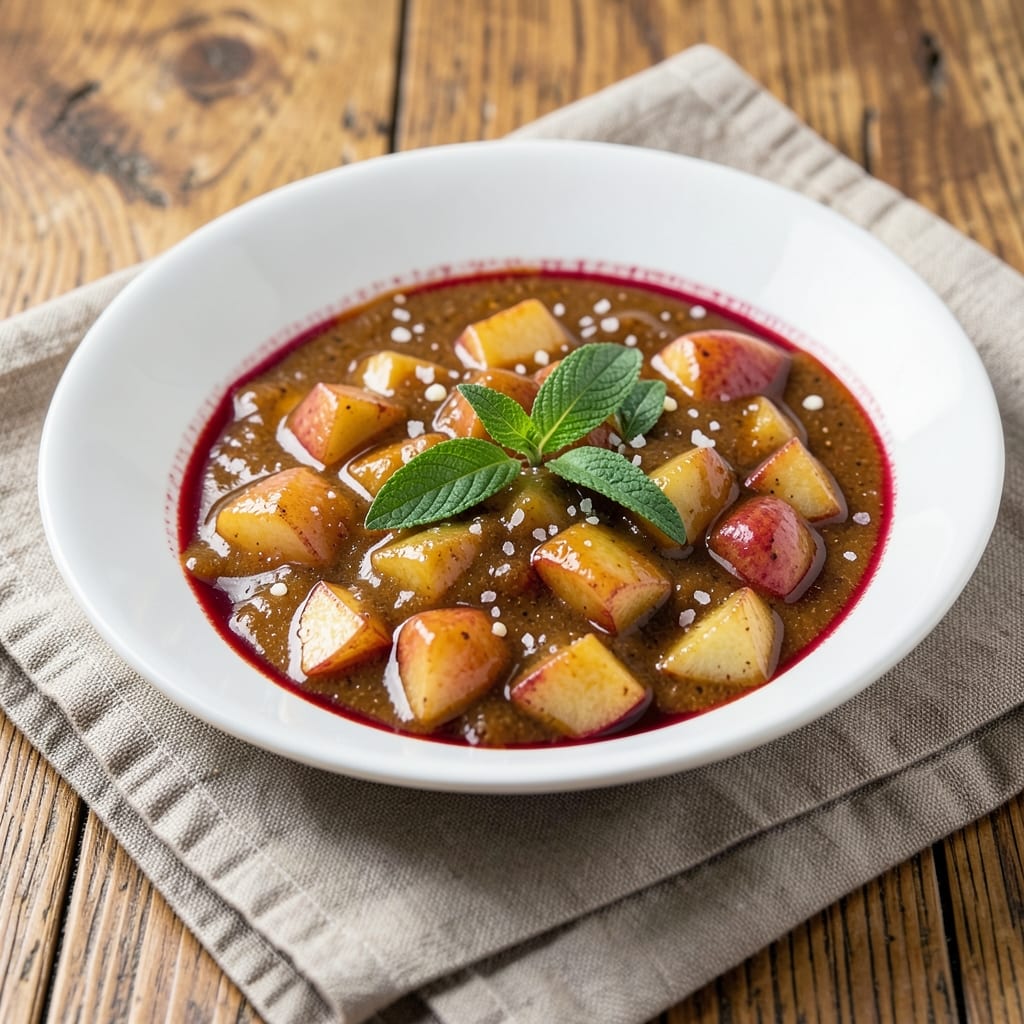
This apple and sage sauce recipe transforms simple ingredients into a velvety, aromatic companion for roasts and mashed potatoes. The secret lies in simmering apples and fresh sage with butter and a touch of sugar, creating a balance of sweet, savory, and herbal notes that elevate any dish. I developed this sauce after realizing how much richer holiday meals became when paired with this simple yet sophisticated topping.
The process is straightforward: cook down apples with butter, add fresh sage leaves for their earthy aroma, and finish with a splash of wine or broth to deepen the flavor. The result is a smooth, glossy sauce that clings beautifully to meats and melts into creamy sides. What makes this sauce special is its versatility—it works equally well as a drizzle for roasted chicken, a topping for mashed potatoes, or even a glaze for pork chops.
What you’ll achieve is a sauce that’s rich enough to stand on its own but light enough to enhance other flavors. The apples add natural sweetness, while the sage brings a piney depth that pairs perfectly with savory dishes. This sauce also keeps well in the refrigerator, making it ideal for meal prep or gifting in small jars.
Ready in just 30 minutes, this recipe delivers restaurant-quality results with minimal effort. Whether you're hosting a dinner party or simply looking to elevate a weeknight meal, this apple and sage sauce is the perfect finishing touch. Let’s get started!
Ingredients for apple and sage sauce
Simple ingredients that create restaurant-quality sauce for holiday meals and weeknight dinners alike.
| Ingredient | Amount | Notes |
|---|---|---|
| Apples 🍎 | 2 medium | Peeled, cored, diced small |
| Unsalted Butter 🧈 | ½ cup | Cold, cubed for even melting |
| Fresh Sage Leaves 🌿 | ¼ cup | Packed, stems removed |
| Granulated Sugar 🍚 | 2 tbsp | Light brown sugar preferred |
| Dry Red Wine 🍷 | ¼ cup | Bold variety like Cabernet |
| Chicken or Vegetable Broth 💧 | ½ cup | Low-sodium preferred |
| Fresh Lemon Juice 🍋 | 1 tbsp | Bright, freshly squeezed |
| Salt 🧂 | ½ tsp | Diamond Crystal preferred |
| Ground Black Pepper 🌶️ | ¼ tsp | Freshly cracked peppercorns |
The apples are the foundation—Honeycrisp or Fuji work best for their balance of sweetness and tartness. Local farmers markets often have the freshest varieties, but any firm apple will do. Avoid those with bruises or soft spots. The butter should be cold when you start so it melts gradually, creating a silky texture. For the sage, fresh is non-negotiable—dried won't give that same aromatic punch. I like to buy my sage in small bunches from Whole Foods or Trader Joe's since it keeps well in the fridge for about a week.
No red wine? Substitute with extra broth—just add another 0.25 cup. Using brown sugar instead of white? You'll get a deeper caramel flavor, but reduce to 1.5 tbsp. For a vegetarian version, ensure your broth is vegetable-based. The lemon juice can be swapped for apple cider vinegar in a pinch, though it'll be slightly tangier. If you can't find Diamond Crystal salt, any fine sea salt will work—just taste as you go. The pepper is optional but adds a nice finish; if you prefer milder flavor, skip it or use white pepper instead.
This sauce thickens as it cools, so don't worry if it looks thin when you're done. Store it in an airtight container in the fridge for up to 5 days. For gifting, portion into small jars—it makes a lovely holiday present. Reheat gently on the stove with a splash of water or broth to restore its glossy texture. Freezes beautifully for up to 3 months, though the texture may change slightly after thawing. I always make extra—it's perfect for drizzling over roasted vegetables too.
Why You'll Love This Recipe
- Foolproof Simplicity: I swear by this—just core the apples, slice them, and toss them in a pan with butter. No peeling, no fancy prep, just 15 minutes of hands-off cooking while you stir in the sage and wine. That’s it.
- Wine-Infused Magic: Honestly, the red wine reduces down into a glossy, slightly tangy sauce that clings to everything—pork chops, roasted chicken, even toasted bread. The sage leaves crisp up just enough to add that earthy punch without overpowering.
- Weeknight to Dinner Party: Between us, this sauce works for scrambled eggs on a lazy morning or drizzled over seared scallops at a holiday gathering. The sugar balances the wine’s acidity, so it’s never too heavy or too sharp—just right.
- Budget-Friendly Luxury: Apples are cheap, butter is a pantry staple, and a bottle of red wine stretches across multiple batches. I’ve made this for under $8 total, and it tastes like I spent twice that. Leftovers? Freeze them—thaw and reheat for breakfast hash or pasta.
Step-by-step instructions for apple and sage sauce
This elegant sauce delivers perfect balance—sweet apples, aromatic sage, and rich depth.
Melt Butter and Cook Apples
In a medium saucepan, melt the 0.5 cup unsalted butter over medium heat until it foams but doesn't brown. Add the 2 medium peeled, cored, and diced apples and cook for 5-6 minutes, stirring occasionally, until they begin to soften slightly. The butter should coat the apples evenly, creating a golden base.
Here's the thing—don't rush this step. You want the apples to release their natural juices while maintaining some texture. They should be tender but still hold their shape, not mushy. If they start to brown too quickly, reduce the heat slightly to medium-low.
Add Sugar and Sage
Stir in the 2 tablespoons granulated sugar and 0.25 cup fresh sage leaves, pressing the leaves gently with a wooden spoon to release their oils. Cook for 2-3 minutes until the sugar dissolves and the sage becomes fragrant. The mixture should smell like a forest after rain—bright, herbal, and inviting.
I press the sage leaves because this ensures maximum flavor extraction. If you skip this, you'll miss out on that deep, earthy aroma that makes this sauce special. Keep stirring gently to prevent burning—sugar caramelizes quickly when left unattended.
Deglaze with Wine and Broth
Pour in the 0.25 cup dry red wine and scrape up any browned bits from the bottom of the pan with a wooden spoon. This deglazing step captures all the flavor that's stuck to the pan. Let the wine simmer for 3-4 minutes until it reduces by half and becomes slightly syrupy.
Next, add the 0.5 cup chicken or vegetable broth and bring the mixture to a gentle simmer. At this point, the sauce should be thick enough to coat the back of a spoon but still fluid enough to pour. If it's too thick, add 1-2 tablespoons water to reach your desired consistency.
Finish with Lemon and Seasonings
Reduce the heat to low and stir in the 1 tablespoon fresh lemon juice, 0.5 teaspoon salt, and 0.25 teaspoon ground black pepper. Simmer gently for 5-7 minutes until the sauce thickens slightly and the flavors meld together. The lemon juice brightens the dish, cutting through the richness of the butter and balancing the sweetness of the apples.
Taste and adjust seasoning if needed. I often find that another pinch of salt enhances the flavors, especially if using low-sodium broth. The sauce should be sweet, herbal, and slightly tangy—complex without being overpowering. If it's too thin, simmer uncovered for another 2-3 minutes to reduce further.
Strain and Serve
Transfer the sauce to a fine-mesh strainer set over a clean saucepan. Press gently with a wooden spoon to extract all the liquid while leaving the sage leaves and apple pieces behind. Discard the solids or save them for another use—like a quick applesauce or compote.
Return the strained sauce to the saucepan and keep it warm over low heat, stirring occasionally. This sauce is best served immediately over roasted meats, mashed potatoes, or even as a drizzle for pancakes. The texture should be smooth, the color a rich amber, and the aroma irresistible.
Pro Tips For Making Apple And Sage Sauce
- DEGLAZE AFTER BROWNING: Let the butter brown first—golden, not white—before adding apples. I learned this the hard way: skipping the browning means a sauce that’s just butter-flavored apples instead of rich, nutty depth. Use the red wine immediately after browning to scrape up every last bit of fond from the pan.
- COARSELY CHOP THE APPLES: No need for perfect dice—roughly chop the apples into ½-inch pieces. Smaller bits turn to mush; larger chunks make the sauce look messy. The texture’s supposed to be rustic, not refined, so embrace the uneven edges.
- SIMMER LOW AND SLOW: After adding the wine and sugar, reduce heat to a gentle simmer. I used to rush it, and the sauce would either burn or taste raw. Five minutes at low heat lets the flavors meld without turning the sage bitter or the apples into applesauce.
- STRAIN THE SAGE LEAVES: Fish out the sage leaves before serving—unless you’re going for a chunky texture. Whole leaves turn bitter when overcooked, and you’ll end up with a mouthful of fibrous bits. A fine-mesh strainer takes 10 seconds and makes the sauce silky.
Common mistakes when making this dish
Skipping the Deglaze
One of the biggest mistakes is forgetting to deglaze the pan after cooking the apples. Those browned bits stuck to the bottom are packed with flavor—flavor you don’t want to miss. Always pour in the 0.25 cup dry red wine and scrape with a wooden spoon to lift those caramelized bits. Without this step, your sauce will taste flat and lack depth. 🍷
Overcooking the Apples
Apples should soften slightly but still hold their shape—mushy apples mean a grainy sauce. Cook them for only 5-6 minutes over medium heat before adding sugar and sage. If they start to brown too quickly, reduce the heat to medium-low. Overcooking releases too much starch, making the sauce thick and gluey instead of silky.
Using Dried Sage
Fresh sage is non-negotiable for this sauce. Dried sage lacks the bright, herbal aroma that makes this dish special. The leaves should be packed tightly—0.25 cup fresh leaves is about 10-12 leaves. Press them gently with a wooden spoon to release their oils. If you must use dried sage, reduce to 1 teaspoon and add it at the very end, but the flavor won’t be the same. 🌿
Ignoring the Strain
Skipping the straining step leaves behind fibrous apple bits and tough sage stems, which can make the sauce gritty. Use a fine-mesh strainer and press gently with a wooden spoon to extract every last drop of flavor. If you’re short on time, blend the sauce first, then strain—this still removes unwanted texture while keeping the sauce smooth. 💫
Rushing the Simmer
This sauce needs time to develop its layers of flavor. After adding the wine and broth, let it simmer gently for at least 10 minutes—don’t rush it. The longer it cooks, the more the sweetness of the apples and the earthiness of the sage meld together. If you’re in a hurry, you’ll end up with a sauce that tastes disjointed rather than harmonious.
Forgetting to Taste
Seasoning is all about balance, and this sauce needs salt, lemon juice, and sugar to shine. Taste as you go—especially after adding the lemon juice and salt. Adjust gradually: another pinch of salt, a splash of lemon, or even a tiny bit of sugar if it needs sweetness. Trust your palate—this sauce should be sweet, herbal, and slightly tangy, not one-dimensional. ✨
Nutrition facts
Frequently asked questions
Can I use this sauce for dishes other than roasts and mashed potatoes?
This versatile sauce works beautifully as a drizzle for roasted chicken, pork chops, or even turkey. Try it over creamy polenta or as a glaze for roasted vegetables like Brussels sprouts. For breakfast, a spoonful elevates pancakes or French toast—just reduce the sugar slightly to balance the sweetness.
What if I don't have red wine? Can I substitute something else?
Yes! Swap the 0.25 cup red wine with 0.25 cup apple cider or 0.5 cup extra broth for a non-alcoholic version. For depth, add 1 teaspoon balsamic vinegar with the broth. The sauce will still develop rich flavors, though the wine adds a subtle complexity that's hard to replicate.
How can I adjust the sweetness if my apples are tart?
Tart apples like Granny Smith need extra sugar to balance their acidity. Increase the sugar to 3 tablespoons and add 1 teaspoon honey during the final simmer. Taste as you go—you can always add more sugar, but you can't remove it. For a smoother finish, blend the strained sauce briefly to incorporate the honey.
Will this sauce thicken when refrigerated? How do I fix it if it's too thick?
Yes, this sauce thickens as it cools—it's normal! To adjust consistency, reheat gently over low heat and stir in 1-2 tablespoons water or broth until smooth. If it's too thin, simmer uncovered for 3-5 minutes to reduce. For a glossy finish, whisk in 1 teaspoon cornstarch mixed with 1 tablespoon water until it shines.
Can I make this sauce ahead of time? How should I store it?
This sauce keeps beautifully for 5 days in an airtight container in the fridge. For gifting, portion into small jars—it makes a lovely holiday present! To reheat, warm over low heat with a splash of water or broth. It also freezes well for up to 3 months, though the texture may change slightly after thawing. Always reheat gently to preserve its silky consistency.