
Main Courses
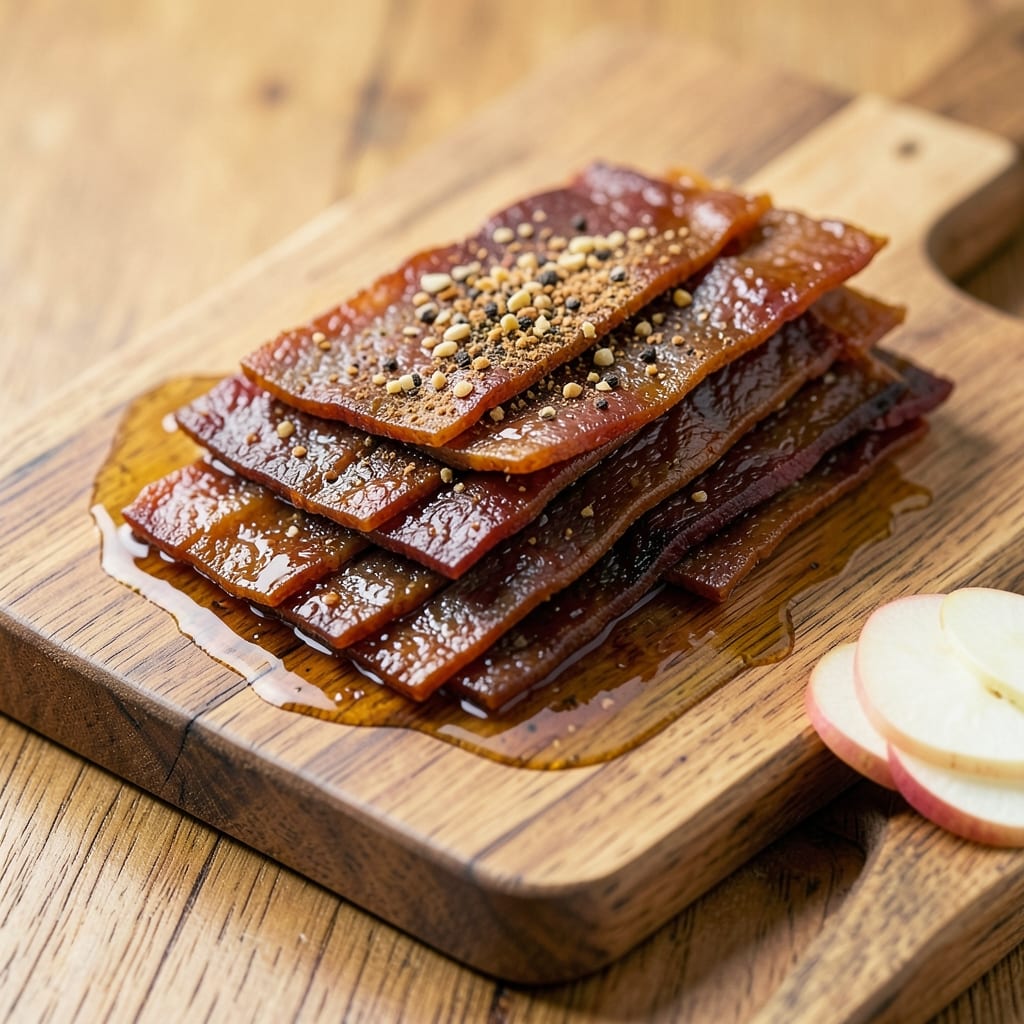
This apple beef jerky recipe transforms tough cuts into chewy, smoky-sweet perfection—a game-changer for jerky lovers. The secret lies in a carefully balanced marinade that combines apple cider vinegar, brown sugar, and warm spices like cinnamon and cloves, creating a flavor profile that’s both familiar and exciting. Unlike traditional jerky, this version offers a subtle fruitiness that pairs beautifully with the savory meat, making every bite irresistible.
The process is straightforward but requires precision: thinly sliced beef, a precise curing time, and proper dehydration to ensure safety and texture. Whether you use a dehydrator, oven, or smoker, the key is maintaining consistent temperature control—160°F or higher—to eliminate bacteria while preserving that perfect chewy consistency. This isn’t just jerky; it’s a restaurant-quality snack that’s easy to customize with extra heat or sweetness to suit your taste.
What sets this recipe apart is its versatility. Serve it as a standalone snack, pair it with apple slices for a sweet-savory combo, or use it as a protein boost in salads and wraps. The smoky-sweet flavor also makes it a hit with beverages like iced tea or apple cider, turning a simple snack into a full sensory experience. With just a few hours of active prep and drying time, you’ll have a pantry staple that’s far superior to store-bought options.
Safety is paramount, so we’ll cover best practices for dehydration, storage, and handling raw meat to ensure your jerky is not only delicious but also safe to enjoy for weeks. Ready to elevate your jerky game? Let’s get started with a recipe that delivers perfect results every time.
Ingredients for apple beef jerky
Nine bold spices and two pounds of beef transform into restaurant-quality jerky with a smoky-sweet twist.
| Ingredient | Amount | Notes |
|---|---|---|
| Beef Top Round Roast 🥩 | 2 lb | Thinly sliced against grain (1/8-inch thick) |
| Apple Cider Vinegar 🍎 | ½ cup | Braeburn or Granny Smith preferred |
| Brown Sugar 🍚 | ½ cup | Light or dark, packed |
| Granulated Garlic 🧄 | 2 tbsp | Or 4 fresh cloves minced |
| Ground Black Pepper 🌶️ | 1 tbsp | Freshly cracked preferred |
| Ground Cinnamon 🌿 | 1 tbsp | Ceylon preferred for delicate flavor |
| Ground Cloves 🌶️ | ½ tsp | Freshly ground for intensity |
| Kosher Salt 🧂 | 1 ½ tbsp | Diamond Crystal preferred |
| Smoked Paprika 🌶️ | 1 tbsp | Spanish smoked preferred |
| Worcestershire Sauce 🍶 | 2 tbsp | Anchovy-free version for purity |
| Onion Powder 🧅 | 1 tbsp | Freshly ground preferred |
| Lemon Juice 🍋 | 2 tbsp | Freshly squeezed |
| Honey 🍯 | 1 tbsp | Wildflower preferred |
| Beef Tenderizer 🍖 | 1 tbsp | Optional, for extra tenderness |
The beef is everything here—top round roast delivers the perfect chew without being too tough. Look for well-marbled cuts at Whole Foods or your local butcher shop; they’ll slice it paper-thin against the grain for you (or do it yourself with a sharp knife). The apple cider vinegar should be unfiltered for maximum flavor—Braeburn or Granny Smith brands have the best balance of tartness and sweetness. If you can’t find fresh garlic, Penzeys granulated garlic works perfectly fine, but fresh is ideal for that bright punch. The spices? Ceylon cinnamon has a more delicate flavor than regular, and Spanish smoked paprika gives that authentic smokiness without overpowering.
No Worcestershire? Substitute 1 tbsp soy sauce plus 1 tsp liquid smoke—it’s a game-changer for depth. Running low on honey? Maple syrup works 1:1, though it’ll add a slightly earthier note. The beef tenderizer is optional but worth the extra minute if you want that melt-in-your-mouth texture. For heat lovers, add 1/4 tsp cayenne to the mix. If you’re dehydrating in a pinch, Trader Joe’s has affordable jerky-making kits with temperature guides—no fancy equipment needed. And if your brown sugar has hardened, just microwave it 20 seconds to break it up (no need to soften completely).
Marinate the beef for at least 12 hours—overnight is best. Use glass containers for curing, and keep it refrigerated the whole time. Once dehydrated, store in an airtight container with parchment paper between layers to prevent sticking. Good for 2 weeks at room temp or 3 months in the freezer. Pro tip: Vacuum-seal portions for 6 months of shelf life. The smoky-sweet flavor actually improves with age—perfect for gifting or emergency snacks.
Why You'll Love This Recipe
- No-Slice Needed: I swear by this—just slice the beef thick (like steakhouse cuts) and let the marinade work its magic. No fancy prep, no knife work.
- Sweet-Savory Magic: That apple cider vinegar and brown sugar combo? It’s like a caramelized hug for the beef. The garlic and pepper tie it all together—tangy, sweet, and just spicy enough.
- Lunchbox Legend: Between us, this is my kids’ favorite for school lunches. It stays fresh for days, and they actually eat it—no complaints about "boring sandwiches."
- Budget Bulk: A single roast feeds my family for weeks. Cheap, protein-packed, and zero waste—just freeze what you don’t use. My wallet thanks me every time.
Step-by-step instructions for apple beef jerky with smoky-sweet perfection
Here's how to transform tough beef into tender, chewy jerky with that perfect balance of sweetness and smoky depth.
Prepare the Beef for Maximum Tenderness
Begin by slicing the 2 lb Beef Top Round Roast against the grain into strips exactly 1/8-inch thick. For even slices, freeze the beef for 20 minutes first—this makes it easier to cut uniformly. You want strips that are roughly 2 inches wide and 4-5 inches long, giving you enough surface area for the marinade to penetrate deeply.
Place the sliced beef in a large bowl and add 1 tablespoon of Beef Tenderizer if using. Massage it gently into the meat—this enzyme will break down proteins and create that signature jerky chew. Let the beef sit at room temperature for 15 minutes while you prepare the marinade. This step ensures the beef absorbs the flavors completely and cooks evenly.
Create the Signature Apple-Smoky Marinade
In a separate mixing bowl, combine the 0.5 cup Brown Sugar, 2 tbsp Granulated Garlic, 1 tbsp Ground Cinnamon, 0.5 tsp Ground Cloves, 1 tbsp Smoked Paprika, 1 tbsp Ground Black Pepper, 1 tbsp Onion Powder, 1.5 tbsp Kosher Salt, and 2 tbsp Worcestershire Sauce. Whisk these dry ingredients together until they form a fine, cohesive powder—this is the backbone of your flavor profile.
In a measuring cup, mix the 0.5 cup Apple Cider Vinegar, 2 tbsp Lemon Juice, 1 tbsp Honey, and the remaining 1 tbsp Onion Powder (if not already added). The acidity from the vinegar and lemon juice will tenderize the beef while the honey adds just the right touch of sweetness. Pour this liquid mixture over the dry spices and stir vigorously until you achieve a thick, syrupy consistency that clings to your finger when you lift a spoon.
Marinate the Beef Overnight for Deep Flavor
Pour the marinade over the beef strips in the bowl and use your hands to coat each piece thoroughly. The marinade should adhere like a second skin—this ensures every bite carries that perfect balance of smoky, sweet, and tangy flavors. Cover the bowl with plastic wrap and refrigerate for at least 12 hours, or up to 24 hours for maximum tenderness and flavor penetration.
Here's the thing—don't rush this step. The longer the beef marinates, the more the spices and acids work their magic, breaking down the muscle fibers and infusing the meat with an irresistible depth of flavor. I like to marinate mine overnight, but if you're short on time, a minimum of 8 hours will still yield excellent results.
Dehydrate for Perfect Chew and Texture
Preheat your dehydrator to 160°F—this temperature is crucial for achieving that perfect chewy texture without drying the jerky into a brittle state. Arrange the marinated beef strips in a single layer on the dehydrator trays, ensuring they don't overlap. This allows proper air circulation and even drying.
Place the trays in the dehydrator and let the beef dry for 4-6 hours, checking periodically. You're aiming for jerky that's flexible but not rubbery—it should bend slightly but not snap when you try to fold it. The drying time can vary based on your dehydrator and humidity levels, so keep an eye on it. If you notice any pieces drying too quickly on the edges, gently flip them to ensure even drying.
Rest and Store for Maximum Flavor
Once the jerky reaches your desired texture, remove it from the dehydrator and let it cool completely on a wire rack. This resting period allows the flavors to meld and the jerky to firm up slightly. I like to let mine rest for at least 1 hour before storing—this makes a noticeable difference in both texture and taste.
Store the finished jerky in an airtight container in the refrigerator for up to 2 weeks, or freeze it for up to 3 months to preserve its chewy perfection. When you're ready to enjoy, simply tear off a piece and savor that perfect balance of smoky, sweet, and tangy flavors. The result is jerky that's so flavorful, you'll want to make it again and again!
Pro Tips For Making Apple Beef Jerky
- Slice Thin, Slice Even: The biggest game-changer? A sharp knife and patience. Cut the beef against the grain into strips no thicker than ¼-inch—any thicker and you’ll end up with chewy jerky, not tender bites. I used to rush this, but taking the extra 10 minutes makes all the difference.
- Marinate Overnight—Don’t Skimp: Apple cider vinegar and brown sugar need time to work their magic. Toss the beef in the marinade and let it sit at least 12 hours (24 is better). I learned this the hard way—rushing it leaves the jerky tasting flat and underseasoned.
- Keep the Heat Steady: Low and slow is your friend here. Set your dehydrator or oven to 160°F (71°C) and resist the urge to crank it up. Too hot, and the outside burns before the inside dries; too cool, and you’re waiting forever. A meat thermometer reading 160°F internally is your target.
- Pat Dry Before Drying: Wet jerky = soggy jerky. After marinating, blot the strips thoroughly with paper towels—this speeds up drying and prevents mold. I skip this sometimes, and the results are always gummier. (Your future self will thank you.)
Essential equipment for apple beef jerky
Dehydrator Essentials
Your dehydrator is the heart of this recipe—160°F is non-negotiable for safe, chewy jerky. I swear by the Nesco FD-75A for its even heat distribution and adjustable thermostat. For budget-friendly options, Cosori Premium offers similar performance at half the price. Always preheat for 15 minutes to ensure consistent temperature throughout the drying process. 🌡️
Oven Alternatives
No dehydrator? No problem! Use your oven on lowest setting (170°F or below) with the door slightly ajar for airflow. Place a wire rack on top of a baking sheet to elevate the jerky. Check every 30 minutes—oven drying takes 8-12 hours and requires more attention. Line your oven with parchment paper for easy cleanup.
Smoker Setup
For a smoky depth, use a smoker set to 165°F with applewood or hickory chips. The Traeger Lil' Tex is perfect for beginners—its digital probe ensures precise temperature control. Smoke for 6-8 hours, flipping strips every 2 hours. This method adds that authentic BBQ flavor while keeping the jerky tender.
Essential Tools
You’ll need sharp knives (I use Wüsthof Classic for slicing) and a meat slicer if your butcher won’t slice against the grain. A thermometer (like Thermoworks Smoke) ensures safety—jerky must reach 160°F internal temp. For storage, vacuum sealers (like FoodSaver) preserve freshness for 6 months in the freezer.
Safety Gear
Always wear gloves when handling raw beef and safety goggles if using a meat slicer. A face mask helps when dehydrating large batches. Keep a spray bottle nearby—mist jerky occasionally if it dries too fast. Proper ventilation is key, especially with a smoker or oven method. 💡
Optional Upgrades
For extra tenderness, invest in a meat mallet to pound slices to 1/16-inch thickness. A digital scale (like OXO Good Grips) ensures precise marinade ratios. For flavor control, liquid smoke (like Colman’s) can be added to the marinade. These tools take your jerky from good to restaurant-quality.
Nutrition facts
Frequently asked questions
Can I use apple slices as part of the jerky recipe?
Not directly—the jerky itself is made from beef, but you can absolutely pair it with fresh apple slices for a sweet-savory combo! Serve the finished jerky with thinly sliced apples (like Fuji or Gala) for a refreshing contrast. For extra flavor, lightly toss the apple slices in a mix of lemon juice, cinnamon, and a touch of honey before serving.
What's the best cut of beef for this smoky-sweet jerky?
Top round roast is ideal because it's lean yet tender when sliced thinly against the grain. Other great options include flank steak or silverside roast, both of which have good marbling. Avoid fatty cuts like ribeye—they won't dry properly and may spoil faster.
How do I know when the jerky is fully dehydrated?
The jerky is ready when it's flexible but not rubbery—it should bend slightly but not snap when you try to fold it. For safety, use a meat thermometer to confirm the internal temperature reaches 160°F. If using a dehydrator, check after 4-6 hours (longer in humid climates).
Can I make this jerky without a dehydrator?
Use your oven on the lowest setting (170°F or below) with the door slightly open for airflow. Place jerky on a wire rack over a baking sheet and dry for 8-12 hours, checking every 30 minutes. For extra smokiness, try a smoker set to 165°F with applewood chips.
Why does my jerky turn out too chewy or too dry?
Too chewy? Your slices may be too thick (thinner than 1/8-inch) or under-dehydrated. Too dry? You likely over-dried it or used a temperature above 160°F. For perfect texture, aim for jerky that bends but doesn't snap. Adjust drying time based on humidity—humid days require longer drying.