
Sauces & Condiments
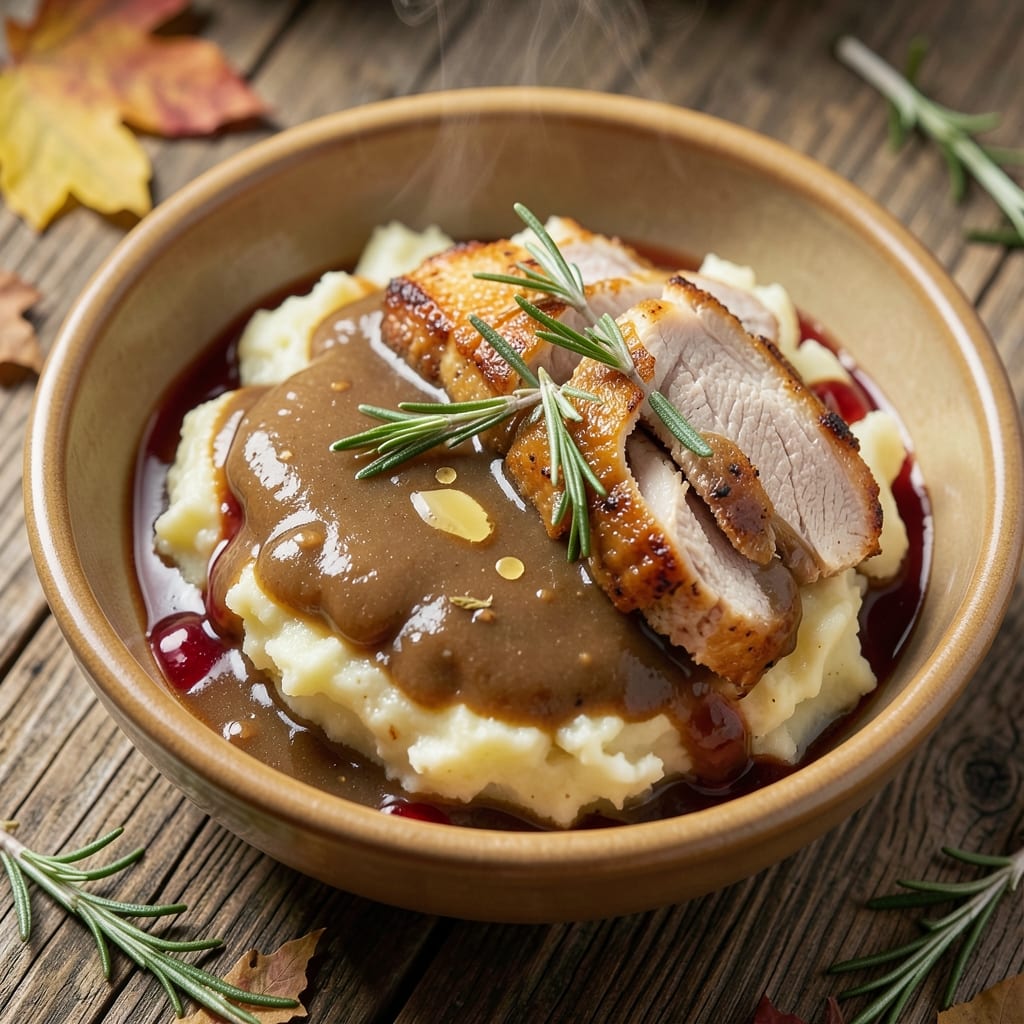
Apple cider turkey gravy transforms ordinary drippings into a velvety, aromatic sauce that elevates any holiday meal. The secret lies in balancing apple cider’s natural sweetness and acidity with rich turkey fat, creating a gravy that’s both comforting and sophisticated. This technique preserves the deep, caramelized flavors from roasting while adding a subtle autumnal warmth.
What sets this gravy apart is the slow reduction process, which intensifies flavor without thickening too quickly. Straining the mixture ensures a silky texture, while apple cider prevents bitterness that often plagues traditional gravies. The result? A sauce so rich and balanced it turns Thanksgiving leftovers into a gourmet experience.
Perfect for drizzling over roasted turkey, mashed potatoes, or even biscuits, this gravy delivers restaurant-quality depth with minimal effort. The apple cider’s subtle tartness cuts through the richness, making every spoonful harmonious. Ready in just 15 minutes, it’s the ideal finishing touch to your holiday feast.
For extra depth, add a splash of apple cider vinegar or a pinch of thyme while reducing. The key is patience—letting the sauce simmer gently until it reaches the perfect consistency. This is gravy that doesn’t just accompany the meal; it steals the show.
Ingredients for apple cider turkey gravy
Nine essential ingredients transform turkey drippings into velvety, aromatic apple cider gravy.
| Ingredient | Amount | Notes |
|---|---|---|
| Turkey Pan Drippings 🍗 | 2 cups | Reserved from roasted turkey |
| Apple Cider 🍎 | 1 cup | Unfiltered, preferably organic |
| Unsalted Butter 🧈 | ½ cup | Cold, cubed for even melting |
| All-Purpose Flour 🌾 | ¼ cup | Diamond Crystal preferred |
| Fresh Thyme Leaves 🌿 | 1 tbsp | Or 1 tsp dried thyme |
| Fresh Rosemary Sprigs 🌿 | 2 whole | Finely chopped, stems removed |
| Apple Cider Vinegar 🍋 | 1 tbsp | For depth of flavor |
| Salt 🧂 | ½ tsp | Diamond Crystal kosher salt |
| Freshly Ground Black Pepper 🌶️ | ¼ tsp | Cracked peppercorns preferred |
| Granulated Sugar 🍚 | 1 tsp | Balances acidity |
The turkey drippings are the foundation—save them carefully in a fat separator or jar while the turkey rests. High-quality apple cider makes all the difference; brands like Woodchuck or Mott's deliver authentic flavor. Fresh herbs should be bright green and fragrant—wilting indicates age. For the flour, Diamond Crystal absorbs less liquid than other brands, crucial for achieving that silky texture. If you prefer convenience, Bob's Red Mill all-purpose flour works equally well. The butter should be cold and cubed to prevent premature melting during reduction, ensuring even emulsification.
No apple cider vinegar? Substitute with lemon juice at half the amount—though the flavor profile shifts slightly. Fresh herbs unavailable? Dried thyme at one-third the quantity maintains depth, while smoked paprika can replace rosemary for a different complexity. For a lower-carb option, reduce the flour to 2 tbsp and compensate with an extra splash of apple cider. The sugar is optional but recommended to balance the acidity, especially if using tart cider. For a richer finish, add 1 tsp of heavy cream at the end, though it alters the gravy's natural clarity.
This gravy reheats beautifully—simply warm on the stove over medium-low heat, stirring constantly. Store in an airtight container in the refrigerator for up to 5 days, though flavor peaks within 24 hours. For longer storage, freeze in ice cube trays for single-serving portions, thawing overnight in the refrigerator. The gravy thickens as it cools, so add a splash of warm water or apple cider if it becomes too stiff when reheated. Garnish with extra thyme before serving to elevate presentation and aroma.
Why You'll Love This Recipe
- Uses What’s Already There: I swear by this trick—no extra shopping trips. Just scoop up those turkey drippings after your roast, dump in a splash of apple cider, and boom. The flavor’s already built into your meal.
- Sweet-Savory Magic: That apple cider cuts through the richness of turkey fat, balancing it with just enough warmth. The thyme? Tiny but mighty—like a cozy hug for your taste buds.
- Leftovers? No Problem: This gravy thickens perfectly for reheating—great for dipping biscuits or drizzling over turkey sandwiches the next day. Honestly, I make double batches just for this.
- One-Pot, Zero Guilt: Five ingredients, one pan, and 15 minutes max. No fancy techniques, no stress. Even if you burn the flour (yes, it happens), the cider smooths it out. Budget-friendly too—uses pantry staples.
Step-by-step instructions for apple cider turkey gravy
Transform simple pan drippings into a rich, aromatic gravy with autumnal depth.
Melt Butter and Bloom the Flour
Place a large saucepan over medium heat and add the 0.5 cup unsalted butter. Allow it to melt completely, watching for the butter to foam and then settle into a smooth, golden liquid. This takes about 2-3 minutes—don't rush it, as the butter needs to fully transform into a liquid state before proceeding.
Once the butter has melted, immediately whisk in the 0.25 cup all-purpose flour to create a roux. Keep whisking constantly for 2 minutes until the mixture turns a pale golden color and smells nutty. This step, called blooming, removes the raw flour taste and prepares the base for your gravy. If the roux darkens too quickly, reduce the heat slightly to prevent burning.
Deglaze with Apple Cider and Vinegar
Slowly pour in the 1 cup apple cider while whisking vigorously to prevent lumps from forming. The liquid will bubble vigorously as it reacts with the roux. Let the mixture simmer for 3-4 minutes until it thickens slightly and the raw flour taste disappears completely.
Next, add the 1 tablespoon apple cider vinegar and the 2 whole fresh rosemary sprigs (finely chopped). The vinegar brightens the flavors and balances the sweetness of the cider. Stir for another 1 minute to incorporate these ingredients fully. You'll notice the mixture becomes more aromatic, with a subtle herbal note from the rosemary.
Incorporate Pan Drippings and Herbs
Gradually whisk in the 2 cups turkey pan drippings, allowing the liquid to come to a gentle simmer. The drippings will create a rich, savory foundation for your gravy. As it heats, stir frequently to prevent any bits from settling at the bottom of the pan.
Add the 1 tablespoon fresh thyme leaves, 0.5 teaspoon salt, and 0.25 teaspoon freshly ground black pepper. Simmer the mixture for 5-7 minutes until it thickens to a smooth, velvety consistency. You want it to coat the back of a spoon without being gluey. If it thickens too quickly, whisk in 1-2 tablespoons of hot water to adjust the texture.
Finish with Sugar and Strain
Remove the pan from heat and stir in the 1 teaspoon granulated sugar. This subtle addition balances the acidity of the vinegar and enhances the natural sweetness of the apple cider. Let the gravy rest for 2 minutes to allow the flavors to meld.
Strain the gravy through a fine-mesh sieve into a clean saucepan to remove any herb stems or sediment. This step ensures a silky-smooth texture without any unwanted bits. Taste and adjust seasoning if needed—you may want to add a pinch more salt or pepper to suit your preference. The gravy should have a rich, complex flavor with notes of apple, herbs, and turkey.
Pro Tips For Making Apple Cider Turkey Gravy
- STRAIN WELL: Skip the lazy skimming—use a fine-mesh strainer or cheesecloth to filter the turkey drippings before making gravy. I learned this the hard way when I ended up with a lumpy, meat-speckled mess instead of smooth, silky perfection. Takes 30 seconds but makes all the difference for that restaurant-quality finish.
- WHISK THE ROUX FAST: Cook the butter and flour on medium-high heat until it’s a deep golden brown—about 2 minutes. Too low, and you’ll get a raw flour taste; too high, and it burns. I used to hover over the pan like a nervous parent, but trust the timer once you’ve done it a few times.
- DEGLAZE WITH CIDER HEAT: Pour in the apple cider when it’s just off the boil—hot enough to sizzle but not so violent it splatters everywhere. Cold cider shocks the pan and leaves behind a dull, unreactive layer. Warm it slightly first if it’s straight from the fridge, or you’ll be scraping burnt bits off your pan later.
- SALT THE CIDER: Add a pinch of salt to the apple cider before combining it with the roux. The flavor builds as it simmers, and you’ll need less at the end. I used to forget this and end up with a bland, one-dimensional gravy—now I just taste the cider first and adjust. Works every time.
Regional styles of these flavors
New England Classic
In New England, apple cider gravy is a Thanksgiving staple, often made with unfiltered cider and a touch of maple syrup instead of sugar. Locals like to use dried sage alongside thyme for a more robust herbal profile. The key technique here is a longer reduction time—simmer the gravy for 10-12 minutes to deepen the apple flavors. Serve it with cornbread or roasted root vegetables for a true regional experience. 🍁
Southern Comfort Twist
Southern cooks elevate this gravy by adding a splash of bourbon (about 1 tablespoon) during the reduction. The warmth of the whiskey complements the apple cider beautifully, creating a gravy with caramelized depth. Use stone-ground cornmeal instead of flour for thickening—it adds a subtle corn sweetness that pairs perfectly with turkey. This version is often served over buttermilk biscuits or collard greens. 🥃
Midwest Homestyle
The Midwest approach focuses on simplicity and heartiness. Here, gravy is made with apple cider vinegar and a pinch of ground cinnamon (about ¼ teaspoon) for warmth. The secret? Slow-cooking the drippings with the turkey before making the gravy—this infuses the sauce with deep turkey flavor. Serve it alongside mashed potatoes or stuffing for a classic holiday spread. 🥔
Pacific Northwest Innovation
On the West Coast, chefs experiment with local pear cider (like Bellingham Pear) instead of apple cider for a slightly floral, less tart profile. Add a splash of balsamic vinegar (about ½ tablespoon) to enhance the umami notes. This version often includes fresh rosemary and a touch of honey instead of sugar. Pair it with wild mushroom dishes or roasted Brussels sprouts for a modern twist. 🍐
Texas BBQ Fusion
In Texas, apple cider gravy gets a smoky kick with ½ teaspoon of smoked paprika and a dash of chipotle powder. The gravy is often served over smoked turkey or even brisket for a fusion dish that’s gaining popularity. Use dark cider (like hard cider) for a bolder flavor. This version is perfect for Thanksgiving or holiday BBQs where bold flavors shine. 🔥
Nutrition facts
Frequently asked questions
Can I make this gravy without turkey drippings?
Yes, but the flavor will be less rich. Use 2 cups chicken or turkey stock instead, or substitute with 2 cups vegetable broth for a vegetarian version. For extra depth, add 1 tablespoon soy sauce or ½ teaspoon smoked salt to mimic the savory notes from drippings.
How do I fix gravy that's too thick or too thin?
For gravy that's too thick, whisk in 1-2 tablespoons of hot water or apple cider until smooth. If it's too thin, remove from heat and stir in 1 teaspoon cornstarch mixed with 1 tablespoon cold water, then simmer for 1-2 minutes until thickened. Always adjust gradually to avoid lumps.
Can I make this gravy ahead of time?
Prepare the gravy up to 24 hours ahead and store it in an airtight container in the refrigerator. Reheat gently on the stove, stirring constantly, and add a splash of apple cider if it thickens too much. For longer storage, freeze in ice cube trays for single servings.
What's the best way to store leftover apple cider?
Store unopened cider in the pantry for up to 6 months. Once opened, refrigerate and use within 1 week. For extended storage, freeze in 1-cup portions—thaw overnight in the fridge. Avoid reheating opened cider in the microwave, as it can degrade flavor.
Why does my gravy taste bitter?
Bitterness usually comes from over-reducing or using old apple cider. Balance it by adding ½ teaspoon sugar or 1 tablespoon cream. For future batches, simmer at medium-low heat and use fresh, high-quality cider. If the butter burns, strain it immediately to remove sediment.