
Beverages
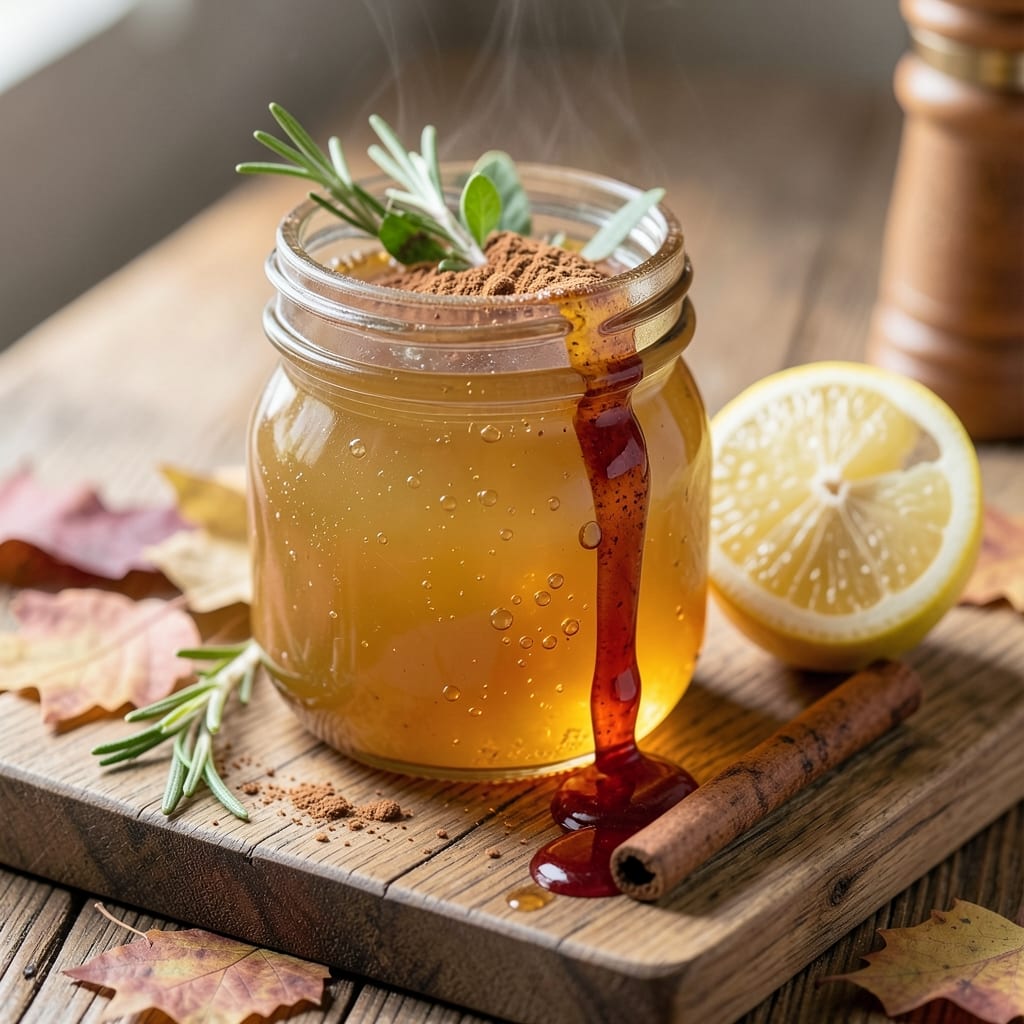
This apple cider vinegar jelly recipe transforms tangy vinegar into a versatile, plant-based condiment perfect for salads, sandwiches, and cocktails. The secret lies in balancing sweetness with the vinegar's sharpness, creating a jelly that's both bold and subtly complex. Unlike traditional fruit jellies, this version relies on natural pectin from the vinegar itself, eliminating the need for artificial thickeners.
With just five simple ingredients—apple cider vinegar, sugar, lemon juice, and a touch of cinnamon—you'll create a jelly that sets beautifully while retaining that signature tang. The process is straightforward: simmer, strain, and pour into sterilized jars, ensuring a smooth, glossy finish that's ready to elevate any dish. No special equipment is needed beyond a saucepan and fine-mesh strainer.
What you'll end up with is a bright amber jelly with a perfect balance of sweet and tart flavors, ideal for drizzling over toast, mixing into dressings, or even stirring into cocktails. The vinegar's acidity preserves the jelly naturally, so it stays fresh in the fridge for up to three weeks—far longer than store-bought alternatives. This is the kind of homemade condiment that turns ordinary meals into something special.
Use it as a glaze for roasted vegetables, a tangy addition to vinaigrettes, or even a sweet-savory topping for pancakes. The possibilities are endless, and the process is foolproof—perfect for beginners and seasoned cooks alike. Let's get started!
Ingredients for apple cider vinegar jelly
Five ingredients transform tangy vinegar into a bright amber jelly perfect for salads and sandwiches.
| Ingredient | Amount | Notes |
|---|---|---|
| Apple Cider Vinegar 🍏 | 1 cup | Raw, unfiltered preferred for texture |
| Granulated Sugar 🍚 | 1 ½ cups | White or raw cane preferred |
| Lemon Juice 🍋 | ¼ cup | Freshly squeezed, no pulp |
| Ground Cinnamon 🌿 | ½ tsp | Ceylon preferred for delicate flavor |
| Water 💧 | ¼ cup | Filtered or distilled preferred |
| Powdered Pectin 🍬 | 1 tbsp | Low-methoxyl for vegan compatibility |
The apple cider vinegar is the star—Bragg Organic or Texas Pete work beautifully, but any raw, unfiltered variety adds depth. The sugar should be fine grain for even dissolving, and Wholesale Club or Costco often have bulk options at great prices. Fresh lemon juice is non-negotiable here; bottled won't cut it. The cinnamon? Ceylon has a more delicate flavor than cassia, but regular works fine. For the pectin, Ball RealFruit or Pomona's Universal Pectin are vegan-friendly and reliable—avoid the high-methoxyl types that require citrus acid.
No Ceylon cinnamon? Regular ground cinnamon at half the amount works in a pinch, though the flavor will be stronger. Short on lemon juice? Lime juice at the same quantity gives a similar tang. The pectin can be skipped entirely if you're okay with a softer set, but it ensures that perfect jelly consistency. If you can't find powdered pectin, agar-agar at 1/4 tsp is a great vegan alternative. The water should be filtered or distilled to avoid any off-flavors—tap water with strong chlorine can alter the final taste. And if you're worried about the sugar crystallizing, microwave the sugar and water together for 20 seconds before adding to the vinegar.
This jelly thickens as it cools, so don't pour it into jars until it's fully set—about 20-30 minutes after pouring. Store in sterilized jars with airtight lids in the fridge for up to 3 weeks. The flavor actually improves over time, so make extra. For a longer shelf life, freeze portions in ice cube trays—thaw and drizzle as needed. If you're gifting, use amber glass jars to protect from light, which can degrade the vinegar's delicate flavor over time.
Why You'll Love This Recipe
- Pantry Magic: I swear, this jelly lives in my cupboard and never lets me down. Just sugar, vinegar, and a splash of lemon—no fancy shopping trips, no last-minute ingredient hunts. Honestly, I make it when I forget to buy honey.
- Tangy-Sweet Balance: That first bite? Pure comfort. The apple cider vinegar gives it a bright, almost caramelized bite, while the cinnamon warms it up like a hug. I’ll be real: it’s the only jelly I’ll put on toast in winter.
- Meal Prep MVP: Slather it on morning toast, drizzle it over yogurt, or toss it in salads—it’s my secret weapon for quick breakfasts and lazy lunches. Between us, it’s the only condiment that makes even plain oatmeal feel special.
- Keeps Forever: Make a big batch, store it in the fridge, and it’ll last weeks. No waste, no stress—just pure, reliable flavor whenever I need it. (Yes, even on a Tuesday night.)
Step-by-step instructions for apple cider vinegar jelly
This tangy homemade jelly transforms simple ingredients into a vibrant condiment perfect for brightening salads and sandwiches.
Combine Vinegar, Sugar, and Water
In a medium saucepan, combine the 1 cup apple cider vinegar, 1.5 cups granulated sugar, and 0.25 cup water. Stir over medium-high heat until the sugar dissolves completely and the mixture reaches a gentle boil. You'll see the sugar crystals disappear and the liquid become clear—this takes about 3-5 minutes.
Here's the thing—don't walk away during this step. The mixture needs constant stirring to prevent scorching at the bottom of the pan. Once boiling, reduce heat to medium-low and let it simmer for 5 minutes, stirring occasionally. This pre-cooking stage ensures even sugar distribution and helps develop the jelly's signature tang.
Add Lemon Juice and Pectin
Remove the pan from heat and stir in the 0.25 cup lemon juice and 1 tbsp powdered pectin. The lemon juice adds brightness that balances the vinegar's sharpness, while the pectin acts as the thickening agent. Let the mixture sit for 5 minutes—this resting period allows the pectin to fully hydrate and prepare for the thickening process.
I always use low-methoxyl pectin for this recipe because it creates a cleaner set without cloudiness. During this resting time, you'll notice the mixture become slightly more viscous. This is normal and indicates the pectin is activating. Don't be tempted to return it to heat yet—patience at this stage is crucial for proper gel formation.
Bring to a Rolling Boil
Return the pan to medium-high heat and bring the mixture to a full rolling boil. You'll know it's ready when large bubbles vigorously break the surface and the mixture reaches 220°F on a candy thermometer. This boiling phase typically takes 3-5 minutes—watch closely as it can happen quickly.
The reason we aim for this exact temperature is that pectin requires high heat to fully activate and create that perfect gel structure. If you don't reach 220°F, your jelly may remain too runny. Once boiling, let it cook for exactly 1 minute—timing is everything here. Overcooking can make the jelly too firm or develop an unpleasant vinegar taste.
Work Quickly to Set the Jelly
Immediately after the 1-minute boil, remove the pan from heat and stir in the 0.5 tsp ground cinnamon. The cinnamon adds warmth that beautifully complements the tangy vinegar. Quickly ladle the hot mixture into four 4-ounce jelly jars, leaving about ½-inch headspace at the top.
Here's where it gets critical: work fast but carefully. The jelly will begin setting within 5-10 minutes as it cools. Tap the jars gently on the counter to release any air bubbles that may have formed during pouring. This ensures a smooth, bubble-free finish. I like to use small jars because they cool more quickly and make the jelly easier to serve.
Cool and Store Properly
Let the jars cool completely at room temperature for 1 hour, then refrigerate for at least 4 hours (or overnight) to fully set. The jelly should achieve a firm, gel-like consistency that holds its shape when spooned. If you're impatient, you can refrigerate them for 2 hours, but they'll be firmer after the full cooling period.
Once fully set, your apple cider vinegar jelly should have a vibrant amber color and a bright, tangy flavor with subtle cinnamon warmth. Store in the refrigerator for up to 3 weeks. The jelly's acidity helps preserve it longer than traditional fruit jellies. For best results, use it to drizzle over salads, mix into dressings, or spread on sandwiches for a zesty kick.
Pro Tips For Making Apple Cider Vinegar Jelly
- STIR CONSTANTLY AT FIRST: The first 5 minutes after adding sugar to vinegar are where it all happens—lumps form fast. Use a wooden spoon and keep it moving like you’re stirring oatmeal on high. I learned this the hard way when I walked away for "just a second" and ended up with grainy jelly.
- USE UNFILTERED VINEGAR: That cloudy, unfiltered apple cider vinegar? It’s not just for looks. The sediment adds depth—skip the filtered version unless you’re okay with a one-dimensional flavor. (Yes, even if it makes your jelly look like it has dirt in it.)
- DON’T SKIP THE SIMMER TEST: Before pouring into jars, drop a spoonful onto a chilled plate. If it doesn’t set in 30 seconds, your mixture needs 5 more minutes of steady simmering. I used to eyeball it and end up with jelly that was more syrup with attitude.
- MEASURE CINNAMON BY WEIGHT: Ground cinnamon varies wildly by brand—what looks like "1 teaspoon" in one jar could be half that in another. Use a scale for 3 grams instead. I was skeptical until I tried it: the flavor became consistent, and no more "randomly spicy" batches.
Dietary considerations for these flavors
Vegan-Friendly Foundation
This recipe is completely plant-based, making it perfect for vegans and anyone avoiding animal products. The apple cider vinegar serves as the natural acidifier, replacing traditional citrus or gelatin-based thickeners. The low-methoxyl pectin ensures a clean set without dairy or gelatin, while the granulated sugar provides sweetness without honey or refined alternatives. 🌱
Gluten-Free by Nature
All ingredients in this jelly are naturally gluten-free, so it's safe for those with celiac disease or gluten sensitivities. The apple cider vinegar, sugar, lemon juice, and pectin contain no wheat, barley, or rye. Always double-check your pectin brand to ensure it's certified gluten-free, as some commercial varieties may be processed in shared facilities. I prefer Pomona's Universal Pectin since it's explicitly labeled gluten-free.
Low-Sugar Adaptations
For a reduced-sugar version, replace 0.5 cups of sugar with 0.5 cups of maple syrup or agave nectar—both work well with vinegar's tang. The jelly will be slightly softer but still set properly. If you want to cut sugar further, try erythritol or monk fruit sweetener at a 1:1 ratio, though you may need to add an extra 0.25 tsp of pectin to compensate for the lack of sugar's natural thickening properties.
Allergen Considerations
This recipe contains no common allergens like nuts, dairy, or eggs, making it safe for most allergy sufferers. However, always check your pectin brand for potential cross-contamination warnings if you're highly sensitive. For those avoiding citrus, substitute the lemon juice with lime juice or white vinegar (though the flavor will differ slightly). The cinnamon is optional but adds warmth—omit it if you have a sensitivity to spices.
Raw Food Variations
If you prefer a no-cook approach, try a raw apple cider jelly by blending 1 cup raw apple cider vinegar, 1 cup dates (soaked in water), 1 tbsp chia seeds, and 1 tsp cinnamon. Let it sit for 24 hours to thicken naturally. This version is softer but still vibrantly tangy. For a firmer set, add 1 tsp agar-agar and heat briefly to activate it before blending. 💫
Nutrition facts
Frequently asked questions
Why does my apple cider vinegar jelly turn cloudy?
Cloudiness usually happens when the mixture doesn't reach 220°F or if you over-stir after adding pectin. Use a candy thermometer for accuracy, and stir only until the sugar dissolves initially. For a clearer jelly, try adding 1 extra teaspoon of lemon juice—the acidity helps stabilize the pectin.
Can I make this jelly without pectin?
Yes! For a softer, more syrup-like version, omit the pectin and add 1 tablespoon of chia seeds or 1 teaspoon of agar-agar instead. Simmer for 10 minutes after adding the thickener, then strain through a fine-mesh sieve. The texture will be more liquid but still delicious for dressings or drizzling.
How can I use up extra jelly if I made too much?
Freeze it in 1-teaspoon portions using ice cube trays for easy single-use servings! Thaw overnight in the fridge and drizzle over roasted veggies, mix into cocktails, or spread on toast. The jelly also makes a fantastic glaze for grilled chicken or pork—simmer 2 tablespoons with 1 teaspoon honey for 3 minutes before brushing on meat.
What if my jelly doesn't set at all?
This usually means you didn't reach the proper temperature or used too much liquid. Next time, reduce the water to 2 tablespoons and ensure the mixture boils vigorously for the full 1 minute. For a quick fix, mix 1 teaspoon of cornstarch with 1 tablespoon cold water, stir into the jelly, and heat for 2 minutes to thicken.
Can I make this jelly with other vinegars?
White vinegar works in a pinch, but the flavor will be milder. For bolder results, try balsamic vinegar (reduce sugar to 1 cup) or rice vinegar (add ½ teaspoon ginger powder for depth). Apple cider vinegar's unique tang is hard to replicate—stick with it for the classic flavor!