
Desserts
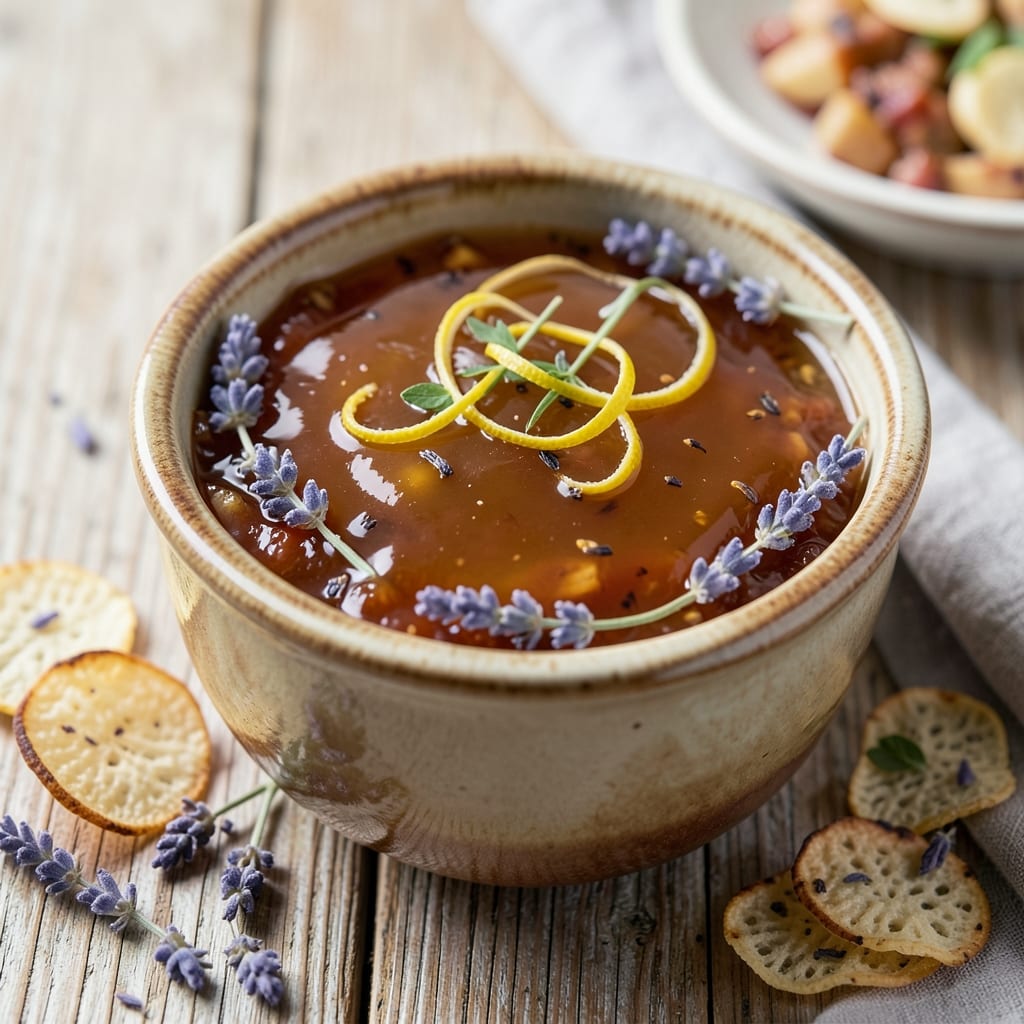
This apple and lavender jelly recipe transforms simple apples and delicate lavender into a velvety-sweet spread that elevates everything from toast to cheese boards. The secret lies in balancing tart apple flavors with floral lavender notes, creating a jelly that's both sophisticated and approachable—perfect for those who love subtle herbal undertones in their desserts.
With just five core ingredients and a precise cooking process, you'll achieve a beautifully set jelly that's neither too tart nor overly sweet. The lavender infuses gently, adding depth without overpowering the apple's natural brightness. This recipe delivers restaurant-quality results at home, with a texture that's smooth yet slightly textured—ideal for dipping, drizzling, or spreading.
The process is straightforward: simmer apples with sugar to extract their juices, strain through cheesecloth for a silky texture, then cook with pectin until it reaches the perfect set. Fresh lavender buds steep in the hot mixture for just 10 minutes, releasing their aroma without bitterness. The final product is a golden-amber jelly with delicate floral whispers in every spoonful.
Use it to enhance buttery croissants, drizzle over vanilla yogurt, or pair with sharp cheeses like brie. The jelly keeps for up to 3 months in the fridge, making it a perfect homemade gift. Let's create this elegant, versatile spread that turns ordinary treats into something extraordinary.
Ingredients for apple and lavender jelly
Five ingredients, floral magic—this elegant jelly transforms humble apples into a restaurant-worthy spread.
| Ingredient | Amount | Notes |
|---|---|---|
| Fresh Apples 🍎 | 2 lb | Honeycrisp or Fuji, peeled and cored |
| Granulated Sugar 🍚 | 3 cups | White or turbinado for subtle caramel notes |
| Fresh Culinary Lavender 🌸 | 2 tbsp | Dried buds, food-grade only |
| Lemon Juice 🍋 | ¼ cup | Freshly squeezed, for brightness |
| Pectin Powder 🍯 | 1 tbsp | High-methoxyl, like Ball or Certo |
| Cheesecloth 🧵 | 1 sheet | For ultra-smooth texture |
| Water 💧 | ½ cup | For pectin activation |
The apples are non-negotiable—Honeycrisp or Fuji deliver that perfect balance of sweet-tart. Local orchards or Trader Joe's usually have them year-round, but avoid anything mealy. The lavender? Food-grade culinary lavender from specialty stores or bulk spice shops—never floral lavender from craft stores. It’s worth the splurge for that delicate aroma. Sugar is your flavor anchor, but turbinado adds subtle caramel notes if you want extra depth. And that pectin? Ball or Certo are the gold standards—cheap but reliable.
No fresh apples? Cooked apple sauce works in a pinch, but you’ll lose that bright tartness. Skip the lavender? Vanilla bean or rose petals add floral notes, but lavender’s unique herbal sweetness is irreplaceable. Running low on pectin? Extra lemon juice helps set it, but texture will be softer. The cheesecloth is optional but game-changing for silky smoothness—if you skip it, strain through a fine-mesh sieve instead. And that water? Don’t substitute with juice—pectin needs hydration to activate properly.
Once set, this jelly keeps for up to 3 months in the fridge, sealed airtight. For gifting, use amber glass jars—they preserve color and aroma better. The texture thickens as it cools, so reheat gently in a water bath if it gets too firm. Freeze portions in ice cube trays for single-serving drizzles. And pro tip: Add a splash of brandy to the finished jelly for a boozy twist—it infuses beautifully over a few days.
Why You'll Love This Recipe
- No-Core Chopping: I just toss in peeled, cored apples—no fancy dicing or juliennes. That lemon juice brightens the whole thing while you’re at it, so it’s basically hands-off after the initial prep.
- Floral Sweet Magic: The lavender isn’t just a garnish—it’s the star. A pinch of those tiny buds turns tart apples into something aromatic and dreamy, like a hug in jelly form.
- Gift-Worthy Leftovers: This stuff lasts months in the fridge, and it’s the perfect hostess present. Slather it on toast, drizzle it over yogurt, or fill a jar for someone who “loves homemade treats.”
- Budget Luxury: Fresh apples and sugar are cheap staples, but the lavender makes it feel fancy. I’ve used this to elevate simple cheese boards or even as a glaze for roasted chicken—no extra cost, all the vibes.
Step-by-step instructions for apple and lavender jelly
Transform fresh apples and delicate lavender into a velvety-smooth spread perfect for tea cakes or buttery pastries.
Prepare the Apple Mixture
Core and peel the 2 lb fresh apples, then cut them into even ½-inch chunks. Transfer them to a large saucepan and add the 0.5 cup water. Bring to a gentle boil over medium-high heat, then immediately reduce to medium-low and simmer uncovered for 15-20 minutes, stirring occasionally. You'll see the apples break down and release their juices—this is when their natural pectin begins to activate.
Once the apples have softened and are releasing liquid freely, use a wooden spoon to mash them against the side of the pan until completely smooth. Strain the mixture through the cheesecloth into a clean bowl, pressing gently to extract every drop of juice. The resulting liquid should measure about 3 cups—this is your apple base. Discard the solids in the cheesecloth. The strained juice is crucial for achieving that ultra-smooth texture we're after.
Bloom the Pectin and Add Sugar
In a separate large saucepan, combine the 3 cups granulated sugar and the 1 tbsp pectin powder. Stir gently to prevent clumping, then add the strained apple juice and the 0.25 cup lemon juice. Bring the mixture to a rolling boil over high heat, stirring constantly with a wooden spoon. This is where the magic happens—the pectin needs to fully bloom in the hot liquid to create that perfect gel.
As soon as the mixture reaches a full rolling boil, add the 2 tbsp fresh culinary lavender buds. Immediately reduce the heat to medium and let it boil vigorously for exactly 1 minute. This precise timing is critical—too short and the jelly won't set properly; too long and the lavender will become bitter. Watch carefully for the moment when the mixture reaches a steady boil and maintain that temperature for the full minute.
Test and Pot the Jelly
Remove the pan from heat and carefully skim off any foam that has formed on the surface using a spoon. This step ensures your finished jelly will be crystal clear. Ladle the hot jelly into sterilized 4-ounce jelly jars, leaving about ¼-inch headspace at the top. The lavender buds will naturally sink to the bottom, creating beautiful layers of floral color.
Seal the jars immediately while the jelly is still hot. Let them cool at room temperature for 10 minutes, then refrigerate for at least 4 hours or until fully set. To test if it's ready, insert a clean knife into a jar—if it comes out clean with jelly clinging to it, your jelly has set perfectly. The finished product should have a delicate lavender aroma with subtle floral notes and a bright, apple-forward flavor that's neither too sweet nor too tart.
Store and Enjoy
Once fully set, store the jars in the refrigerator where they'll keep for up to 3 weeks. The jelly will continue to develop its floral complexity as it ages. For best results, use it within 2 weeks for maximum freshness. The lavender flavor will be most pronounced when served on warm scones or toasted brioche, where its aromatic qualities can truly shine.
When ready to serve, simply spoon the jelly directly from the jar. The layers of color—from pale yellow at the top to lavender-tinged at the bottom—will make an elegant presentation. Each bite should deliver a perfect balance of apple sweetness, citrus brightness, and floral depth. For an extra touch, garnish with a single lavender bud on top of each serving to enhance the visual and aromatic experience.
Pro Tips For Making Apple And Lavender Jelly
- STRAIN THE LAVENDER: Don’t just dump whole lavender sprigs into the pot—bruise them first with a rolling pin or mortar and pestle to release the oils. Then strain through a fine-mesh sieve lined with cheesecloth, squeezing every last drop. I learned this the hard way after a batch tasted disappointingly mild (and looked like a floral science experiment).
- COOK APPLES UNTIL SOFT: You’re not making applesauce, but get those apples truly mushy—think fork-tender, not just slightly broken down. A food mill or fine-mesh sieve afterward ensures no gritty texture ruins the smooth jelly. I used to rush this, and the result was always cloudy and uneven.
- MEASURE PECTIN PRECISELY: Pectin powder is unforgiving—use a kitchen scale for accuracy (most brands need ~1.5% of the sugar weight). Too little and your jelly won’t set; too much and it’ll taste like glue. I once added "a little extra" and ended up with a sad, wobbly mess.
- USE LEMON JUICE LAST: Add the lemon juice only after the sugar fully dissolves and the mixture reaches a rolling boil. Acid too early can break down the pectin before it has a chance to work. This tiny timing fix makes the difference between a firm set and a runny disappointment.
Common mistakes when making your apple and lavender jelly
Overcooking Lavender
Lavender is delicate—boiling it too long turns its floral notes bitter. That 1-minute boil after adding buds is non-negotiable. I’ve ruined batches by letting it simmer too long, so set a timer and watch for bubbles. If you accidentally overcook, strain out the buds immediately and add 1 tsp vanilla extract to mask the bitterness. 🌸
Skipping the Strain
Using unstrained apple pulp creates a grainy texture that ruins the silky finish. Cheesecloth is ideal, but a fine-mesh sieve works in a pinch. Press hard to extract every drop—those solids contain extra pectin that could thicken your jelly unevenly. I once skipped this step and ended up with a jelly that looked like applesauce. Not pretty! 🧵
Incorrect Pectin Activation
Pectin needs water to bloom properly—never substitute juice or broth. Mix the 1 tbsp pectin with sugar first, then add liquids to prevent clumping. If you accidentally add pectin to hot liquid directly, whisk vigorously to dissolve. I’ve seen recipes fail because the pectin sat as lumps, leading to a runny jelly. Always bloom it with sugar first! 🍯
Inconsistent Heat Control
A rolling boil is essential for proper setting, but too high heat can scorch the jelly. Use medium-high heat and stir constantly to prevent burning. If the mixture starts smoking, reduce heat immediately. I once burned a batch because I walked away—now I keep a timer and stir every 30 seconds. A gentle boil keeps flavors bright and color vibrant. 🔥
Jar Sterilization Oversights
Unsterilized jars cause mold growth, even in the fridge. Run jars and lids through a 250°F oven for 10 minutes or boil them for 5 minutes. I learned this the hard way when a jar developed mold after just 5 days. Always sterilize—it’s the only way to ensure your jelly lasts its full 3-week shelf life. ❄️
Rushing the Set Time
Jelly needs 4+ hours to fully set—don’t test it too soon. A knife test after 2 hours will likely show it’s still liquid. Patience here prevents a jelly that’s too soft. If yours doesn’t set after 6 hours, it may need more pectin next time. I’ve had batches take up to 8 hours in cooler kitchens. 💡
Nutrition facts
Frequently asked questions
Can I use dried lavender instead of fresh?
Yes! Use 1 tbsp dried culinary lavender instead of 2 tbsp fresh buds. Dried lavender is more concentrated, so reduce the amount by half. Always ensure it's food-grade and free from pesticides. The flavor will be slightly more potent, so taste as you go and adjust sweetness if needed.
Why did my jelly turn cloudy?
Cloudiness usually means the pectin didn't activate properly or the mixture cooled too quickly. Ensure you're using high-methoxyl pectin and bring the mixture to a full rolling boil for at least 1 minute. Stir constantly and avoid letting it simmer after boiling. If it's already set, reheat gently to 165°F and re-pot for a clearer finish.
How can I make this jelly without added sugar?
For a sugar-free version, reduce the sugar to 2 cups and add 1 extra tbsp pectin. Use low-sugar pectin (like Ball No-Sugar-Needed) and follow package instructions. The texture will be softer, but still settable. Balance tartness with extra lemon juice (0.375 cup) and consider adding 1 tsp vanilla extract to complement the lavender.
What's the best way to use up extra jelly?
Freeze in 1-tbsp portions for single-serving drizzles on pancakes or yogurt. Drizzle over warm cheese boards with brie and honey, or layer in thin toast with whipped cream. It also makes an elegant glaze for roasted pork tenderloin—just reduce 2 tbsp jelly with 1 tbsp butter on the stovetop. The floral notes pair beautifully with savory dishes!
Can I substitute another fruit?
Yes! Try peaches or plums (use 1.5 lb for similar yield) or blackberries (2 cups mashed). Adjust lemon juice to 0.375 cup for tart fruits. Avoid overly watery fruits like strawberries—they dilute the flavor. For deeper color, add 1 tsp beet juice or 1 tbsp red wine vinegar to the strained mixture.