
Desserts
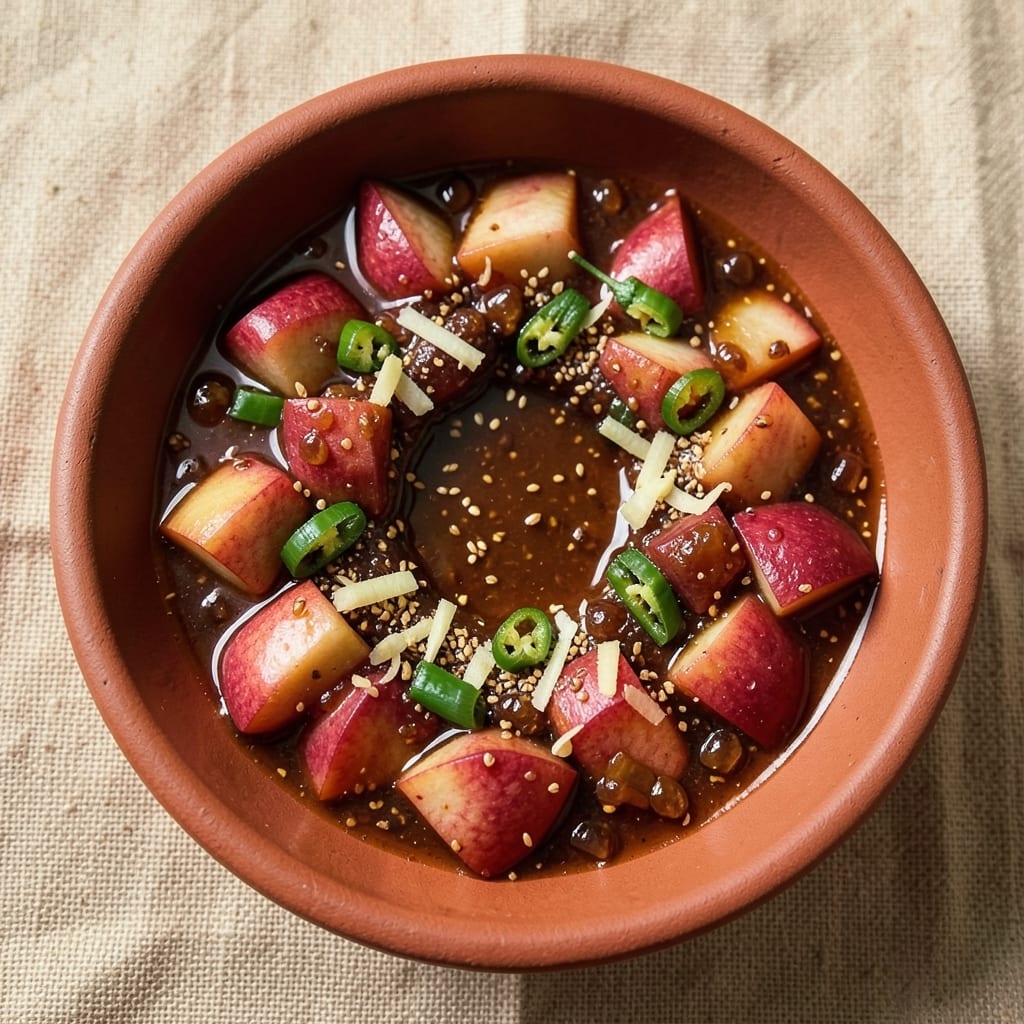
This apple chutney Indian style recipe transforms humble apples into a vibrant, tangy-sweet condiment that bridges curries, dosas, and even cheese platters with effortless authenticity. The secret lies in balancing tamarind’s sharp tang with caramelized apples and aromatic spices like cumin and green chilies—creating a sauce that’s both complex and foolproof to make. I’ve perfected this version over years of serving it alongside crispy dosas and spiced lentils, where its bright acidity cuts through richness without overpowering.
The process is simpler than it sounds: apples are gently cooked until tender, then blended with tamarind paste, ginger, and a touch of jaggery for depth. Fresh herbs like cilantro and mint add brightness, while cumin and green chilies deliver that signature Indian spice kick. The result is a smooth yet textured condiment that stays fresh for up to a week in the fridge—ideal for batch cooking or gifting.
What makes this chutney special is its versatility. Drizzle it over steaming hot dosas for a tangy contrast, spread it on toast with cheese for a quick snack, or mix it into curries for an instant flavor boost. The tamarind and jaggery create a natural sweetness that balances the heat, while the apples add a subtle jammy richness. It’s the kind of condiment that elevates everyday meals into something memorable.
Ready in about 30 minutes with minimal prep, this chutney is perfect for both weeknight dinners and festive spread. The key is letting the flavors meld during cooking—don’t rush it. Here’s how to make it step by step, with tips to adjust sweetness and spice to your taste.
Ingredients for apple chutney indian style
Nine simple ingredients transform into this vibrant, tangy-sweet Indian chutney perfect for curries and dosas.
| Ingredient | Amount | Notes |
|---|---|---|
| Apples 🍎 | 2 lb | Firm variety like Granny Smith |
| Tamarind Paste 🍯 | ½ cup | Or 3 tbsp tamarind pulp |
| Jaggery 🍯 | ½ cup | Or brown sugar substitute |
| Fresh Ginger 🧄 | 2 tbsp | Grate finely for brightness |
| Green Chilies 🌶️ | 2 whole | Adjust for spice preference |
| Ground Cumin 🌿 | 1 tsp | Toasted for deeper flavor |
| Fresh Cilantro 🌿 | ¼ cup | Chopped, stems removed |
| Fresh Mint Leaves 🌿 | ¼ cup | Chopped for freshness |
| Red Chili Powder 🌶️ | ½ tsp | Adjust for heat level |
| Salt 🧂 | ½ tsp | To taste, adjust carefully |
| Water 💧 | ½ cup | For blending consistency |
The apples are the heart of this chutney—Granny Smith gives the best balance of tartness and texture. Indian grocery stores usually carry them, but any firm apple works in a pinch. I like to use the whole apples, peeled and chopped—no need to core them, just slice off the top and bottom. Tamarind paste is non-negotiable for that signature Indian tang. Koyo brand is my go-to, but you can also use tamarind pulp if that's what you've got. The jaggery adds depth, but if you can't find it, brown sugar works just fine—just remember it's sweeter than jaggery.
No tamarind? Lemon juice plus a pinch of salt mimics the tang, though it won't be identical. Fresh ginger is ideal, but ground ginger at half the amount works in a bind. For the green chilies, serrano peppers are perfect if you can't find Indian green chilies—they've got that same bright heat. The cilantro and mint are freshness boosters, but dried herbs at one-third the amount will still give you flavor. Want it smoother? Add an extra splash of water when blending. Prefer it chunkier? Use less water and pulse instead of blending fully.
This chutney keeps beautifully in the fridge for up to a week—the flavors actually deepen over time. I like to store it in a glass jar with a tight lid to keep it fresh. For longer storage, freeze it in ice cube trays—perfect for single-serving portions. When reheating, just warm it gently on the stove with a splash of water to loosen it up. The best part? It tastes even better the next day after all the flavors meld together.
Why You'll Love This Recipe
- Five-Ingredient Magic: I swear by this—just apples, tamarind, jaggery, ginger, and chilies. No fancy prep, no hidden spices. The tamarind paste does all the tangy work while I chop the apples into rough chunks (no peeling, no fuss).
- Sweet-Spicy Balance: That first bite? Crunchy apples meet jaggery’s caramel warmth, then whoosh—ginger and green chilies cut through like a bright, zesty hug. It’s the kind of chutney that makes you reach for seconds without even thinking.
- Party in a Jar: I keep a batch in my fridge for everything—spread it on toast, dollop it with dosas, or serve it with cheese boards. Honestly, it’s my go-to when guests drop by last minute. No stress, just flavor.
- Months of Leftovers: Between us, this chutney tastes better after a week. The flavors meld into this perfect sweet-tangy depth, and I’ve had it last three months in the pantry. Plus, jaggery’s cheap—this is my budget-friendly pantry staple.
Step-by-step instructions for apple chutney Indian style
This vibrant chutney comes together with simple steps—just follow the sequence and taste as you go.
Prepare the Apples and Tamarind Base
Peel and core the 2 lb apples, then chop them into ½-inch chunks. I like to use a food processor for this—it gives you more even pieces, but a sharp knife works too. Set them aside in a bowl.
In a separate bowl, mix the 0.5 cup tamarind paste with the 0.5 cup jaggery and 0.5 cup water. Warm this mixture in a small saucepan over low heat for 3-4 minutes, stirring constantly until the jaggery dissolves completely. You want a smooth, syrupy consistency—this is your flavor foundation. If it thickens too much, add a splash of water to loosen it.
Cook the Aromatics and Spices
Heat a heavy-bottomed pan over medium heat and add the 2 tbsp fresh ginger (pre-grated) and 2 whole green chilies (sliced lengthwise). Sauté for 2-3 minutes until the ginger turns golden and the chilies soften slightly. This step unlocks their aromatic oils—don't rush it.
Add the 1 tsp ground cumin and 0.5 tsp red chili powder, stirring for 30 seconds until fragrant. The spices should smell earthy and toasty. Immediately pour in the warm tamarind-jaggery mixture and let it simmer for 5 minutes on low heat. This reduces the mixture slightly and blends the flavors together.
Combine and Simmer the Chutney
Add the chopped apples to the pan and stir gently to coat them in the tamarind-spice mixture. Cover and cook for 8-10 minutes on medium-low heat, stirring occasionally. You want the apples to soften but still hold their shape—think tender yet slightly crisp. If the mixture looks too dry, add 1-2 tablespoons of water to keep it balanced.
Once the apples are tender, stir in the 0.25 cup fresh cilantro and 0.25 cup fresh mint leaves. These herbs add brightness and freshness that cut through the sweet-tangy flavors. Taste and adjust seasoning with the 0.5 tsp salt—you might need a pinch more or less depending on your jaggery.
Blend to Perfection and Adjust Texture
Transfer the chutney to a blender or food processor. Pulse until smooth but still slightly textured—this gives it that authentic Indian chutney feel. For a smoother version, blend longer, but I prefer a little bite. Taste again and adjust—more tamarind for tang, jaggery for sweetness, or salt for balance.
If the chutney is too thick, thin it with 1-2 tablespoons of water until it reaches a spreadable consistency. It should coat the back of a spoon but still be easy to drizzle. Let it cool to room temperature before serving—this lets the flavors meld even more.
Pro Tips For Making Apple Chutney Indian Style
- Peel Apples After Cooking: I learned this the hard way—peeling raw apples first makes them turn brown and watery. Instead, chop them with skin on, then peel after cooking. The skin adds texture, and you’ll save time scrubbing off stubborn patches later.
- Soak Tamarind 10 Minutes: Tamarind paste is sneaky—it clumps like glue if you toss it in dry. Mix it with ¼ cup warm water first, let it sit, then strain out the fiber. Your chutney won’t have weird stringy bits, and the tang will blend smoothly.
- Crush Jaggery, Don’t Melt: Jaggery melts unevenly and can burn before dissolving. Grate or pound it into small pieces first, then add it gradually while stirring. This keeps the heat low and prevents a bitter, scorched flavor creeping in.
- Blend Ginger-Green Chili Paste: Chopping ginger and chilies separately means uneven heat. Pulse them together in a blender with a splash of water first, then add to the pan. The paste cooks faster and distributes flavor like a pro—no surprise fiery pockets.
Regional styles of this dish
South Indian Style
In South India, this chutney often includes grated coconut (about ¼ cup shredded) for a tropical twist. I like to add 1 tsp black pepper and a pinch of asafoetida (hing) for depth—these spices are staples in Kerala and Tamil Nadu. The result is creamier with a subtle earthy aroma. Serve it with dosa or idli for that perfect South Indian breakfast combo. 🌿
Punjabi Sweet-Tangy
Punjabi households often sweeten their chutneys with more jaggery (up to ¾ cup) and add cardamom pods (2-3 crushed) for warmth. I’ve seen versions with roasted cumin seeds (instead of ground) for extra crunch. This richer style pairs beautifully with makki ki roti or parathas. The key is balancing the sweetness with a splash of lemon juice at the end for brightness.
Gujarati Spiced Heat
Gujarat takes chutneys seriously—expect more green chilies (3-4 whole) and ½ tsp garam masala stirred in at the end. I’ve made this version with roasted coriander powder (1 tsp) for nutty depth. It’s perfect with thepla or khichdi, where the heat stands up to rich dairy dishes. The Gujarati trick? A final sprinkle of toasted sesame seeds before serving for crunch.
Bengali Tamarind Twist
Bengali-style chutneys often use less jaggery (just ¼ cup) to keep the tamarind’s tang dominant. I add ½ tsp fennel seeds toasted with the cumin for a licorice note. This version works wonderfully with luchi or as a dip for beguni (fritters). The secret? A longer simmer (12-15 minutes) to deepen the tamarind flavor without added sweetness.
Goan Coastal Fusion
Goan cuisine loves bold flavors—this chutney gets ½ cup coconut milk blended in for creaminess, plus 1 tsp vinegar for extra tang. I’ve seen versions with curry leaves (5-6) sautéed with the ginger. It’s fantastic with Goan fish curry or as a marinade for seafood kebabs. The coconut milk makes it rich enough to stand up to spicy seafood dishes.
Nutrition facts
Frequently asked questions
Can I substitute jaggery with regular sugar?
Yes, but use half the amount since jaggery is sweeter and adds depth. For 0.5 cup jaggery, try ¼ cup brown sugar or ⅓ cup granulated sugar. The texture will be slightly different, but the flavor will still work well with the tamarind and apples. For authenticity, jaggery’s caramel notes are hard to replicate!
How spicy should this chutney be?
The recipe uses 2 green chilies for mild heat—adjust to taste! For extra kick, add 1 tsp red chili powder OR 1 extra chili. For kids or sensitive palates, reduce to 1 chili OR skip the chili powder entirely. The cilantro and mint will balance any heat, so don’t worry about overpowering the sweet-tangy flavors.
Can I make this chutney without tamarind?
Mix ¼ cup lemon juice + ½ tsp salt to mimic tamarind’s tang. For depth, add 1 tsp vinegar OR 1 tbsp amchur (dry mango powder). The chutney will taste brighter but still delicious—just reduce the jaggery slightly (¼ cup) since lemon is sweeter. This works especially well for South Indian-style versions!
What’s the best way to serve this chutney?
This versatile chutney shines with hot dosas, idlis, or parathas—drizzle it generously for tangy contrast! It’s also perfect with cheese platters, grilled sandwiches, or even masala chai for a sweet-spicy twist. For a fusion touch, spread it on toasted bread with butter OR use it as a marinade for paneer or chicken tikka. The key is serving it at room temperature to let the flavors pop!
Why did my chutney turn out too sweet?
Jaggery and tamarind are both sweet-tangy—balance them by adding 1 tbsp lemon juice OR extra salt (½ tsp). For future batches, reduce jaggery to ⅓ cup AND add 1 extra green chili to cut sweetness. Taste as you go! The chutney’s texture should be slightly sticky but not cloying—if it’s too thick, thin with 1 tbsp water while blending.